


How Cloud Server Services Can Improve Business Continuity and Disaster Recovery
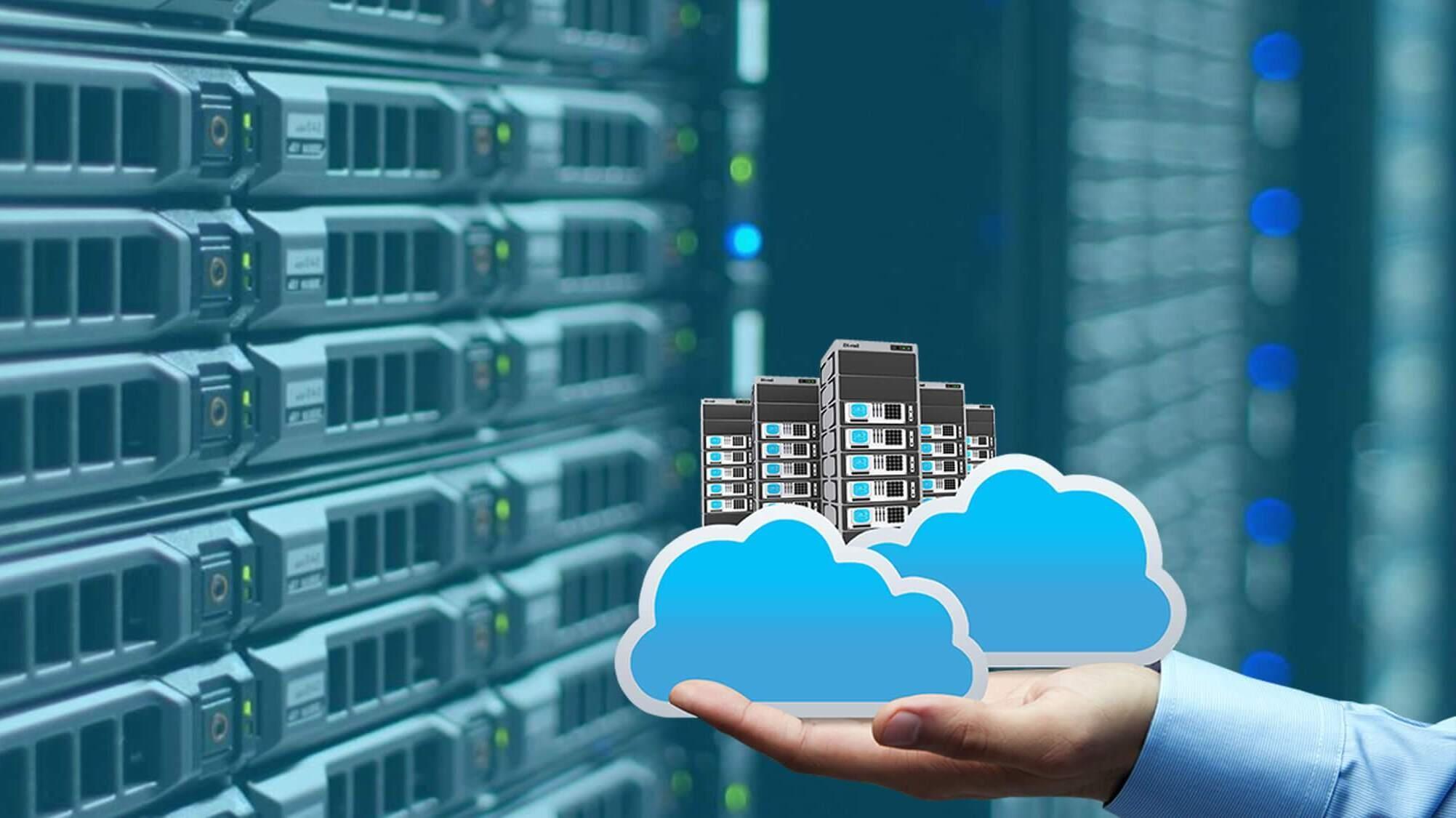
Imagine this: A sudden summer storm knocks out power to your office for hours. A hardware failure corrupts your primary database server. Or, in a more sinister scenario, a ransomware attack encrypts all your local files. In these moments, the theoretical concepts of Business Continuity (BC) and Disaster Recovery (DR) become the most urgent, tangible concerns your business will ever face. The questions are stark: How long can you afford to be offline? Can you recover your data? Will your business survive the disruption?
For decades, building a robust BC/DR plan was a complex, expensive endeavor. It involved maintaining duplicate hardware in a secondary location, performing cumbersome manual tape backups, and hoping everything would work if ever tested by a real disaster. The result was often gaping vulnerabilities and immense stress for business leaders.
Today, a fundamental shift has occurred. Cloud server services have transformed business continuity and disaster recovery from a costly insurance policy into an integrated, operational advantage. By leveraging the infrastructure of professional cloud server service providers, companies of all sizes can achieve resilience levels once reserved for giant corporations. This article explores how the cloud not only safeguards your operations but turns recovery from a crisis into a manageable, predictable process.
The High Stakes of Downtime: More Than Just Inconvenience
First, let's ground the discussion in reality. Business continuity is about keeping essential functions running during a disruption. Disaster recovery is the specific plan to restore data and applications after a catastrophic event. The cost of failure in these areas is measured in more than dollars.
-
Financial Loss: Every minute of downtime halts productivity and sales. For an e-commerce site, it means abandoned carts and lost revenue. For a professional services firm, it means billable hours that vanish.
-
Reputational Damage: Customers and clients expect reliability. If your website is down or you can't access client records, trust erodes quickly. A competitor is just a click away.
-
Operational Chaos: Without access to critical systems—be it your CRM, email, or inventory management—your team is paralyzed. Recovery becomes frantic and reactive, increasing the chance of errors.
-
Compliance and Legal Risk: Many industries have regulations mandating data protection and minimum uptime. Failure to recover data can lead to significant fines and legal liability.
Traditional on-premise solutions struggle to mitigate these risks effectively. Backup tapes can fail. Off-site hardware becomes obsolete. The recovery process is slow and manual, turning a minor incident into a major business interruption.
The Cloud as a Strategic Shield: Core Mechanisms for Resilience
Cloud server services address the core weaknesses of traditional DR by design. They provide not just a backup destination, but a dynamic, ready-to-go replica of your IT environment. Here’s how they fundamentally change the game.
1. Geographic Redundancy: Putting Distance Between You and Disaster
A disaster that affects your primary location—be it a fire, flood, or regional power outage—should not affect your backup. Leading cloud server service providers maintain vast networks of data centers spread across different geographic regions and even countries.
-
How it Works: Your data and server images are replicated in real-time or at frequent intervals to a cloud region hundreds of miles away. If your main office in Miami is hit by a hurricane, your systems can be brought online from a data center in Chicago or Dallas within minutes.
-
The Practical Benefit: This isn't just about big disasters. It protects against local ISP failures, construction accidents that cut fiber lines, and even city-wide power grids going down. Your business's digital presence becomes untethered from a single, vulnerable location.
2. Rapid Recovery: Turning Days into Minutes
The most critical metric in DR is Recovery Time Objective (RTO)—how quickly you must be back online. With physical hardware, RTOs could be days. The cloud slashes this time dramatically.
-
How it Works: Your cloud server (a virtual machine) is essentially a software file. In a disaster scenario, you don’t wait for new hardware to be shipped and configured. You simply initiate the process to "spin up" your pre-configured server image from the backup copy in the cloud. This process, known as failover, can often be automated.
-
The Practical Benefit: Instead of a days-long recovery ordeal, critical systems can be operational in minutes or hours. Employees can log in remotely from home, your website can resume transactions, and customer service can access tools—all while your primary office is unreachable.
3. Scalable and Cost-Effective Resilience
Maintaining a "hot" disaster recovery site—a fully equipped, idle data center—is prohibitively expensive for most. The cloud introduces a "pay-as-you-use" model to DR.
-
How it Works: In normal times, you pay only for the storage of your replicated data and server images. The powerful compute resources needed to run your full production environment sit idle, costing you little. Only in a disaster, when you initiate failover, do you start paying for those active compute resources. This is dramatically cheaper than maintaining duplicate physical infrastructure.
-
The Practical Benefit: Small and mid-sized businesses can now afford an enterprise-grade DR plan. There’s no large capital expenditure for secondary servers. You get world-class infrastructure on a flexible, operational budget.
4. Simplified, Automated Testing
A DR plan that has never been tested is just a hopeful document. Testing with physical hardware is disruptive, complex, and often skipped.
-
How it Works: In the cloud, you can test your DR plan without affecting your live production environment. With a few clicks, you can spin up your disaster recovery servers in an isolated network, verify applications work, and test your team's response procedures. Then, you shut it down. The process is non-disruptive, can be done regularly, and builds confidence.
-
The Practical Benefit: You move from uncertainty to certainty. Regular, painless testing ensures your plan works, familiarizes your team with the process, and allows you to update recovery steps as your IT environment evolves. You’re prepared, not just hopeful.
Implementing a Cloud-Based BC/DR Strategy: Key Considerations
Adopting cloud services for continuity requires thoughtful planning. Here are the key steps and questions to address:
-
Risk Assessment & Goal Setting: Identify your most critical systems (e.g., your financial database, customer-facing website, email). For each, define your RTO and Recovery Point Objective (RPO)—the maximum amount of data you can afford to lose (e.g., 15 minutes of transactions vs. 24 hours). These metrics will dictate your cloud solution design.
-
Choose the Right Service Model: Providers offer a spectrum. Disaster Recovery as a Service (DRaaS) is a fully managed solution where the provider handles the replication, failover, and failback. Alternatively, you can use Infrastructure as a Service (IaaS) to build a more customized, self-managed DR environment. The choice depends on your in-house IT expertise.
-
Focus on Data Replication: Ensure your chosen solution seamlessly and continuously replicates data to the cloud. This can be at the storage level, hypervisor level, or application level. Consistency is key—you need a recoverable copy, not a corrupted one.
-
Document and Communicate the Plan: A technology solution is only part of the answer. A clear, written plan that assigns roles (Who declares the disaster? Who initiates failover?) and includes communication protocols for employees and customers is essential. The cloud enables technical recovery; your plan enables business recovery.
The Ultimate Benefit: Confidence and Competitive Advantage
The transition to cloud-based BC/DR is more than a technical upgrade. It's a strategic business decision that yields profound benefits:
-
Operational Confidence: Leadership can make decisions knowing the company's digital backbone is resilient. This confidence permeates the organization, reducing anxiety and enabling focus on growth, not just survival.
-
Enhanced Customer Trust: You can confidently assure clients and partners of your resilience. This becomes a differentiating factor, especially when bidding for contracts that require proven BC/DR plans.
-
Resource Liberation: IT staff are freed from the tedious manual work of managing tape rotations and aging backup hardware. They can focus on innovation and projects that drive the business forward.
In a world of constant disruption, resilience is not optional. Cloud server services have democratized access to powerful, automated, and affordable business continuity and disaster recovery. They transform it from a reactive cost center into a proactive pillar of business strategy. By leveraging the cloud, you're not just buying a backup; you're investing in the uninterrupted flow of your operations, the protection of your reputation, and the enduring confidence that no matter what happens, your business will persevere.

 English
 French
 Spanish
 Portuguese
 Deutsch
 Turkish
 Dutch
Dutch
 Italiano
 Russian
 Romaian
 Portuguese (Brazil)
 Greek
Greek