


Reconciling Accounts Monthly: Financial Habit That Keeps Your Business Accurate and Audit-Ready
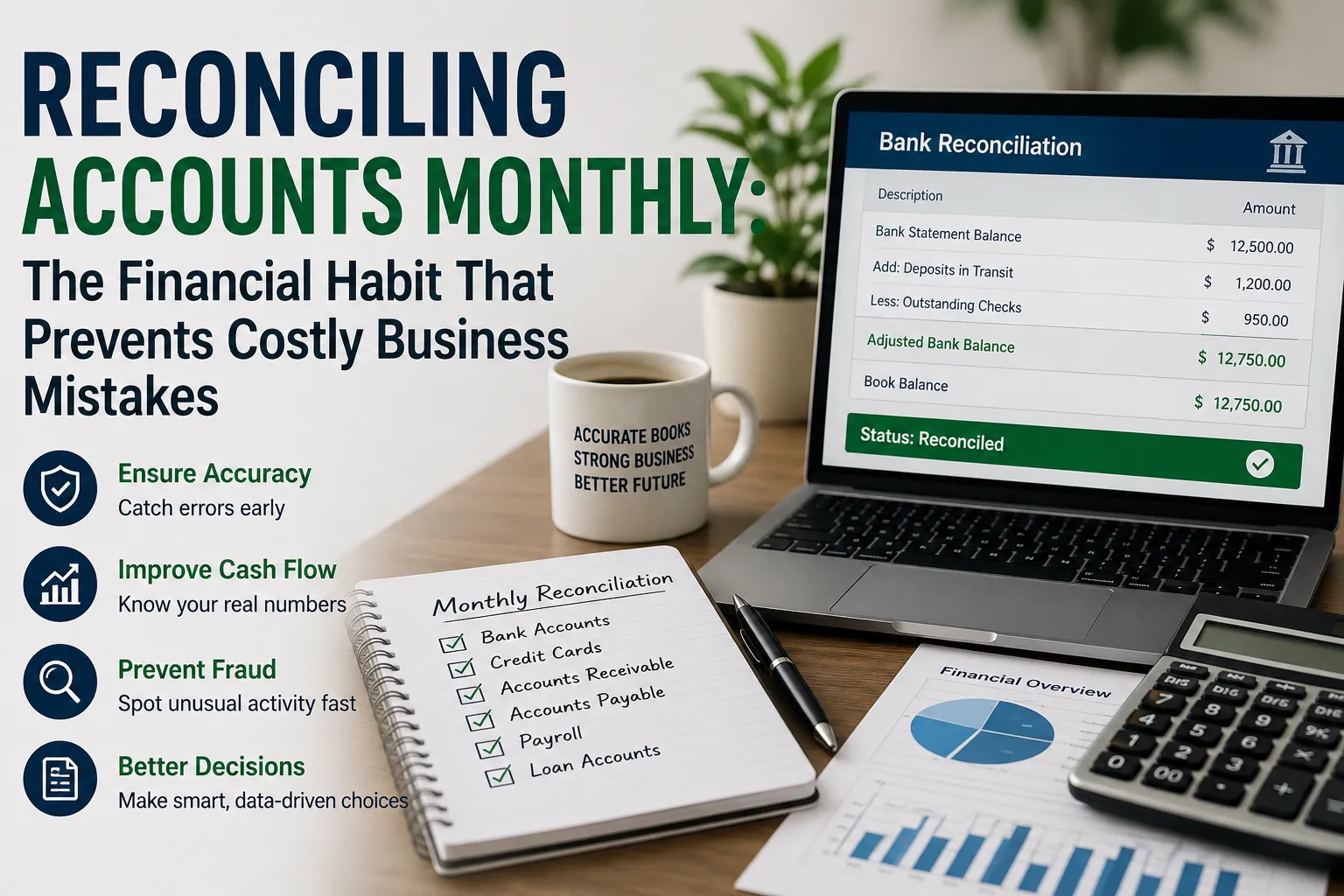
Accurate financial records are the foundation of every successful business. Whether you're a small business owner, freelancer, or growing company, keeping your books up to date helps you make confident financial decisions. However, recording transactions alone isn't enough. You also need to verify that every payment, deposit, fee, and balance matches your financial records.
That's where reconciling accounts monthly becomes essential.
Monthly account reconciliation is one of the most effective accounting practices for maintaining accurate books, protecting your cash flow, and preparing for tax season. Instead of waiting until the end of the quarter or year to identify accounting mistakes, monthly reconciliation helps you catch discrepancies early, reducing stress and preventing costly financial errors.
In this guide, you'll learn what monthly account reconciliation is, why it matters, its benefits, common mistakes to avoid, and practical tips to make reconciliation part of your regular financial routine.
What Is Monthly Account Reconciliation?
Account reconciliation is the process of comparing your internal accounting records with external financial documents, such as bank statements, credit card statements, loan records, and payment processor reports.
The purpose is to confirm that every financial transaction has been accurately recorded.
If differences exist, they should be investigated and corrected before they affect financial reports or tax filings.
Businesses commonly reconcile:
- Business checking accounts
- Savings accounts
- Credit card statements
- Accounts receivable
- Accounts payable
- Payroll accounts
- Business loans
- Merchant payment platforms
- Petty cash accounts
Monthly reconciliation ensures that your accounting records accurately reflect your actual financial position.
Why Reconciling Accounts Monthly Matters
Financial mistakes often begin as small errors that go unnoticed for months.
Examples include:
- Duplicate expense entries
- Missing customer payments
- Incorrect bank charges
- Forgotten subscriptions
- Unrecorded deposits
- Data entry mistakes
When these issues remain unresolved, they can affect cash flow, financial reporting, budgeting, and tax preparation.
Reconciling your accounts every month allows you to identify these problems while they're still easy to fix.
The Biggest Benefits of Monthly Account Reconciliation
Improves Financial Accuracy
Accurate bookkeeping begins with accurate reconciliation.
By comparing your accounting records with financial statements every month, you ensure that:
- Every transaction is recorded correctly.
- Account balances remain accurate.
- Financial reports reflect real business performance.
- Errors are corrected before they become larger problems.
Reliable financial information leads to better business decisions.
Strengthens Cash Flow Management
Cash flow is one of the most important indicators of business health.
Monthly reconciliation helps you understand:
- Available cash balances
- Outstanding customer invoices
- Upcoming vendor payments
- Payroll obligations
- Business spending patterns
With accurate cash flow information, business owners can better plan future expenses and avoid unexpected shortages.
Simplifies Tax Preparation
Tax season becomes significantly easier when your accounts are reconciled throughout the year.
Instead of reviewing months of transactions at once, your records remain organized and current.
Benefits include:
- Faster tax preparation
- More accurate tax returns
- Better documentation
- Easier deduction tracking
- Reduced risk of IRS filing errors
Organized books also allow tax professionals to work more efficiently.
Detect Errors Before They Become Expensive
Small bookkeeping mistakes can create significant financial problems over time.
Monthly reconciliation helps identify:
Duplicate Transactions
Duplicate expense entries may inflate operating costs and reduce reported profits.
Finding them early prevents inaccurate financial statements.
Missing Deposits
Occasionally customer payments or transfers may not be recorded correctly.
Reconciling accounts helps ensure all income is properly recognized.
Incorrect Bank Fees
Banks occasionally process incorrect charges or duplicate withdrawals.
Regular reviews help businesses detect these issues quickly.
Unauthorized Transactions
Monthly reconciliation can also uncover fraudulent activity before additional financial damage occurs.
Better Financial Reporting for Smarter Decisions
Business owners rely on financial reports when making important decisions.
Monthly reconciliation improves the accuracy of reports including:
- Profit and Loss Statements
- Balance Sheets
- Cash Flow Statements
- Expense Reports
- Revenue Reports
Accurate reports help businesses evaluate profitability, manage expenses, and identify financial trends.
Improve Business Budgeting
Budgeting requires dependable financial information.
If accounting records contain errors, budgets become less reliable.
Monthly account reconciliation supports better budgeting by providing:
- Accurate expense tracking
- Reliable revenue figures
- Better spending forecasts
- More informed financial planning
Businesses can confidently allocate resources because their financial data is current.
Common Reconciliation Mistakes to Avoid
Although reconciliation is straightforward, businesses often make avoidable mistakes.
These include:
Waiting Too Long
Reconciling accounts only once a year makes identifying discrepancies much more difficult.
Monthly reviews keep financial records manageable.
Ignoring Small Differences
Even minor discrepancies should be investigated.
Small errors often indicate larger bookkeeping problems.
Forgetting Outstanding Transactions
Outstanding checks and pending deposits should remain on reconciliation reports until cleared.
Monitoring them prevents inaccurate account balances.
Poor Record Organization
Missing receipts, invoices, or payment confirmations make reconciliation more difficult.
Keeping organized records throughout the month simplifies the entire process.
Best Practices for Reconciling Accounts Monthly
Following a consistent process improves both efficiency and accuracy.
Schedule a Monthly Review
Choose the same time each month to reconcile accounts after receiving bank statements.
Consistency helps prevent work from piling up.
Maintain Complete Documentation
Keep copies of:
- Bank statements
- Credit card statements
- Customer invoices
- Vendor bills
- Payroll reports
- Expense receipts
- Loan statements
Complete documentation makes discrepancy investigations much easier.
Use Modern Accounting Software
Cloud-based accounting software can automatically import bank transactions and identify unmatched entries.
Automation reduces manual work while improving efficiency.
Review Financial Reports After Reconciliation
Once reconciliation is complete, review financial statements to ensure they accurately reflect business performance.
This helps identify unusual trends before they become larger issues.
Why Small Businesses Should Reconcile Every Month
Small businesses often operate with tighter cash flow than larger organizations.
Monthly reconciliation helps them:
- Monitor available cash
- Reduce accounting mistakes
- Improve customer payment tracking
- Control operating expenses
- Prepare for tax deadlines
- Strengthen financial decision-making
Regular reconciliation also creates confidence when applying for financing or meeting with investors.
The Role of Professional Bookkeeping
As businesses grow, account reconciliation becomes more complex.
Professional bookkeeping services help by:
- Recording financial transactions accurately
- Reconciling bank and credit card accounts
- Preparing financial statements
- Monitoring accounts receivable and payable
- Maintaining organized financial records
- Supporting tax preparation
- Improving financial reporting accuracy
Professional support allows business owners to focus on growth while ensuring their financial records remain reliable.
Signs Your Business Needs Better Reconciliation Practices
You may benefit from improving your reconciliation process if you frequently experience:
- Unexplained account balances
- Late financial reports
- Cash flow surprises
- Missing receipts
- Delayed customer payments
- Duplicate expenses
- Bank statement differences
- Difficulty preparing tax returns
Addressing these issues early helps prevent larger accounting challenges.
Building a Monthly Financial Routine
Successful businesses treat account reconciliation as part of a regular financial routine rather than a year-end task.
A simple monthly checklist includes:
- Download bank statements
- Compare every transaction
- Verify deposits
- Match vendor payments
- Review outstanding invoices
- Confirm account balances
- Correct discrepancies
- Update financial reports
Completing these steps each month creates more accurate books and stronger financial management.
Final Thoughts
Reconciling accounts monthly is one of the smartest habits any business can adopt. It improves bookkeeping accuracy, strengthens cash flow management, supports better financial reporting, and makes tax preparation significantly easier. More importantly, it helps business owners identify errors, prevent fraud, and make informed decisions based on reliable financial data.
Whether you manage your own books or work with professional accounting services, making monthly reconciliation a consistent practice will save time, reduce costly mistakes, and provide greater confidence in your business finances. By keeping your accounts accurate throughout the year, you'll be better prepared for growth, audits, tax filing, and long-term financial success.

 English
 Arabic
 French
 Spanish
 Portuguese
 Deutsch
 Turkish
 Italiano
 Russian
 Romaian
 Portuguese (Brazil)
 Greek
Greek