


Breakthrough in Autism Spectrum Disorder Treatment
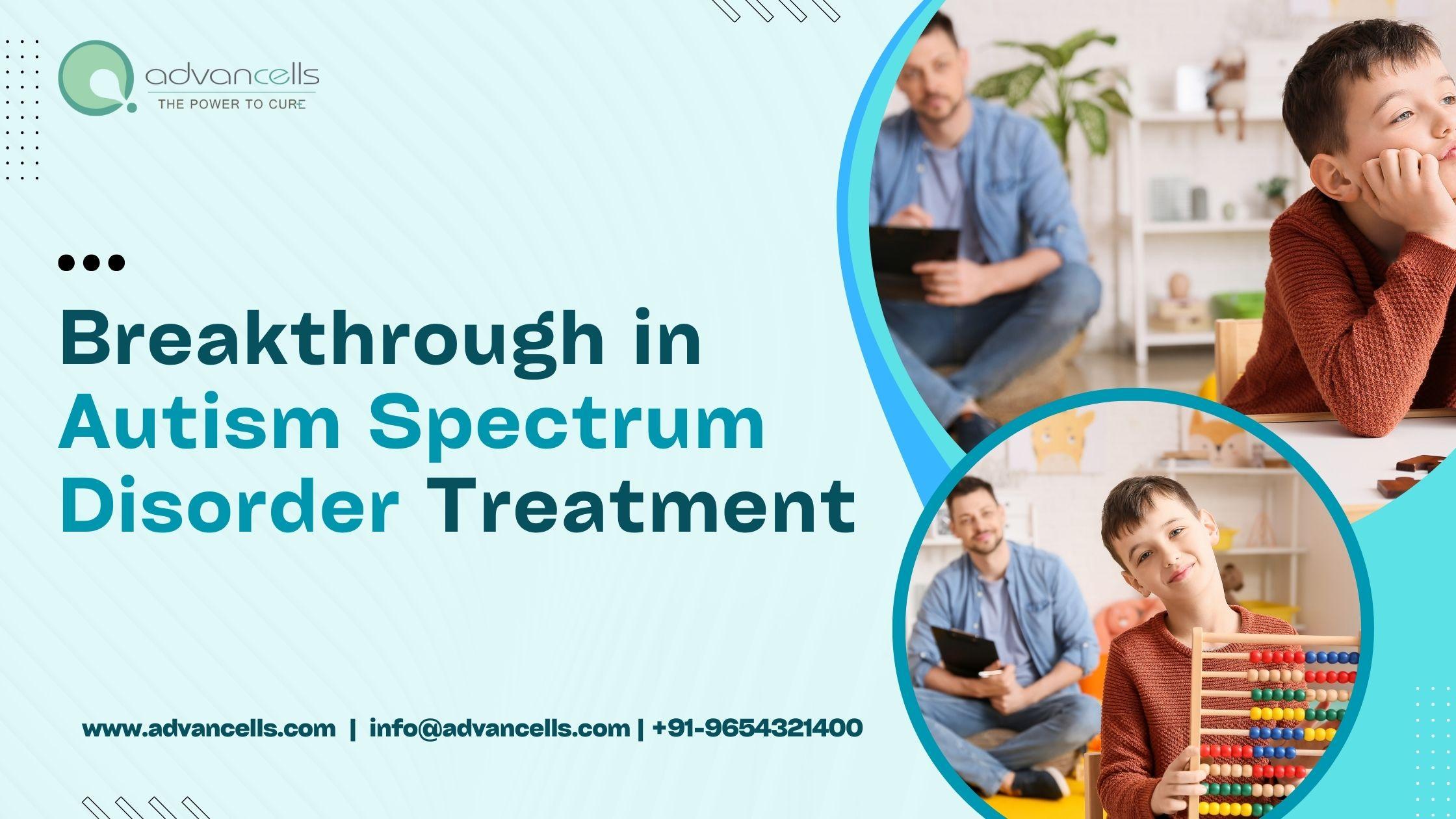
Autism Spectrum Disorder (ASD) is a complex developmental neuronal disorder among children associated with difficulty in communication, social interaction, and repetitive behaviour. Generally, Autism Spectrum Disorder (ASD) is detected among children at their early age, yet misinformation or misunderstanding of the problems by peers has kept it long ignored.
The Centers for Disease Prevention identified 1 in every 36 children to be autistic globally. This marks the seriousness of the problem and paves the way to address the issue actively.
Understanding Autism Spectrum Disorder
Parents or care providers can identify early signs and symptoms of autistic children before they reach one year. Besides, the levels of autism in toddlers till 2-3 years become more demanding. The common deficit signs and symptoms include:
-
Communication deficit: Decreased interest in sharing or averting eye contact, problem with speech or literal interpretation of abstract ideas.
-
Repetitive behaviour: Continuous hand movement like flapping, snapping, finding difficulty in identifying things kept at different places; arranging toys in a specific way
-
Restricted Interest: Difficulty in copying or accepting change, focused on a niche subject, ignoring new experiences.
It is important for parents or early caregivers to mark such signs and symptoms in a child during their early life stages.
Treatment for Autism Spectrum Disorder: Conventional Therapies
Conventional therapies for autistic children consider several effective interventions, including:
-
Behaviour Analysis: Develops structural behavioral plans based on systematic analysis of the child's functional challenges.
-
Speech Therapy: Focuses on the improvement of the child's speech pattern.
-
Social Skill Training: Conducted in groups so that the autistic child can efficiently navigate through social situations.
-
Occupational Therapy: Address adaptive deficiency of the child, that is, difficulty with daily life activities.
-
Palliative care: In case of behavioral irritability, medication such as risperidone and aripiprazole is prescribed along with other therapies.
Treatment for Autism Spectrum Disorder: Autism Stem Cell Therapy
Although conventional therapies have proven to be game-changers for autistic children, none of them address the root cause of the problem. To combat such challenges, stem cell therapy comes into play. Autism Stem Cell Therapy focuses on improving the behavioral problems of the child from within. The main focus remains on:
- Neural Regeneration of the Cells: Stem cell therapy targets or modifies the biological pathways of the autistic child. This results in regeneration and repair of the damaged or dead cells, hence triggering molecular mechanisms.
- Neural Protection: Stem cells secrete various growth factors containing various cytokines and chemokines that protect neural cells from further damage.
- Reducing Inflammation: Various anti-inflammatory factors present in stem cells reduce the chronic inflammation in the autistic brain, which is a common problem with autism.
- Blood Supply: Stem cells promote new blood vessel formation (angiogenesis), hence promote blood supply and oxygenation in the autistic brain.
India's Breakthrough: Autism Stem Cell Therapy
Autism Stem Cell Therapy in India majorly focuses on use of mesenchymal stem cells (MSCs) obtained from umbilical cord blood (allogeneic-obtained from a donor, or autologous-from the patient's own blood). The major focus remains on adapting holistic approaches, including inducing cell/tissue regeneration, reducing inflammation, and promoting blood supply to the brain. However, the outcome varies between individuals depending on the condition of the brain. However, stem cell therapy has shown promising and consistent results when consulted with reputed clinics.
Moreover, the care focus remains on providing personalized therapy based on the child's needs, followed by complete guidance with aftercare and follow-ups. Consistent support from the child's family showed significant improvement in treatment response.
Notably, the therapy outcomes are quite promising, but still under active investigation.
Safety, Ethics & Regulatory Standards in India
The safety of the stem cell therapy as the best autism treatment in India is high when performed under expert supervision. The certified facilities ensure the extreme safety measures, non-manipulation of the stem cells, and undertaking a holistic treatment approach. Early research has reported minimal or no side effects of the therapy. The use of MSCs from umbilical cord blood averts the ethical concerns as obtained non-invasively.
However, parents seeking the therapy must be cautious in choosing clinics for the therapy. The treatment options vary among individuals, hence parents must refrain from falling for over- or fake promises.
In India, Advancells is a reputed organisation that actively conducts research and provides treatment for Autism Spectrum Disorder.
Future Perspectives
Stem cell therapy for Autism Spectrum Disorder is promising and transformative. Researchers' focused in-depth analysis of the long-term impact of stem cell therapy reflects valuable insights. To date, the success rate is quite high, yet continuous advance research is required for claiming the complete success of the therapy. There is a lack of scientific evidence backing stem cell therapy for ASD for its widespread application.

 English
 Arabic
 French
 Spanish
 Portuguese
 Turkish
 Dutch
Dutch
 Italiano
 Russian
 Romaian
 Portuguese (Brazil)
 Greek
Greek