


AHK-Cu 100mg: Copper Peptide Research, Laboratory Applications, and Handling Guide
Introduction
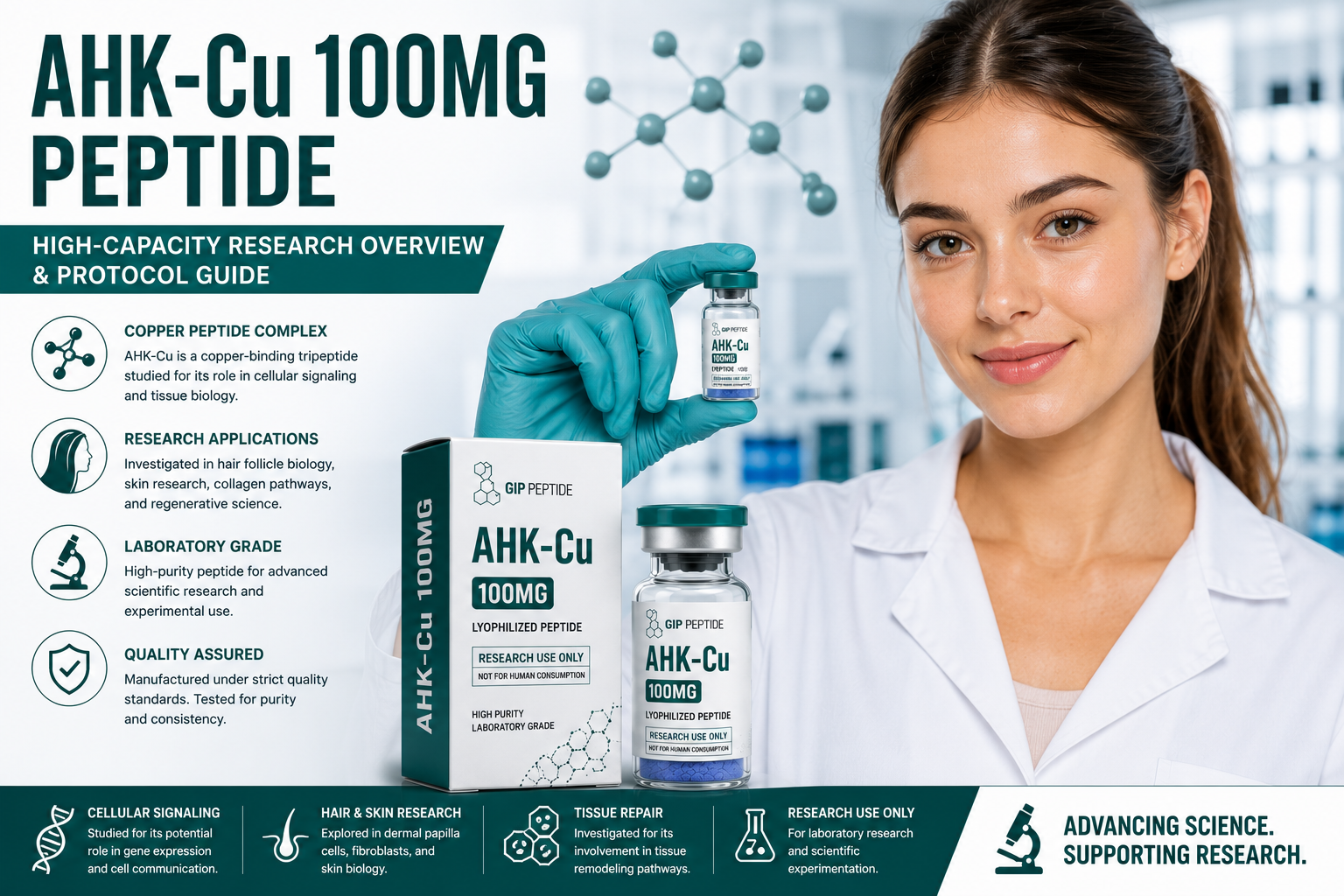
AHK-Cu 100mg is a high-capacity research formulation of a synthetic copper-binding tripeptide composed of alanine, histidine, and lysine coordinated with a copper (Cu²⁺) ion. Structurally related to the better-known GHK-Cu, AHK-Cu differs by a single amino acid and has become an area of interest in laboratory studies focused on copper-peptide biology, dermal cell signaling, and hair follicle research.
The 100mg presentation is commonly selected by laboratories conducting larger experimental projects or repeated investigations requiring consistent batch documentation. This article provides an educational overview of AHK-Cu 100mg, including its scientific background, areas of investigation, laboratory handling, storage recommendations, and quality considerations.
What Is AHK-Cu?
AHK-Cu is a synthetic copper-binding tripeptide consisting of the amino acid sequence alanine–histidine–lysine (AHK) complexed with copper. It belongs to the family of copper peptides and shares structural similarities with GHK-Cu while remaining a distinct molecule with its own research focus. Current literature primarily explores AHK-Cu in laboratory and cosmetic research related to skin biology and hair follicle signaling rather than as an approved therapeutic agent.
Why Researchers Study AHK-Cu
Copper peptides are investigated because copper plays an important role in numerous biological processes, including enzyme activity, cellular signaling, and connective tissue biology. AHK-Cu has attracted scientific attention for its potential interactions with dermal papilla cells and other laboratory models associated with follicular biology.
Current areas of investigation include:
-
Hair follicle biology
-
Dermal cell signaling
-
Skin-related cellular research
-
Copper-peptide chemistry
-
Angiogenesis-related signaling
-
Cellular communication
-
Tissue biology
-
Molecular biology
Most published evidence comes from laboratory, cell culture, or ex vivo studies, and human clinical evidence remains limited.
Scientific Interest in Copper Peptides
Copper-binding peptides continue to be studied because they provide researchers with models for understanding how trace minerals influence cellular processes. AHK-Cu is one member of this broader group of investigational compounds and is frequently compared with GHK-Cu to better understand differences in biological activity and signaling pathways. Although the two molecules are structurally related, they are not interchangeable and have different research emphases.
Why the 100mg Presentation Is Used
The 100mg format is commonly chosen by research laboratories performing multiple experiments or long-term studies.
This presentation may support:
-
Standardized laboratory workflows
-
Consistent sample preparation
-
Batch traceability
-
Multi-phase research projects
-
Efficient inventory management
The quantity supplied is intended to meet research requirements and should not be interpreted as an indicator of potency or intended use.
Laboratory Handling Practices
AHK-Cu 100mg is generally supplied as a sterile lyophilized research material. Maintaining proper laboratory procedures helps preserve sample quality throughout experimental investigations.
General laboratory practices include:
-
Working under aseptic conditions
-
Using sterile laboratory-grade equipment
-
Following manufacturer handling recommendations
-
Recording batch numbers and preparation dates
-
Clearly labeling prepared samples
-
Preventing contamination
-
Maintaining complete laboratory documentation
Preparation methods should always follow institutional laboratory protocols and manufacturer guidance.
Storage Recommendations
Proper storage contributes to maintaining the stability and integrity of research materials.
Laboratories commonly:
-
Store unopened material according to the manufacturer's recommendations.
-
Protect samples from excessive heat, moisture, and direct light.
-
Maintain documented storage temperatures.
-
Clearly identify prepared materials.
-
Minimize unnecessary freeze–thaw cycles where applicable.
Consistent storage procedures help support reproducible laboratory results.
Quality Assurance
Before beginning laboratory investigations, researchers often review:
-
Product identity
-
Batch consistency
-
Purity documentation
-
Physical appearance
-
Certificate of Analysis (COA), when available
-
Storage and shipping records
Quality assurance helps improve reliability and reproducibility across scientific studies.
Research Outlook
Interest in AHK-Cu continues to grow as scientists investigate copper-peptide biology and cellular signaling in experimental models. While existing studies provide useful insights into its biochemical characteristics, additional high-quality research is needed to better understand its mechanisms and potential research applications. Current evidence remains strongest in laboratory and cosmetic research settings rather than large human clinical studies.
Conclusion
AHK-Cu 50mg is an investigational copper peptide used in laboratory research exploring dermal biology, follicular signaling, and cellular communication. Its relationship to other copper peptides, combined with ongoing scientific interest in copper-mediated biological processes, has made it a valuable research material for specialized laboratory investigations.
As peptide science continues to evolve, AHK-Cu remains an active area of study for researchers seeking to better understand copper-peptide interactions and their role in cellular biology.
Research Use Only
AHK-Cu 100mg is intended exclusively for laboratory and scientific research. It is not intended for human consumption, therapeutic use, or diagnostic applications. All preparation, storage, and handling should comply with institutional policies, applicable regulations, and the manufacturer's recommendations.

 English
 Arabic
 French
 Spanish
 Portuguese
 Turkish
 Dutch
Dutch
 Italiano
 Russian
 Romaian
 Portuguese (Brazil)
 Greek
Greek