


Pipeline Circulation Pumps in Heating and Cooling Networks
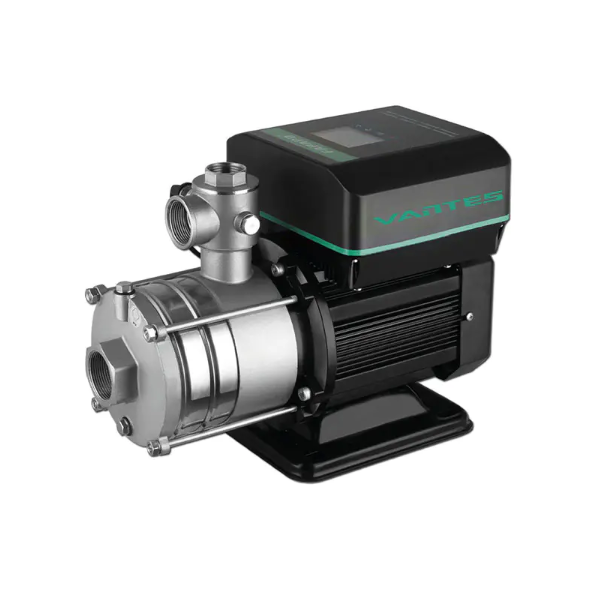
The Pipeline Circulating Pump and Multi-Stage Centrifugal Pump are widely used in systems where fluid movement must remain stable over long operating periods. These pumps support circulation networks that emphasize balanced flow, controlled pressure distribution, and mechanical reliability rather than intermittent output variation.
Pipeline circulating pumps are commonly applied in heating and cooling systems where water or thermal media must circulate continuously. Their inline configuration allows fluid to move through the pump without sharp directional change, which helps maintain steady velocity throughout the pipeline. This characteristic is particularly useful in closed-loop systems that rely on consistent circulation to maintain thermal balance.
In heating networks, circulating pumps help distribute heated water evenly across different zones. Uneven flow can result in temperature inconsistency, affecting system efficiency and user comfort. A properly selected pipeline circulating pump supports uniform circulation, helping heat exchangers and terminal units operate within their intended temperature range.
Cooling systems rely on similar principles. Circulating pumps maintain the movement of cooling water through chillers, condensers, and cooling towers. Stable flow helps ensure predictable heat transfer and reduces the risk of localized overheating within system components.
Multi-stage centrifugal pumps serve a different role within fluid transport systems. These pumps are selected when pipeline resistance, elevation change, or system complexity requires higher delivery pressure. By dividing pressure generation across multiple impeller stages, the pump achieves higher head while maintaining stable operating conditions.
This staged pressure increase is particularly useful in systems with long vertical runs or multiple pressure zones. Rather than relying on a single impeller to generate the required pressure, multi-stage centrifugal pumps distribute mechanical load more evenly across internal components.
Zhejiang Embang Environmental Equipment Co., Ltd. develops pump solutions based on observed operating conditions across industrial and municipal installations. Product design emphasizes structural stability, consistent performance, and compatibility with standard pipeline configurations.
Operating conditions such as temperature variation, working medium quality, and continuous duty cycles influence pump selection. Pumps designed with appropriate tolerances help reduce wear and maintain stable operation over extended periods.
Energy use is closely related to system matching. Oversized pumps may operate outside their optimal range, while undersized pumps can struggle to maintain required flow. Coordinating pipeline circulating pumps with multi-stage centrifugal pumps helps achieve a balanced relationship between pressure demand and flow requirement.
Maintenance planning is another important factor. Pumps with accessible structures and standardized components support routine inspection and servicing. Zhejiang Embang Environmental Equipment Co., Ltd. considers maintenance practicality during product development to support long-term system operation.
Within heating and cooling networks, pumps function as supporting infrastructure rather than primary equipment. Zhejiang Embang Environmental Equipment Co., Ltd. provides pumping equipment designed to integrate smoothly into these systems, supporting steady circulation and predictable performance throughout the operating cycle.

 English
 Arabic
 French
 Portuguese
 Deutsch
 Turkish
 Dutch
Dutch
 Italiano
 Russian
 Romaian
 Portuguese (Brazil)
 Greek
Greek