


The AI Advantage: Creating Scroll-Stopping Amazon Main Images That Convert

For years, Amazon sellers have battled one common challenge — creating a main image that truly converts. It’s the first impression, the make-or-break visual that decides whether a shopper clicks or scrolls away.
Yet, despite its importance, most sellers rely on guesswork, traditional design workflows, and subjective taste. Meanwhile, AI-driven image creation is quietly rewriting the rules — merging data, psychology, and design into one powerful creative process.
Let’s explore how AI tools like Listing Optimization AI are not just helping sellers build better listings, but are fundamentally redefining creativity for Amazon main images.
The Old Myth: “AI Can’t Be Creative”
For a long time, people assumed artificial intelligence was only useful for repetitive, logical tasks — writing text, analyzing data, or automating operations. Creativity? That was supposed to be uniquely human.
But that myth is collapsing fast. Today’s AI image systems are not only generating photorealistic visuals — they’re understanding design psychology, analyzing what makes a product image convert, and predicting which visual composition will attract the highest CTR (Click-Through Rate).
In other words, AI can now think visually — and that’s a game-changer for Amazon listing optimization.
The New Workflow: Data-Driven Creativity
At AMZ One Step, we’re using AI in a way that most Amazon sellers haven’t even imagined. Instead of replacing designers, AI acts as the strategic brain behind the creative process.
Here’s how the new workflow unfolds:
- AI Does the Research
It studies your competitors, analyzes CTR trends, and identifies which visual triggers work best in your niche. This includes color psychology, background contrast, product angles, lighting tone, and even emotional appeal.
For example, if most high-converting listings in your category use front-high-angle shots with soft shadows, AI will spot that trend long before a human analyst does. - AI Builds the Concept
Once the data is collected, AI begins designing the image — planning the composition, props, lighting, angles, reflections, and even placement logic. It creates a visual blueprint based entirely on what’s statistically proven to work, not what simply “looks nice.” - Designers Refine It
This is where human expertise steps in. Professional designers take the AI’s visual plan, retouch it, fix the minor AI-generated flaws, and polish it until it’s pixel-perfect.
The outcome? An image that feels emotionally creative yet is 100% data-driven and conversion-focused.
The Proof: Numbers Don’t Lie
When this hybrid AI-human process was first tested, the results were stunning.
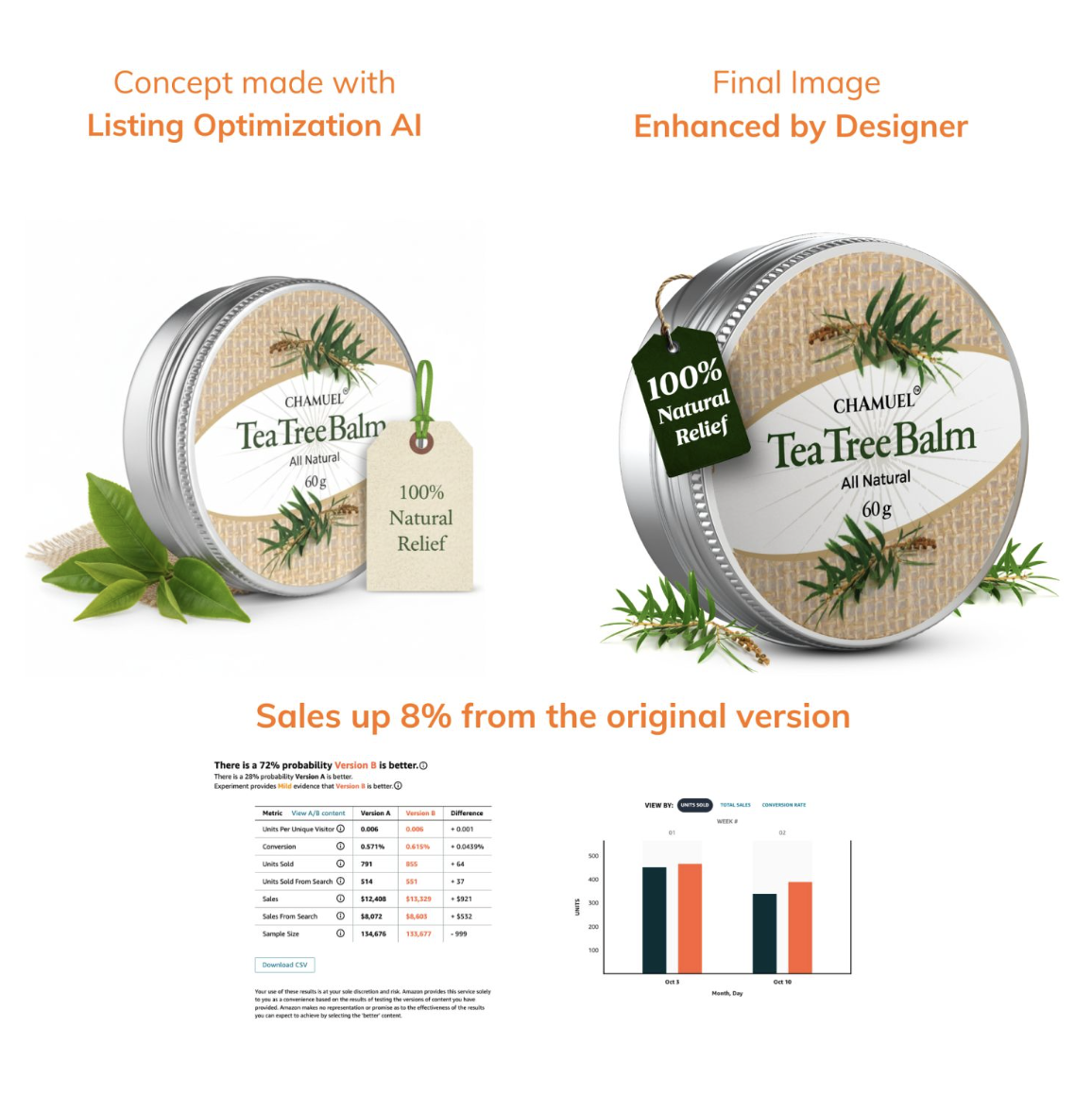
After replacing just one main product image — an AI-researched, designer-enhanced photo — the listing’s sales jumped by 8%.
- No new ad spend.
- No keyword overhaul.
- Just a smarter main image.
This is the power of data-backed creative optimization.
AI’s ability to process thousands of data points from competitor listings, consumer behavior patterns, and click-through metrics gives brands a clear edge in visual strategy — something no traditional photographer or designer can achieve at this speed and scale.
Why Main Images Are the Hardest to Get Right
If you’ve ever built an Amazon listing, you already know the pain:
- Lifestyle images are subjective — they tell a story.
- Infographics are flexible — they inform and explain.
- But the main image? It’s make-or-break.
The main image must follow strict Amazon guidelines (white background, clear visibility, no added text or graphics), yet it also needs to spark curiosity, convey value, and attract clicks in less than two seconds.
That balance — between clarity and intrigue, compliance and creativity — is where most sellers struggle.
This is precisely where AI-powered listing tools shine. They can test dozens of visual arrangements, assess each against CTR benchmarks, and recommend the exact composition formula most likely to succeed.
How AI Research Transforms Main Image Strategy
Let’s break down what AI research actually looks like behind the scenes:
- Competitor Analysis at Scale
AI scans hundreds of listings in your category, identifying what the top-performing images have in common. It looks at background color temperature, product positioning, camera perspective, and even shadow gradients. - CTR Pattern Detection
By correlating visual data with click performance, AI uncovers the elements that statistically drive engagement — such as tighter product framing, balanced lighting, or motion cues (like splashes, airflow, or reflections). - Consumer Behavior Insights
AI doesn’t just analyze pixels — it interprets psychological triggers. For example, it can determine whether consumers respond better to a zoomed-in hero shot or a contextual angle that subtly implies use. - Predictive Visual Modeling
Using advanced machine learning, the AI can predict which new image variation is likely to outperform your current one — before you even upload it.
This is the difference between random creative iteration and data-driven art direction.
The AI-Human Synergy: Best of Both Worlds
A lot of people fear that AI will replace designers. The truth is exactly the opposite.
AI provides the blueprint, but humans provide the soul.
At AMZ One Step, our process looks like this:
- AI handles the intelligence. It identifies trends, layouts, and technical details that maximize click-through rate.
- Designers handle the nuance. They understand texture, lighting realism, emotional tone, and storytelling — things that make an image feel alive.
This AI-human collaboration ensures that every final image combines mathematical precision with artistic depth.
The result? Creative that doesn’t just look good — it sells.
Why AI-Powered Main Images Convert Better
When an image is crafted using AI insights, several powerful effects occur:
- Optimized for Click-Through Rate (CTR)
AI identifies what draws the eye first — the golden triangle of focus between product, contrast, and negative space — ensuring the main image instantly grabs attention. - Emotionally Aligned Design
AI can assess emotional cues (comfort, trust, excitement) from high-performing visuals and integrate similar tones into new concepts, aligning imagery with brand psychology. - Faster A/B Testing
AI-generated mockups can be produced in minutes, allowing sellers to test multiple visual hypotheses before committing to a costly photoshoot. - Consistent Brand Visuals
Using AI style calibration, every image can maintain the same lighting logic, shadow consistency, and design tone across product lines — strengthening brand identity. - Reduced Production Costs
Traditional main-image photoshoots require physical samples, props, and lighting setups. AI concepts minimize this upfront work, cutting time-to-market dramatically.
In short, AI isn’t replacing creativity — it’s systemizing it for performance.
Case in Point: The 8% Sales Lift Story
Let’s revisit the example mentioned earlier.
A brand working with AMZ One Step replaced their main product image — not the entire listing, just the hero photo.
Using Listing Optimization AI, the system analyzed:
- Competitor CTR averages
- Market saturation visuals
- Lighting contrast ratios
- Product angle success probabilities
The AI suggested a new visual direction: a slightly higher camera angle, optimized shadow diffusion, and better surface reflection.
After the new image went live, sales rose by 8% within weeks — purely due to higher CTR and conversion rate.
That’s the measurable power of AI-enhanced creative strategy.
The Science Behind Visual Performance
Most sellers think the main image performance is about “looking nice.” But the reality is far more scientific.
According to data from multiple A/B tests:
- A 10% increase in CTR can raise conversion rates by up to 3%.
- Images that emphasize depth, realism, and proportion outperform flat, overexposed photos by over 20%.
- Balanced negative space (not too tight, not too wide) increases engagement time on the search results page.
AI tools process these variables at scale — thousands of listings, millions of pixels — to decode what actually drives clicks.
That’s how Listing Optimization AI helps you make design decisions based on evidence, not opinion.
Why AI Is the Future of Amazon Listing Optimization
In the hyper-competitive world of Amazon, attention is currency — and every pixel matters. A single glance can determine whether a shopper clicks, converts, or scrolls away.
As the marketplace grows more saturated and advertising costs rise, sellers can no longer rely on creativity alone. What they truly need now is conversion intelligence — a precise blend of data science and design psychology.
That’s where AI-powered main images are reshaping the future of Amazon listing optimization.
1. Predictive Design Analytics
Traditional design relies on guesswork: “What looks good?”
AI replaces that guesswork with predictive analytics — analyzing thousands of listings, click-through trends, and visual cues to forecast what will actually perform.
Using advanced machine learning algorithms, AI identifies subtle but powerful factors such as:
- The best camera angle to maximize product perception
- The color contrast that attracts the most clicks
- The object spacing and proportions that create clarity and balance
In essence, AI transforms creative design into a scientific process — predicting success before the image even goes live.
2. Faster Testing Cycles
A/B testing is essential, but traditional testing is slow and costly.
AI-driven optimization accelerates this process dramatically.
Instead of waiting weeks for data, sellers can:
- Generate multiple AI image concepts in minutes
- Predict which version will perform best
- Deploy faster micro-tests across variations
This rapid iteration helps brands refine visuals in real time, cutting the testing cycle from weeks to days — and sometimes even hours.
3. Lower Creative Costs
High-quality main image photography has traditionally required expensive setups — studios, lighting equipment, props, retouching, and multiple rounds of revisions.
With AI-assisted design, much of that groundwork is automated:
- Product angles and lighting are generated digitally.
- Backgrounds and reflections are simulated for realism.
- Designers focus only on polishing, not starting from scratch.
The result? Reduced production costs and faster turnaround times without compromising visual quality.
AI makes premium-grade visuals accessible to every seller — not just big brands.
4. Smarter Decision-Making
AI doesn’t just create — it learns and adapts.
Every image generated, tested, or refined feeds new data back into the system. Over time, the tool becomes smarter, recognizing what drives higher engagement in specific categories or audiences.
That means each new listing benefits from the collective intelligence of previous successes — a compounding advantage that’s impossible with manual design workflows.
This enables brands to make data-backed creative decisions that consistently outperform guess-based visuals.
Human + AI: The Unbeatable Formula
While AI provides precision and scalability, human designers bring intuition, storytelling, and emotion — the essential elements that connect with real buyers.
When the two collaborate, the outcome is unmatched:
- AI analyzes data and structures the perfect composition.
- Humans refine, enhance, and inject personality into the design.
Together, they create scroll-stopping main images that not only capture attention but convert at scale — giving brands the ultimate advantage in visual dominance.
The Tool Behind the Transformation: Listing Optimization AI
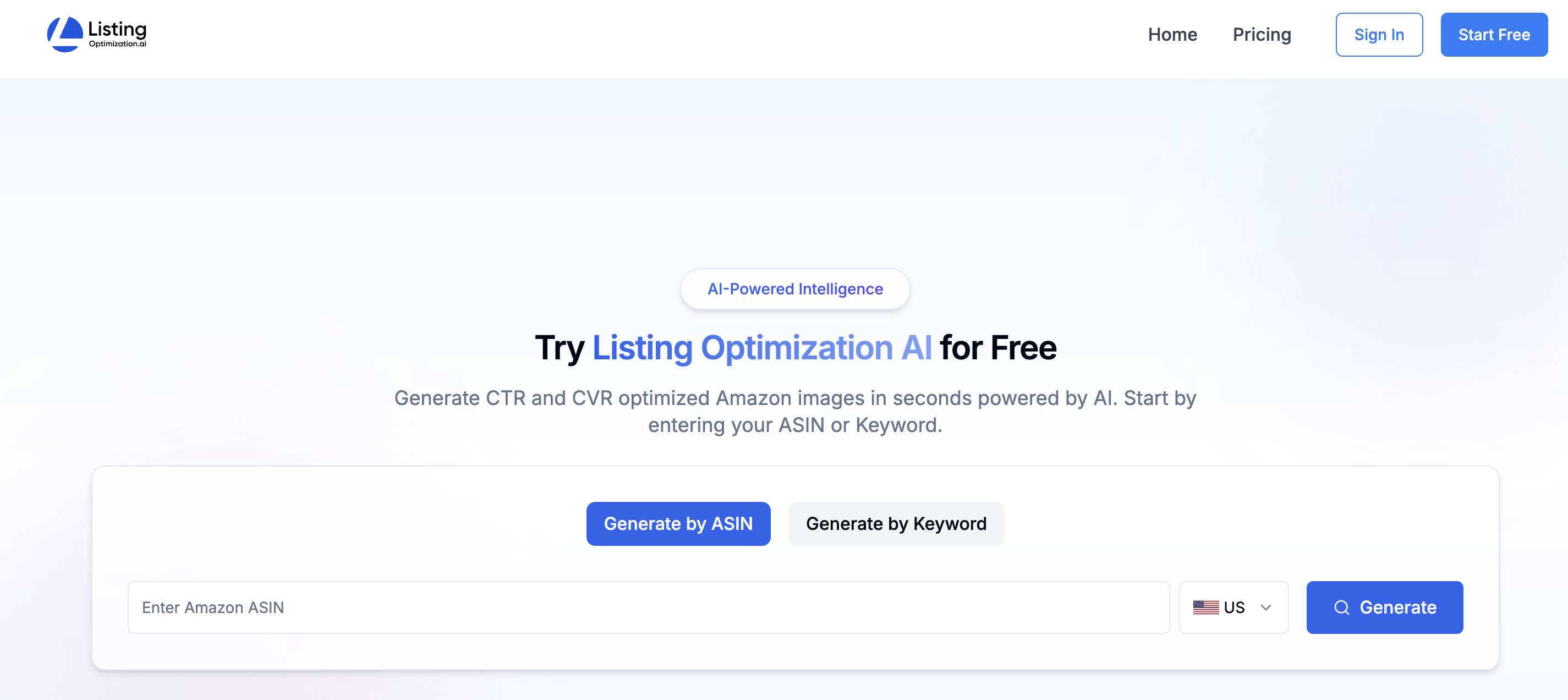
If you want to experience this process firsthand, try Listing Optimization AI — the same proprietary tool used by AMZ One Step to engineer AI-researched, designer-refined main images that outperform traditional visuals.
This system integrates:
- AI competitor research
- CTR trend prediction
- Visual composition generation
- Human creative refinement
The result? Amazon images that stand out, drive clicks, and convert better — all built on a foundation of data-driven creativity.
Final Thoughts
Most people still think AI can’t handle creative work.
But the truth is, it’s handling it better than ever — and in ways that actually enhance human creativity, not replace it.
By letting AI handle the research and visual logic, and humans handle the emotion and refinement, sellers can finally achieve the perfect balance: images that look stunning and perform even better.
As one of our tests proved, sometimes a single AI-optimized image can increase sales by 8% or more — a result that no guesswork or gut-feeling design could consistently deliver.
So if you’re ready to step ahead of your competitors, stop relying on outdated creative workflows. Try Listing Optimization AI and discover what it really means to turn data into design.
This content is originally posted on: https://www.amzonestep.com/
Source URL: https://www.amzonestep.com/blog/ai-amazon-main-image-optimization-for-higher-ctr/

 English
 Arabic
 French
 Spanish
 Portuguese
 Deutsch
 Turkish
 Dutch
Dutch
 Russian
 Romaian
 Portuguese (Brazil)
 Greek
Greek