


Seeing the World Digitally: An Introduction to AI Image Recognition Technology
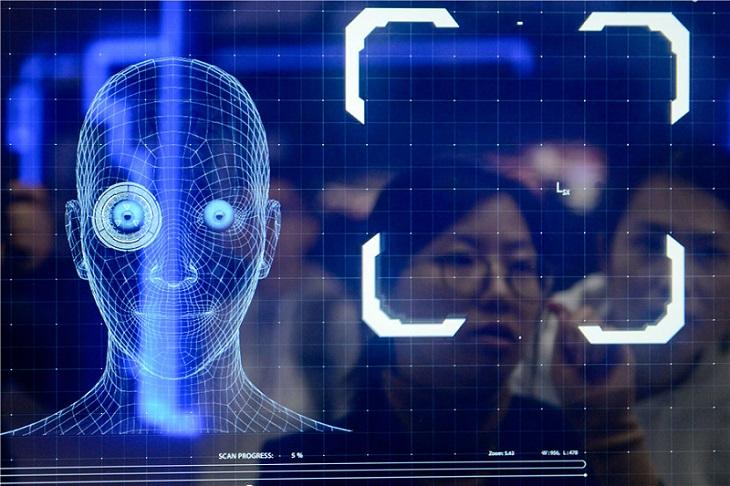
In an increasingly visual world, the ability for machines to see and interpret images has become a cornerstone of modern technology. This remarkable capability, at the heart of the AI Image Recognition field, involves training computer systems to identify and categorize objects, people, places, and actions within digital images and videos. By leveraging complex algorithms and deep learning models, particularly neural networks, we are essentially teaching machines a sense of sight. This process moves beyond simple pixel analysis to a sophisticated level of contextual understanding, allowing technology to perceive the visual world in a manner that mimics human cognition. The implications are profound, paving the way for advancements in automation, security, healthcare, and countless other domains, fundamentally changing how we interact with data and the environment around us. This technology is no longer science fiction; it's an integrated part of our daily digital experience.
The engine driving modern image recognition is a specialized class of deep learning models known as Convolutional Neural Networks (CNNs). These networks are ingeniously designed to automatically and adaptively learn spatial hierarchies of features from images. The process begins with feeding the network a massive dataset of labeled images. The CNN then processes these images through multiple layers, with early layers learning to detect simple features like edges, corners, and colors. As the data progresses through deeper layers, these simple features are combined to recognize more complex structures such as textures, patterns, and eventually entire objects like a car, a face, or a specific animal. The model's accuracy is then refined through a training process that minimizes the difference between its predictions and the actual labels, resulting in a highly sophisticated system capable of recognizing visual content with astonishing precision.
The field of AI image recognition encompasses several distinct but related tasks, each with specific applications. The most common is image classification, which involves assigning a single label to an entire image (e.g., "cat," "beach," "car"). Object detection takes this a step further by not only identifying multiple objects within an image but also locating them with bounding boxes. Facial recognition is a specialized form of object detection focused on identifying and verifying individuals based on their facial features. Another crucial task is Optical Character Recognition (OCR), which extracts printed or handwritten text from images, converting it into machine-readable text. Together, these capabilities allow AI systems to perform a wide range of visual analysis tasks, from organizing a personal photo library to enabling complex industrial automation processes with high levels of accuracy.
The impact of these technologies is already widespread and continues to grow. On social media platforms, AI image recognition automatically suggests tags for people in photos and filters out inappropriate content. In the healthcare sector, it assists radiologists in detecting tumors and other anomalies in medical scans like X-rays and MRIs, leading to earlier and more accurate diagnoses. For autonomous vehicles, it is the primary sense, allowing the car to perceive its surroundings by identifying pedestrians, other vehicles, traffic lanes, and road signs in real-time. As the algorithms become more powerful and the hardware more efficient, the applications of AI image recognition will continue to expand, making it one of the most transformative and foundational artificial intelligence capabilities of our time, seamlessly integrating into the fabric of our society.
Top Trending Reports:

 English
 Arabic
 French
 Spanish
 Portuguese
 Deutsch
 Turkish
 Dutch
Dutch
 Italiano
 Russian
 Romaian
 Portuguese (Brazil)