


AI Detector Ensuring Authenticity in the Age of Artificial Intelligence
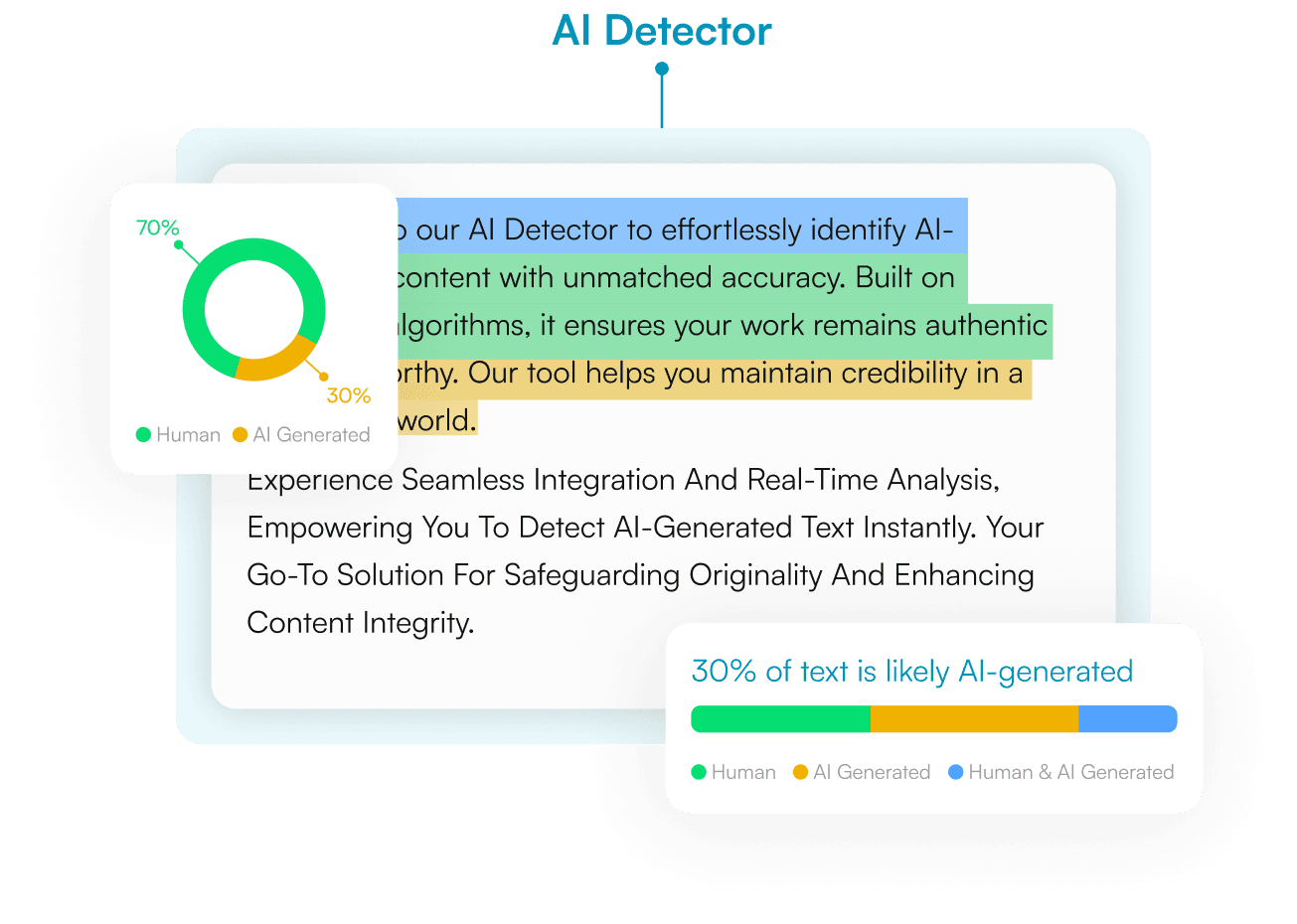
Advanced artificial intelligence is changing the ways people generate, communicate, and consume content online. From automated essays and blogs, to AI-written news, the online world is saturated with machine-made text. In addition to the new level of productivity and creativity this technology offers, there is also the question of whether what people are reading comes from a person or from AI. In this case, an AI detector would tell you the answer. An AI detector is a tool that determines whether content was produced by a person or machine.
This article will discuss the features, components, and relevance of an AI detector, and the importance of this tool in our rapidly evolving digital world.
What Is an AI Detector?
An Top AI detector is a tool or software that determines if content produced was created using artificial intelligence. AI detection software looks for specific text structure patterns, algorithms, and linguistic text features that are unique to machine-generated content. This is vital as AI tools, including ChatGPT and other machine learning systems, have become so advanced and sophisticated that the text produced is indistinguishable from real human writing.
Although there are signs that AI can imitate human writing, there are signs that help identify when it isn't human written. AI detectors identify those signs and provide a probability score to identify content as AI or not.
Why do we need AI detectors?
There are a variety of reasons AI detectors are in-demand, and it is justified.
Integrity in Education
There are AI tools that generate essays, assignments, and reports in a few seconds. Though convenient, these tools result in imbalanced learning. Schools and universities need AI detectors to combat academic dishonesty and to ensure that fences are made around plagiarism generation tools.
Trustworthy Online Information
With the rise of AI-driven content, determining the reliability of information people read online has become increasingly difficult. AI can generate blogs, news articles, and social media posts that are not fact-checked. AI detectors can help identify content that is genuine and trustworthy as opposed to simply being generated by a machine.
Misinformation
AI can generate misleading articles, fake reviews, and propaganda, which can result in vast distribution. Detecting these AI tools is crucial for protecting readers and online transparency.
Business and Marketing Standards
When businesses and organizations are hiring copywriters, marketers, or freelance writers, they expect them to produce work that is original and authentic. AI detector tools are specifically engineered to ensure that the content developed is representative of human inventiveness and aligns with the company's voice, rather than being an AI work that is bland and cliché.
How Does an AI Detector Work?
While AI detection tools may approach the problem from different angles, most use a combination of machine learning and linguistic analysis. Here is a step-by-step explanation of how a typical AI detector works:
Recognizing Linguistic Patterns
AI authored texts exhibit a robotic, predictable, and fixed structure. Detectors use the outlined structures to identify and block AI content.
Perplexity and Burstiness
AI typically smoothens out texts into an AI authored work, human writers tend to vary their sentence lengths. Detectors identify the AI authored work based on these patterns.
Data Training
AI detectors are designed with large databases. The databases contain both AI and human authored texts. The subtle distinctions analysis helps to identify AI work.
Providing Probability Scores
Most detectors will give a percentage grade that indicates how likely it is that a piece of text was authored by AI. Most of them do not give a final score of yes or no.
Benefits of an AI Detector
With the rapid increase of AI-written texts, the need for AI detectors is more critical now than ever. Here are the main benefits:
Keeping Content Real – Authentic human-written pieces are kept and not replaced.
Upkeeping Standards – Quality over quantity is maintained as the more superficial machine-written articles are removed.
Fostering Trust – Respect and trust are established amongst businesses, customers, and readers.
Promoting Learning – Teachers are able to recognize the AI misuse among students.
Upholding Ethical Principles – AI detectors stop companies from mistakenly distributing or purchasing AI-created materials.
Detectors Challenges and Limitations
Strong as AI detectors may be, they are not flawless. Here are a couple issues:
False Positives – An AI detector may wrongly label a human written article as AI authored. This is common when a writer's style is overly formal or has a lot of repetitive structures.
AI Evolving – AI gets smarter. Detectors need to catch up. A detector has the potential for great success today, but may not be able to work efficiently tomorrow.
Context Limitations – A detector is able to understand the style of writing but often misses the context.
AI detectors are paramount for integrity and trustworthiness, even with the points above.
AI Detectors in Other Sectors
AI detection is not limited to the education sector. Here are more examples:
Education: AI detectors are used by schools and universities to authenticate students’ work
Publishing: To keep their credibility, news agencies and online publishers check their articles.
Business: Companies make sure their advertising and other communications show creativity.
Recruitment: HR hires and other staff use detectors to check job resumes and applications for authenticity.
Legal Fields: Lawyers use best AI detector to check documents for authenticity.
The Future of AI Detection Technology
With AI development, the demand for advanced AI detectors will increase. We will likely soon see detectors built into search engines, plagiarism checkers, and content management systems. AI content detectors will be able to legally enforce content to be clearly marked as AI generated.
One will be able to detect and regulate AI content and use it to mislead readers.
Conclusion
The digital age is largely powered by AI. The improvements AI offers us come with the burdens of persistence, falsehood, and untruth. An AI detector is more than a tool. It is a protection that is needed to ward off reliance on AI generated content. AI detectors protect businesses, education, and society.We help maintain trust, uphold originality, and safeguard the worth of authentic human creativity by employing AI detectors. AI may advance, but one thing is certain: authenticity matters. AI detectors help ensure we don’t lose it.
For More Relevant Information: Click here

 English
 Arabic
 French
 Spanish
 Portuguese
 Deutsch
 Turkish
 Dutch
Dutch
 Italiano
 Russian
 Romaian
 Greek
Greek