


The Invisible Infrastructure Gap: Why Modern Homes Are Rejecting Mobile Signals
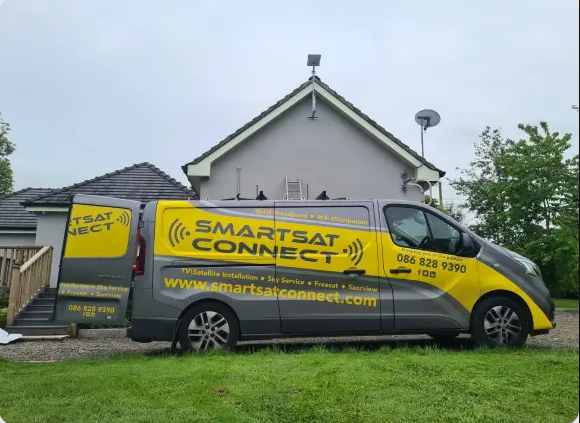
The shift toward remote work and digital-first living has fundamentally altered how we view residential infrastructure, revealing a growing disconnect between our connectivity needs and the physical reality of our homes. While fibre broadband has become a standard utility, mobile coverage remains a volatile variable, often disappearing entirely the moment a resident steps indoors. This phenomenon has created a unique sector of the telecommunications industry focused on bridging the gap between outdoor networks and indoor spaces, a field where companies like Smartsat Connect are becoming increasingly vital. The issue is not merely one of convenience but represents a significant structural challenge as homes become more energy-efficient and, inadvertently, more resistant to the radio frequencies required for mobile communication.
Reporting on the state of modern housing reveals that the very innovations designed to save energy are the primary culprits in killing connectivity. High-performance insulation, foil-backed plasterboard, and triple-glazed windows with metallic coatings are engineering marvels for thermal retention, but they act as formidable shields against cellular signals. Architects and builders have spent decades perfecting the sealed envelope of the modern home, but in doing so, they have created unintended dead zones. This leaves homeowners in a paradoxical situation where they reside in areas with excellent network coverage yet find themselves unable to make a simple phone call from their living room. The narrative here is not about the failure of mobile carriers to provide coverage, but rather the inability of that coverage to penetrate the fortress-like construction of contemporary buildings.
To counter this, the industry has turned to the mobile phone signal booster, a technology that serves as a dedicated link between the external network and the internal environment. Unlike Wi-Fi calling, which relies on internet bandwidth and can struggle with handoffs or outages, a signal booster operates on the cellular frequency itself. The system functions by capturing the existing signal from the roof—where it is unobstructed by building materials—and channeling it via cabling to an amplifier unit inside the house. This amplifier then regenerates the signal and broadcasts it locally, effectively creating a private cell tower within the property. It is a hardware solution to a hardware problem, bypassing the structural interference that no amount of software updates or plan upgrades can resolve.
Interviews with telecommunications experts suggest that this technology is moving from a niche commercial requirement to a standard residential necessity. As households increasingly abandon landlines in favor of mobile-only communication, the reliability of indoor signal becomes a safety and utility issue. Families rely on mobile connections for two-factor authentication, emergency alerts, and coordinating daily logistics. When that connection is severed by the walls of their own home, it creates a vulnerability that many are no longer willing to accept. The installation of a booster system restores the utility of the mobile device, allowing it to function as the primary communication tool it was designed to be, regardless of the thickness of the walls or the layout of the building.
The trend points toward a future where signal distribution is considered as essential as electrical wiring or plumbing. Just as a home is wired for power outlets in every room, the expectation is growing that a home should also be "wired" for wireless connectivity. This involves a shift in mindset from viewing poor signal as an unchangeable fact of life to seeing it as a manageable infrastructure deficit. Homeowners are beginning to understand that they have control over their digital environment and that relying on a fluctuating bar of service near a window is an outdated practice.
By integrating these systems, residents are effectively future-proofing their properties. As 5G networks continue to roll out, utilizing higher frequencies that struggle even more with building penetration, the need for internal amplification will likely increase. The device sitting in the utility cupboard, quietly boosting decibels and ensuring a steady stream of data and voice capability, is becoming the silent engine of the connected home. It represents a practical adaptation to a world where the walls we build to protect us need to be permeable to the information we require.
Conclusion
The conflict between energy-efficient construction and wireless connectivity is a defining feature of modern housing, but it is one with a clear engineering resolution. By acknowledging that the home itself is often the barrier, residents can adopt technology that circumvents these obstacles and restores seamless communication. The signal booster stands as the critical piece of infrastructure that aligns our physical living spaces with our digital expectations.
Call to Action
To understand more about how this technology works and whether it is the right solution for your property, you can find detailed information at https://www.smartsatconnect.ie/ to guide your decision.

 English
 Arabic
 French
 Spanish
 Portuguese
 Deutsch
 Turkish
 Dutch
Dutch
 Italiano
 Russian
 Romaian
 Greek
Greek