


What Does Extensible Mean? Understanding Extensibility in Software Systems
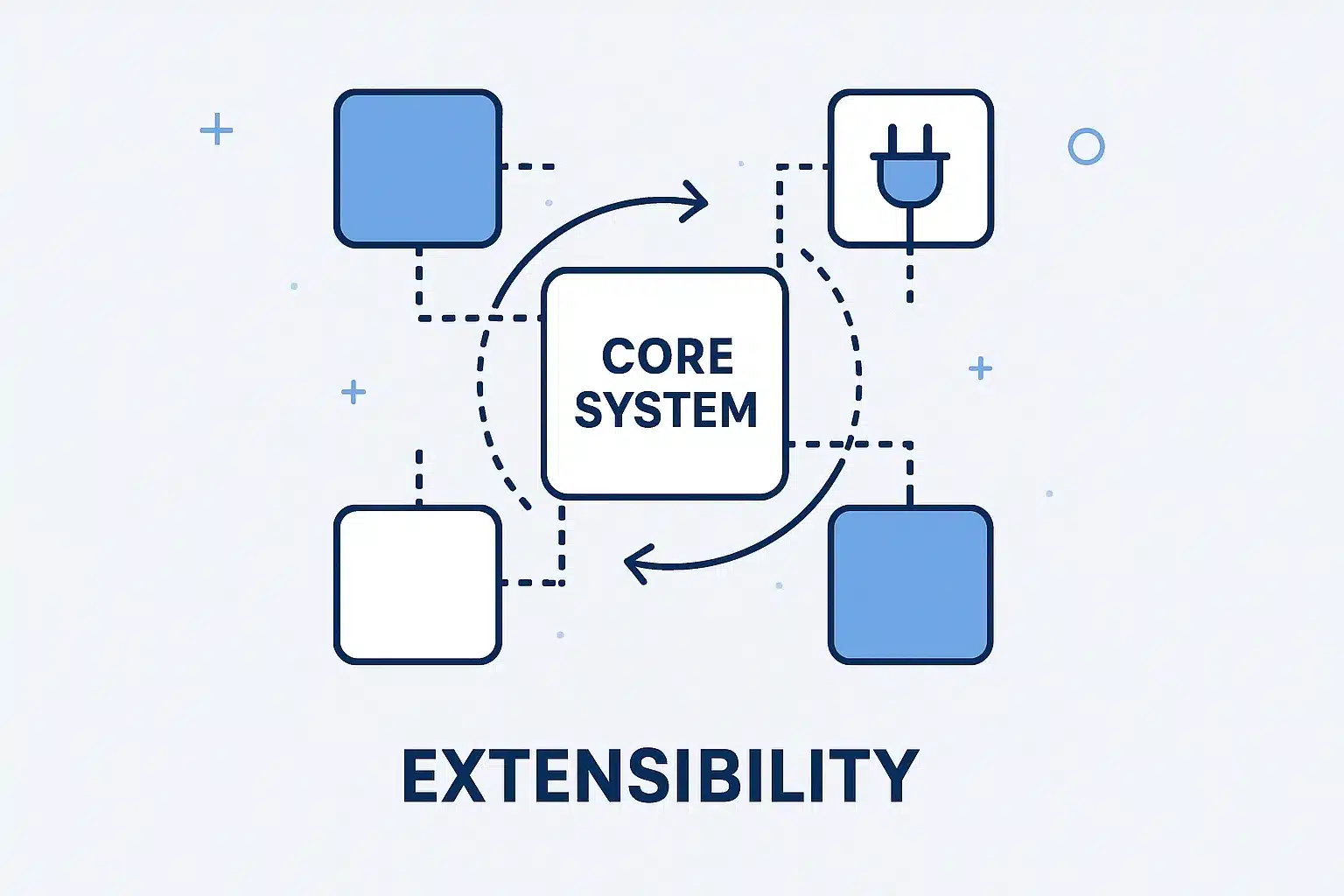
In modern software development, systems are expected to evolve continuously. New features, integrations, and requirements emerge over time, making flexibility a critical design goal. This is where understanding what does extensible mean becomes important.
An extensible system is designed in a way that allows new functionality to be added easily without modifying existing code or disrupting current behavior. Extensibility helps teams build future-ready software that can grow alongside business needs.
What Does Extensible Mean?
Extensible refers to the ability of a system, application, or software architecture to support extensions or enhancements with minimal changes to its core structure. Instead of rewriting or heavily refactoring code, developers can add new features through plugins, modules, APIs, or configuration.
In simple terms, extensibility means building software that is easy to extend without breaking what already works.
Why Is Extensibility Important in Software Development?
As applications scale, requirements change frequently. Without extensibility, even small changes can become costly and risky. An extensible design offers several benefits:
-
Faster feature additions without rewriting existing code
-
Reduced maintenance effort over time
-
Improved scalability as systems grow
-
Better adaptability to new technologies and integrations
-
Lower risk of regressions when adding functionality
This makes extensibility especially valuable in long-lived software systems.
Examples of Extensible Systems
Extensibility appears in many areas of software development:
Plugin-Based Applications
Tools that allow third-party plugins enable users to extend functionality without modifying the core product.
API-Driven Systems
Well-designed APIs allow external services or internal components to extend application capabilities.
Modular Architectures
Breaking systems into independent modules makes it easier to extend specific parts without affecting others.
Configuration-Based Extensions
Some systems support extensibility through configuration rather than code changes.
Extensible vs Flexible: What’s the Difference?
Although often used interchangeably, extensible and flexible are not the same:
-
Flexible systems can handle variations in behavior
-
Extensible systems allow new behavior to be added
A system can be flexible without being extensible, but truly extensible systems are designed with future growth in mind.
How to Design Extensible Software
To build extensible systems, teams should follow key design principles:
-
Use modular and loosely coupled components
-
Define clear interfaces and contracts
-
Avoid hard-coded logic
-
Follow open-closed principle (open for extension, closed for modification)
-
Invest in strong documentation and testing
These practices help ensure extensions can be added safely and predictably.
Extensibility in Modern Development Practices
Extensibility plays a major role in:
-
Microservices architectures
-
API-first development
-
Plugin ecosystems
-
Cloud-native and SaaS platforms
Understanding what does extensible mean helps teams make better architectural decisions that support long-term growth.
Conclusion
Understanding what does extensible mean is essential for building scalable and maintainable software. Extensible systems allow teams to adapt quickly, reduce technical debt, and respond to changing requirements without major rework. By designing with extensibility in mind, organizations can future-proof their applications and development efforts.

 English
 Arabic
 French
 Spanish
 Portuguese
 Deutsch
 Turkish
 Dutch
Dutch
 Russian
 Romaian
 Portuguese (Brazil)
 Greek
Greek