


Sales CRM Software Pricing: Costs, Plans, and ROI Explained
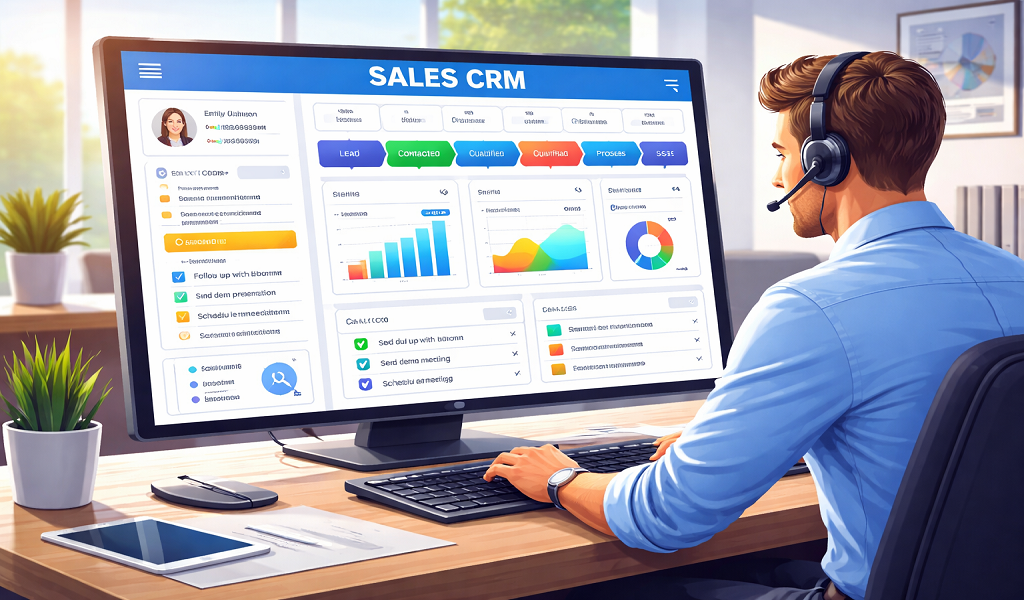
Choosing the right sales CRM software is no longer optional for growing businesses—but understanding CRM pricing can be confusing. With dozens of tools offering different plans, features, and billing models, decision-makers often struggle to determine what they should actually pay and what return they can expect.
This guide breaks down sales CRM software pricing, explains common cost structures, and shows how to evaluate ROI based on real business outcomes.
What Is Sales CRM Software?
Sales CRM (Customer Relationship Management) software helps businesses manage leads, track customer interactions, automate follow-ups, and analyze sales performance. Modern CRMs centralize customer data, streamline sales pipelines, and improve team productivity.
According to industry research and hands-on experience with sales platforms, companies that actively use a CRM typically see shorter sales cycles, higher conversion rates, and improved customer retention.
Common Sales CRM Pricing Models
Most CRM providers follow one or more of these pricing structures:
1. Per-User, Per-Month Pricing
This is the most common model. Businesses pay a monthly or annual fee for each user.
-
Typical cost: $15–$100+ per user/month
-
Best for: Small to mid-sized teams with predictable user counts
2. Tiered Plans
CRMs often offer multiple plans—Basic, Professional, and Enterprise—each with increasing features.
-
Entry plans focus on contact management and pipelines
-
Mid-tier plans add automation, reporting, and integrations
-
Enterprise plans include advanced analytics, security, and customization
3. Usage-Based Pricing
Some platforms charge based on the number of contacts, deals, or data volume stored.
-
Best for: Businesses with fluctuating lead volumes
-
Risk: Costs can rise unexpectedly as data grows
4. One-Time or Custom Pricing
Enterprise CRMs may offer custom pricing based on company size, integrations, and support requirements.
Average Cost of Sales CRM Software
While prices vary widely, most businesses can expect:
-
Small businesses: $15–$30 per user/month
-
Growing sales teams: $30–$70 per user/month
-
Enterprise solutions: $70–$150+ per user/month
Additional costs may include onboarding, premium integrations, advanced support, or API access. Based on professional CRM implementations, underestimating these add-ons is a common budgeting mistake.
What Features Impact CRM Pricing?
Several factors influence how much a sales CRM costs:
-
Automation and AI features (lead scoring, forecasting)
-
Reporting and analytics depth
-
Third-party integrations (email, marketing, accounting tools)
-
Customization and workflow flexibility
-
Security and compliance requirements
Businesses should avoid paying for features they don’t use. From practical experience, many teams overpay for enterprise-level tools when mid-tier plans meet their needs.
Measuring CRM ROI: Is It Worth the Cost?
A CRM’s true value lies in its return on investment (ROI), not its sticker price.
Key ROI indicators include:
-
Increased lead conversion rates
-
Shorter sales cycles
-
Higher average deal size
-
Improved sales team productivity
-
Reduced manual data entry
For example, if a CRM costs $50 per user per month for a 10-person team ($6,000 annually) but helps close just one additional deal worth $10,000, it has already delivered positive ROI.
Businesses that actively train teams and fully adopt CRM workflows consistently see stronger results than those that treat CRM as just a contact database.
How to Choose the Right CRM Pricing Plan
To make a confident decision:
-
Define your sales process and must-have features
-
Estimate realistic user growth over 12–24 months
-
Calculate total cost, including add-ons
-
Request demos or free trials
-
Compare ROI potential, not just monthly price
Final Thoughts
Sales CRM software pricing varies, but the right investment can significantly improve revenue, efficiency, and customer relationships. By understanding pricing models, hidden costs, and ROI drivers, businesses can choose a CRM plan that aligns with both their budget and growth goals.
A well-chosen CRM isn’t an expense—it’s a revenue multiplier.

 English
 Arabic
 French
 Spanish
 Portuguese
 Deutsch
 Turkish
 Dutch
Dutch
 Italiano
 Russian
 Romaian
 Greek
Greek