


Self Pierce Riveting: Revolutionizing Sheet Metal Joining for Modern Manufacturing
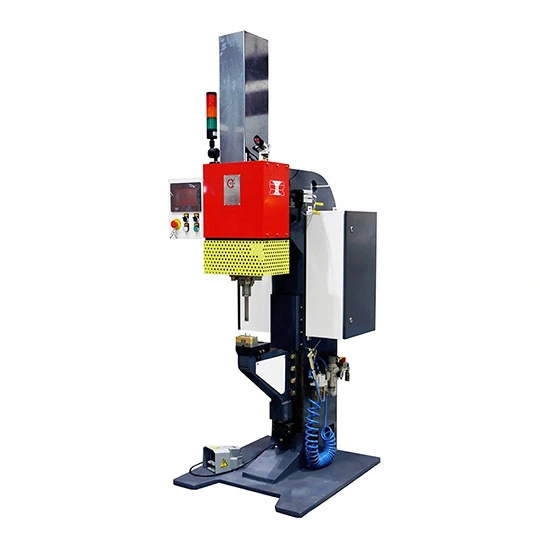
In today’s fast-paced manufacturing environment, efficiency, precision, and cost-effectiveness are critical for OEMs, automation integrators, and production engineers. Traditional welding methods sometimes fall short in meeting these demands especially when working with lightweight, multi-material assemblies. Self pierce riveting (SPR) has emerged as a reliable alternative, enabling high-speed, strong, and repeatable metal joining without the need for pre-drilled holes or additional fasteners.
Heron Welder, a global leader in industrial welding and metal-joining equipment, provides advanced self pierce riveting systems and automated solutions tailored to modern production lines. This article explores the principles, applications, benefits, and best practices of SPR to help manufacturers make informed decisions.
What is Self Pierce Riveting?
Self pierce riveting (SPR) is a mechanical joining process that connects two or more sheets of metal using a semi-tubular rivet. Unlike traditional riveting, SPR does not require pre-drilling. The rivet is pressed into the top sheet, piercing it and flaring into the lower sheet, forming a strong mechanical interlock.
Key characteristics of SPR include:
-
No pre-drilled holes required
-
Works with a variety of metals including aluminum, steel, and coated sheets
-
Consistent, high-quality joints suitable for automated production
-
Minimal surface deformation, preserving material integrity
Heron’s SPR machines are engineered to deliver precision, repeatability, and integration with robotic and automated lines, making them ideal for high-volume manufacturing.
Principles of Self Pierce Riveting
The SPR process relies on controlled mechanical force rather than heat. The main stages are:
-
Rivet Placement: A semi-tubular rivet is positioned above the sheet stack.
-
Piercing & Forming: A hydraulic or servo-driven punch pushes the rivet through the top sheet, flaring its tail within the lower sheet to create a secure joint.
-
Interlock Completion: The rivet forms a strong mechanical bond without compromising the surface finish or coating of the sheets.
SPR systems are often equipped with advanced force monitoring, quality control sensors, and programmable controls, ensuring consistent joint quality across thousands of cycles. Heron’s machines integrate seamlessly with robotic arms and automated production lines for optimized throughput.
Applications of Self Pierce Riveting
SPR is widely used in industries where lightweight materials, multi-layer assemblies, and production efficiency are essential:
Automotive Manufacturing
-
Joining aluminum and steel in body-in-white assemblies
-
Reinforcing structural panels, hoods, and doors
-
Integrating with automated robotic lines for high-volume production
Aerospace
-
Attaching lightweight panels without compromising material properties
-
Combining composite layers with metal sheets
Electronics and Appliances
-
Assembly of enclosures, chassis, and brackets
-
Joining coated or pre-painted sheets without surface damage
Industrial Equipment
-
Fabrication of machinery panels, cabinets, and structural assemblies
-
Reducing thermal distortion compared to welding methods
Heron’s SPR systems are designed for flexibility across diverse industries, supporting both stand-alone machines and fully automated multi-rivet production lines.
Self Pierce Riveting vs. Traditional Welding
Manufacturers often compare SPR with spot welding or MIG/TIG welding. Key distinctions include:
| Feature | Self Pierce Riveting | Resistance Spot Welding |
|---|---|---|
| Heat Impact | Minimal | High, may distort sheets |
| Material Compatibility | Multi-material (steel, aluminum, coated sheets) | Mostly steel, limited aluminum |
| Surface Finish | Preserved | May require post-processing |
| Pre-drilling | Not required | Sometimes required |
| Automation Integration | High, robotic-friendly | Medium, specialized welding robots needed |
By using SPR, manufacturers achieve consistent joint quality with reduced rework and improved material flexibility, making it a preferred choice for modern assembly lines.
Best Practices for Self Pierce Riveting
To maximize SPR performance, manufacturers should follow these guidelines:
-
Select the Right Rivet: Consider material, thickness, and joint strength requirements. Heron offers a range of rivets for different metals and applications.
-
Control Rivet Force and Speed: Proper force ensures a strong mechanical interlock without damaging sheets.
-
Optimize Sheet Stacking: Maintain sheet alignment to avoid misalignment and ensure consistent joint quality.
-
Integrate Quality Monitoring: Use Heron’s systems with force and position monitoring to detect anomalies in real-time.
-
Regular Maintenance: Check tooling, punch, and die condition regularly to maintain precision.
Following these practices ensures durable joints, reduced downtime, and smooth integration into automated lines.
Why Choose Heron for Self Pierce Riveting?
Heron Welder is a trusted global provider of SPR machines and automation solutions. Manufacturers rely on Heron for:
-
High-quality SPR equipment built for durability and precision
-
Custom automation integration with robotic and conveyor systems
-
Expert support and consulting to design production lines tailored to specific requirements
-
Wide application versatility across automotive, aerospace, appliances, and industrial sectors
Heron’s technical expertise ensures that manufacturers achieve optimal performance, cost-efficiency, and process reliability.
FAQs About Self Pierce Riveting
1. Can SPR join dissimilar metals?
Yes. SPR is ideal for joining aluminum to steel or coated metals without heat distortion.
2. Do SPR joints require additional fasteners?
No. The mechanical interlock of the rivet provides a strong joint without supplementary hardware.
3. Is SPR suitable for automated production lines?
Absolutely. Heron’s SPR machines are designed for robotic integration and high-volume automation.
4. How does SPR affect surface coatings?
SPR preserves surface coatings, minimizing the need for post-processing.
5. What maintenance is required for SPR machines?
Regular inspection of dies, punches, and rivet feeders ensures consistent joint quality and longevity of the system.
Conclusion: Optimize Your Production with SPR
Self pierce riveting offers manufacturers a flexible, efficient, and high-quality sheet metal joining solution. Whether for automotive, aerospace, electronics, or industrial applications, SPR reduces heat distortion, handles multi-material assemblies, and integrates seamlessly into automated production lines.
Heron Welder provides industry-leading SPR machines, rivets, and automation solutions, backed by global expertise and technical support.
Ready to enhance your production line? Contact Heron today to request a quote or consult with our experts for customized welding and automation solutions designed to meet your manufacturing goals.

 English
 Arabic
 French
 Spanish
 Portuguese
 Deutsch
 Turkish
 Dutch
Dutch
 Italiano
 Romaian
 Portuguese (Brazil)
 Greek
Greek