


Rapid Recovery After Disasters: How Helical Piles Accelerate Emergency Construction
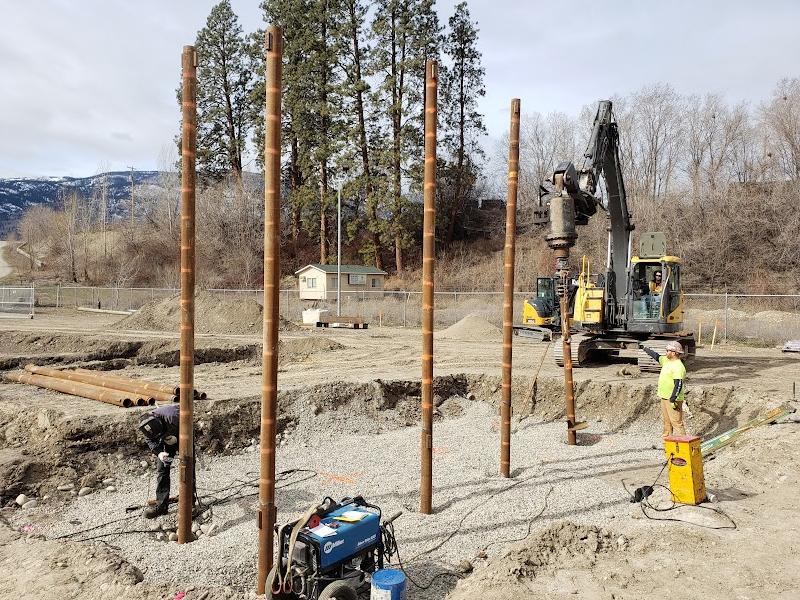
Disasters create urgent construction challenges that demand speed, precision, and reliability. Floods, wildfires, landslides, and severe storms often damage infrastructure at a scale where traditional foundation solutions simply cannot respond fast enough. In these time-sensitive situations, construction teams rely on systems that minimize delays while ensuring long-term structural stability. This is where helical pile systems become critical in emergency response construction.
Urgent Construction Demands After Disasters
Post-disaster environments rarely offer ideal site conditions. Saturated soil, unstable ground, restricted access, and damaged utilities make excavation-heavy solutions impractical. Emergency shelters, bridge repairs, utility supports, and temporary-to-permanent structures must be installed quickly, often while surrounding recovery efforts are still underway. Helical pile installation allows construction to proceed without waiting for soil to dry, debris to be cleared entirely, or concrete to cure.
Speed That Supports Emergency Timelines
One of the most valuable advantages during disaster recovery is installation speed. Helical piles can be installed immediately upon arrival at the site, allowing crews to move directly into structural work. This reduces downtime significantly and enables faster reopening of roads, restoration of services, and construction of emergency facilities. Many helical pile companies specialize in rapid mobilization, which is essential during recovery windows where every hour matters.
Performance in Damaged and Unstable Ground
Access limitations are another major obstacle after disasters. Heavy equipment may not reach certain locations due to washed-out roads, debris fields, or environmental restrictions. Helical pile equipment is compact and adaptable, making it suitable for tight, damaged, or partially accessible sites. This flexibility supports construction in remote areas, urban disaster zones, and environmentally sensitive locations without extensive site disturbance.
Access Solutions for Challenging Sites
Reliability under unpredictable soil conditions is also critical. Disaster events often alter soil composition through erosion, saturation, or compaction changes. Helical pile systems are installed to torque-based capacity, providing immediate feedback on load-bearing performance during installation. This real-time verification helps ensure structural integrity without lengthy soil testing delays, which are often impractical in emergency situations.
Flexibility as Recovery Plans Evolve
Emergency construction also requires adaptability. Recovery projects frequently evolve as damage assessments change or additional needs arise. Helical piles can be extended, adjusted, or integrated into modified designs without removing previously installed foundations. This flexibility allows project teams to adapt quickly without restarting work, saving both time and resources during recovery efforts.
Supporting Sustainable and Responsible Recovery
Environmental impact is another key consideration during disaster response. Many affected areas require minimal ground disturbance to avoid further damage or contamination. Helical piles generate little to no spoil, reduce excavation requirements, and can be installed without introducing curing chemicals into compromised environments. These benefits align well with recovery efforts that must balance urgency with environmental responsibility.
A Reliable Foundation for Faster Recovery
Long-term resilience is just as important as immediate recovery. Temporary structures often become permanent, especially in communities rebuilding critical infrastructure. Helical pile foundations offer durable performance that supports both short-term stabilization and long-term redevelopment. This dual-purpose capability makes them a strategic choice for emergency construction planning.
Experienced helical pile companies play a vital role in these scenarios by offering rapid deployment, technical expertise, and installation efficiency under challenging conditions. Their ability to work within compressed timelines and unpredictable site conditions makes them indispensable during post-disaster reconstruction efforts.
Emergency response construction demands solutions that are fast, dependable, and adaptable. Helical pile systems consistently meet these demands, helping communities recover faster and rebuild stronger after disaster strikes.
For More Information About Drilling Company Kelowna and Residential Piling Services please Visit: ATLAS PILING.

 Arabic
 French
 Spanish
 Portuguese
 Deutsch
 Turkish
 Dutch
Dutch
 Italiano
 Russian
 Romaian
 Portuguese (Brazil)
 Greek
Greek