


Cross Roller Bearing Solutions That Eliminate Vibration and Precision Loss
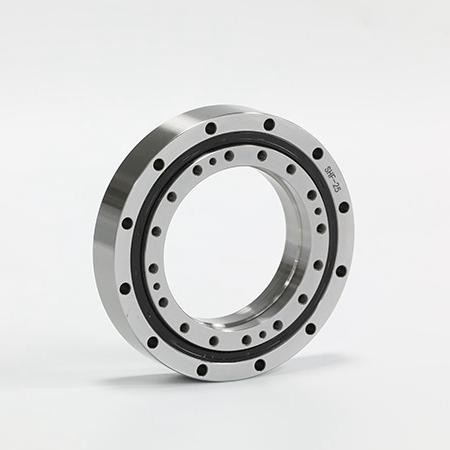
Precision machinery is designed to deliver stable, repeatable motion. Yet many manufacturers face recurring issues such as vibration, positioning errors, and premature wear—especially in applications where space is limited and loads act from multiple directions. In most cases, the root cause is insufficient bearing rigidity. When conventional bearings fail to provide stability, a cross roller bearing becomes the critical solution for restoring accuracy and reliability.
Why Conventional Bearings Fail in High-Precision Applications
Standard ball or roller bearings are often unable to handle complex load combinations efficiently. In equipment such as rotary tables, robotic joints, and machine tool indexing systems, loads are applied radially, axially, and moment loads occur simultaneously. Traditional bearings distribute these forces unevenly, leading to deformation and inconsistent motion.
A cross roller bearing is designed with cylindrical rollers arranged orthogonally between inner and outer rings. This unique structure allows the bearing to support radial loads, axial loads, and moment loads at the same time, making it ideal for applications that demand high stiffness and compact design.
Rigidity Problems Lead to Vibration and Positioning Errors
Lack of rigidity is one of the most common causes of vibration in precision equipment. Even minimal deflection in the bearing can result in misalignment, chatter, and reduced control accuracy. Over time, this not only affects product quality but also accelerates wear on surrounding components.
Using a high-quality cross roller bearing significantly improves system rigidity. The line contact between rollers and raceways increases load capacity while minimizing elastic deformation. This results in smoother rotation, better positional accuracy, and improved repeatability—key factors in automation, robotics, and measuring equipment.
Space Constraints Demand Compact Bearing Solutions
Modern equipment design often prioritizes compactness without compromising performance. However, stacking multiple bearing types to handle different load directions increases system size and complexity. This approach also raises installation and maintenance costs.
A single cross roller bearing can replace multiple conventional bearings by handling multi-directional loads within a compact footprint. This simplifies mechanical design, reduces overall weight, and improves structural efficiency. Engineers benefit from easier assembly and greater design flexibility without sacrificing performance.
Load Distribution Improves Service Life
Uneven load distribution is a major contributor to early bearing failure. When loads concentrate on specific contact points, surface fatigue and raceway damage occur much faster. This leads to frequent replacements and unplanned downtime.
Cross roller bearings distribute loads evenly across multiple rollers, reducing localized stress. This balanced load-sharing improves wear resistance and extends bearing service life, even under demanding operating conditions. As a result, maintenance intervals are longer and operating costs are lower.
Stability at Low and High Speeds
Precision applications often operate at varying speeds, from slow indexing movements to continuous rotation. Bearings that perform well at one speed may fail at another due to friction or instability.
A properly manufactured cross roller bearing maintains smooth rotation across a wide speed range. Optimized internal geometry and high-quality materials help minimize friction and heat generation, ensuring stable performance in both low-speed positioning systems and higher-speed rotary applications.
Reliable Bearings Protect Long-Term Equipment Investment
Precision equipment represents a significant investment. When bearing performance is inconsistent, the entire system is at risk. Selecting the right bearing type is essential to protecting accuracy, reliability, and productivity over the long term.
By choosing a proven cross roller bearing solution, manufacturers can reduce vibration, improve stiffness, and maintain precise motion control. The result is improved equipment reliability, fewer breakdowns, and consistent performance in critical applications.

 English
 Arabic
 Spanish
 Portuguese
 Deutsch
 Turkish
 Dutch
Dutch
 Italiano
 Russian
 Romaian
 Portuguese (Brazil)
 Greek
Greek