


Cross Roller Bearing Solutions for Load Instability and Precision Failures
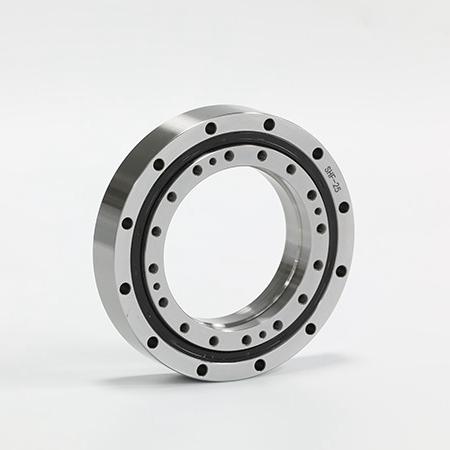
High-precision equipment is designed to deliver accuracy, rigidity, and smooth motion—but many systems fail to meet these expectations due to one overlooked component: the bearing. When machinery experiences positioning errors, uneven load distribution, or premature wear, the root cause is often an unsuitable bearing design. Choosing a high-performance cross roller bearing is critical for maintaining precision and long-term operational stability.
Why Conventional Bearings Fall Short in Precision Applications
Standard ball or cylindrical roller bearings are often unable to handle complex load conditions. In applications such as robotics, machine tools, rotary tables, and medical equipment, bearings must support radial loads, axial loads, and tilting moments simultaneously.
Traditional bearing designs typically require multiple bearings to manage these forces, increasing assembly complexity and alignment challenges. This can lead to deflection, vibration, and reduced positioning accuracy—issues that directly impact equipment performance and reliability.
Cross Roller Bearing Design for Superior Load Handling
Cross roller bearings are engineered with cylindrical rollers arranged alternately at right angles. This unique configuration allows a single bearing to support radial, axial, and moment loads at the same time. The result is exceptional rigidity and load capacity within a compact footprint.
Because loads are evenly distributed across the rollers, deformation is minimized even under heavy or fluctuating loads. This makes cross roller bearings ideal for applications where structural stiffness and precision motion are essential.
Improved Accuracy and Smooth Rotation
One of the most common pain points in precision machinery is inconsistent motion. Any deviation, vibration, or backlash can compromise product quality and system accuracy.
A properly manufactured cross roller bearing offers high rotational accuracy and stable motion. Precision-ground raceways, controlled internal clearance, and optimized roller geometry ensure smooth rotation with minimal friction. This consistency is especially important in indexing tables, robotic joints, and semiconductor manufacturing equipment where micron-level precision matters.
Compact Design That Simplifies Assembly
Space constraints are a constant challenge in modern equipment design. Using multiple bearings to handle different load directions increases system size and complexity.
Cross roller bearings combine multi-directional load support into a single, compact unit. This simplifies mechanical design, reduces the number of components, and improves overall system rigidity. Fewer parts also mean fewer potential failure points, contributing to higher long-term reliability.
Reduced Wear and Extended Service Life
Uneven load distribution and misalignment are major causes of bearing wear. Over time, this leads to surface fatigue, noise, and eventual failure—often earlier than expected.
High-quality cross roller bearing solutions are designed with optimized contact surfaces and advanced heat treatment processes. These features improve wear resistance and reduce stress concentrations, allowing bearings to maintain performance over extended operating cycles. As a result, maintenance intervals are longer, and equipment downtime is significantly reduced.
Ideal for High-Rigidity and High-Precision Industries
Industries such as robotics, automation, aerospace, medical imaging, and precision machining demand bearings that deliver both strength and accuracy. Cross roller bearings meet these demands by providing exceptional rigidity without sacrificing smooth motion.
Their ability to maintain alignment under complex loading conditions makes them a preferred choice for applications where accuracy, repeatability, and durability are non-negotiable.
A Smarter Investment for Long-Term Performance
While bearing selection is often treated as a minor detail, it has a major impact on equipment performance and operating costs. Inferior bearings lead to frequent adjustments, higher maintenance expenses, and reduced system reliability.
By investing in a well-engineered cross roller bearing, manufacturers can eliminate common pain points such as positioning errors, load instability, and premature failure—ensuring consistent performance and improved return on investment.

 English
 Arabic
 French
 Spanish
 Portuguese
 Deutsch
 Turkish
 Italiano
 Russian
 Romaian
 Portuguese (Brazil)
 Greek
Greek