


Cross Roller Bearing Solutions for Precision Loss and Structural Instability
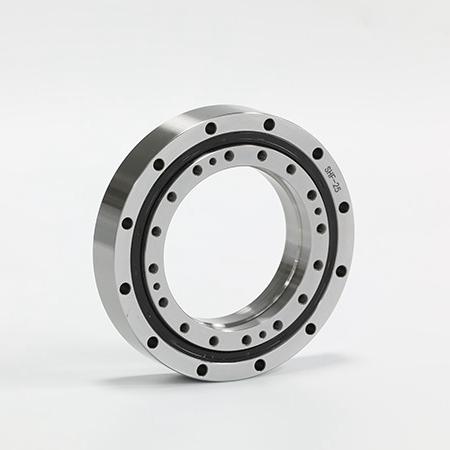
Precision machinery often suffers from accuracy loss, vibration, and structural instability when the bearing system cannot handle complex loads. These issues are especially common in robotics, machine tools, and rotary tables where space is limited but performance demands are high. In many cases, the root cause is choosing a bearing that cannot support multi-directional loads effectively. This is where a cross roller bearing becomes essential for maintaining precision and long-term stability.
Why Conventional Bearings Fail Under Complex Loads
Traditional bearings are usually designed to handle either radial or axial loads efficiently—but not both at the same time. When machines experience combined loads and overturning moments, standard bearings can deform, causing uneven wear and loss of accuracy.
A cross roller bearing uses cylindrical rollers arranged orthogonally, allowing it to support radial, axial, and moment loads simultaneously. This unique structure provides exceptional rigidity and load distribution, making it ideal for high-precision applications.
Precision Challenges in Compact Machine Designs
Modern industrial equipment is becoming smaller, lighter, and more precise. However, compact designs leave little room for error in bearing selection. Bearings with poor rigidity can introduce deflection, reducing positioning accuracy and repeatability.
High-quality cross roller bearing solutions are specifically engineered for compact installations. Their slim profile and integrated load-handling capability help designers achieve high stiffness without increasing system size.
How Bearing Rigidity Affects Accuracy and Service Life
Low rigidity bearings allow micro-movements under load, which can degrade machining accuracy and accelerate wear on surrounding components. Over time, this leads to backlash, noise, and frequent recalibration of equipment.
A precision cross roller bearing provides high rotational accuracy and excellent rigidity by evenly distributing loads across the rollers. This design minimizes elastic deformation, ensuring stable motion and extended service life even under continuous operation.
Reducing Maintenance and Downtime in High-Precision Equipment
Frequent maintenance is a major concern for manufacturers relying on precision equipment. Bearing failures often result in unexpected downtime, production delays, and costly repairs. Bearings that wear unevenly or lose preload quickly increase these risks.
Using a properly engineered cross roller bearing reduces maintenance requirements by maintaining consistent preload and alignment. This reliability helps minimize downtime and keeps production schedules on track.
Performance Advantages in Robotics and Automation Systems
Robotics and automation systems require smooth motion, high repeatability, and resistance to complex loads. Any compromise in bearing performance can affect accuracy, speed, and safety.
Cross roller bearings are widely used in robot joints, indexing tables, and precision stages because they provide high torque capacity and stable rotation. Their ability to handle moment loads makes them particularly suitable for dynamic and multi-axis motion systems.
Choosing the Right Bearing to Protect Long-Term Investment
Selecting the correct bearing is crucial for protecting expensive machinery and ensuring consistent performance. A poor bearing choice can lead to recurring issues that increase operational costs and reduce equipment lifespan.
Cross roller bearings offer a reliable solution for applications where precision, rigidity, and load capacity are critical. By choosing the right bearing design, manufacturers can enhance performance, improve accuracy, and achieve long-term operational stability.

 English
 Arabic
 French
 Spanish
 Portuguese
 Deutsch
 Turkish
 Dutch
Dutch
 Italiano
 Russian
 Portuguese (Brazil)
 Greek
Greek