


Everest Three High Pass Trek Gear: Crampons vs. Microspikes
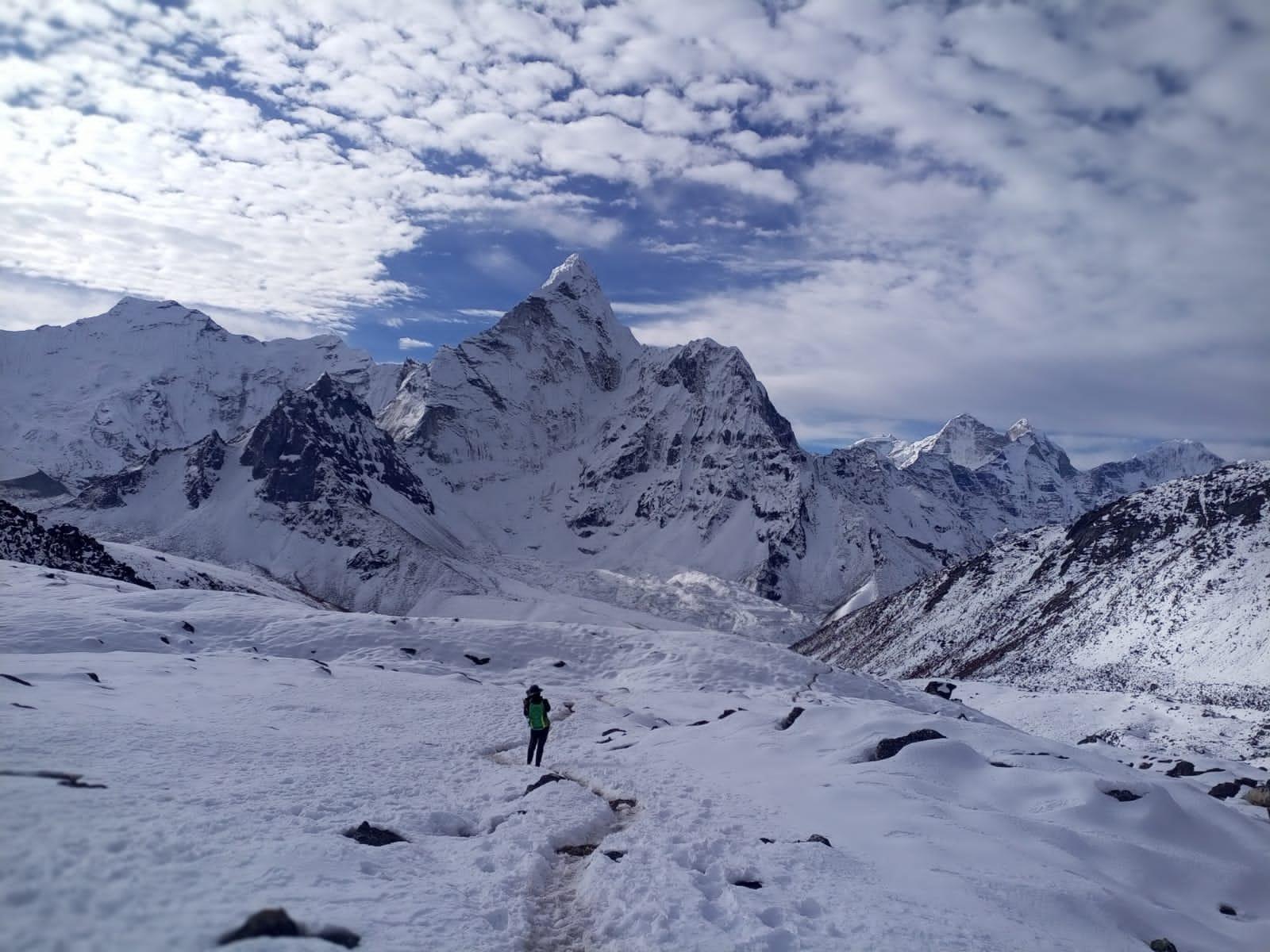
Hiking the Everest Three High Pass route is a dream of many trekkers, and one has to choose wisely what gear to pack for safety and maneuverability. One such important accessory for this trek is crampons, which assist in walking on icy/snowy surfaces. On the trail, trekkers frequently ask whether they should use crampons or microspikes. One must have a great understanding of these types and their pros and cons before heading out.
information on the Terrain
The Everest Three High Pass Trek is truly magnificent. It is the option of conquering Kongma la (5,535 meters), Cho la pass (5,420 m), and Renjo La pass (5360m. The passes have snowfields, glaciers, and icy slopes in the course of the pre-monsoon (spring) to monsoon (autumn) seasons.
Even though a good deal of the trek is on mounted trails, the passes may be icy, especially when you ascend them in the morning or after a heavy snow. In those conditions, you don’t have a choice in the matter: decent traction devices are not just a luxury but mandatory for safety and peace of mind.
What Are Crampons?
Crampons are metal pikes that can be fixed to boots to give traction on ice and hard-packed snow. They are offered in a variety of styles such as strap-on, hybrid, and step-in. 10 or 12-point crampons are used for mountaineering to prevent slipping on steeper, icy slopes. Crampons generally work with rigid mountaineering boots, allowing them to travel safely across glaciers and the like. They are at home in deep snow, on icy spots, and on mixed grounds.
What Are Microspikes?
The microspikes are chains with tiny spikes, like a dog’s choke chain, attached to them. They fit over standard trekking or hiking boots and are best for firm snow, icy patches, or packed trails. Microspikes are more user-friendly, lighter on the shoulder, and handy for less technical mountaineering sections. They do grip on moderate slopes, but won’t provide the support for dedicated ice climbing or anything too steep.
Crampons vs. Microspike Strengths and Weaknesses
Crampons provide better purchase on steep, icy, technical terrain. They are essential in the ice and hard snow sections of the Three High Pass Trek. But crampons are also heavier, more cumbersome, and you need compatible boots (plus some experience) to safely use them. They’re also slower to pull on and adjust, causing a bit of hassle during short, steep sections of trail.
Microspikes, on the other hand, are lightweight and easy to put on and take off, and are relatively comfortable for walking on moderate snow-covered or icy trails. They work well for the non-technical portion of the trek, i.e., trails leading to high passes. On the downside, they don't stick so well on very steep and glacier terrain, and have shorter spikes, which means less bite for icy or deep snow.
Your Best Gear for Everest 3 Pass Trek
For most trekkers, the decision comes down to experience, style, and time of year. Spring: New snow and ice on passes such as Cho La could necessitate the use of crampons, especially when exposed slopes are encountered. In the fall, microspikes will generally do the trick, as trails are harder and ice tends to be less extreme. Some trekkers, in fact, carry both; one set of microspikes for regular trekking and another with crampons to use specifically for technical pass crossings.
Tips for Using Traction Devices
Whatever your decision, the technique must be proper. When wearing crampons, take nice steps, balance your weight, and don’t scuff too much. Keep your pace steady and change up your stride every so often to keep from slipping. Both devices are compatible with trekking poles, which can be very useful in steep or icy sections. Also, it’s essential to get used to the usage of those gadgets before beginning the trek because unfamiliarity with them causes extra fatigue and the risk of slips.
Preservation and Protection
Both crampons and microspikes have maintenance costs. Simple and convenient to use, just rinse the snow off, dir, and moisture after use, dry before storage to avoid rust. Inspect straps and chains for wear and tear prior to the trek. Bring a small repair kit for minor adjustments since it's tough to replace a broken spike in the middle of an unplanned peak trek. Safety is also being able to know when to take the traction off: on rocky or muddy sections, where spikes can slip and harm your boots (or the trail).
Conclusion
It depends on terrain, season and level of experience you have for the Everest Three High Pass Trek wheatear to use crampons or microspikes--> For the Everest Three High Pass Trek. On icy, technical terrain, crampons will offer you the most security but are only compatible with heavier boots and some skill. Microspikes are lightweight and convenient for moderate snow and ice, but not effective on steep or exposed terrain.
Experienced hiking groups usually have each; they strap on the microspikes for most of the day and then transfer over to crampons when they get to critical excessive skip territory. With the proper precautions, training, and equipment maintenance, you can recollect touring accurately throughout a number of the arena’s most breathtaking high-altitude landscapes.

 English
 Arabic
 French
 Spanish
 Portuguese
 Turkish
 Dutch
Dutch
 Italiano
 Russian
 Romaian
 Portuguese (Brazil)
 Greek
Greek