


How Does an RS-485 to Ethernet Converter Assist in Data Logging Applications
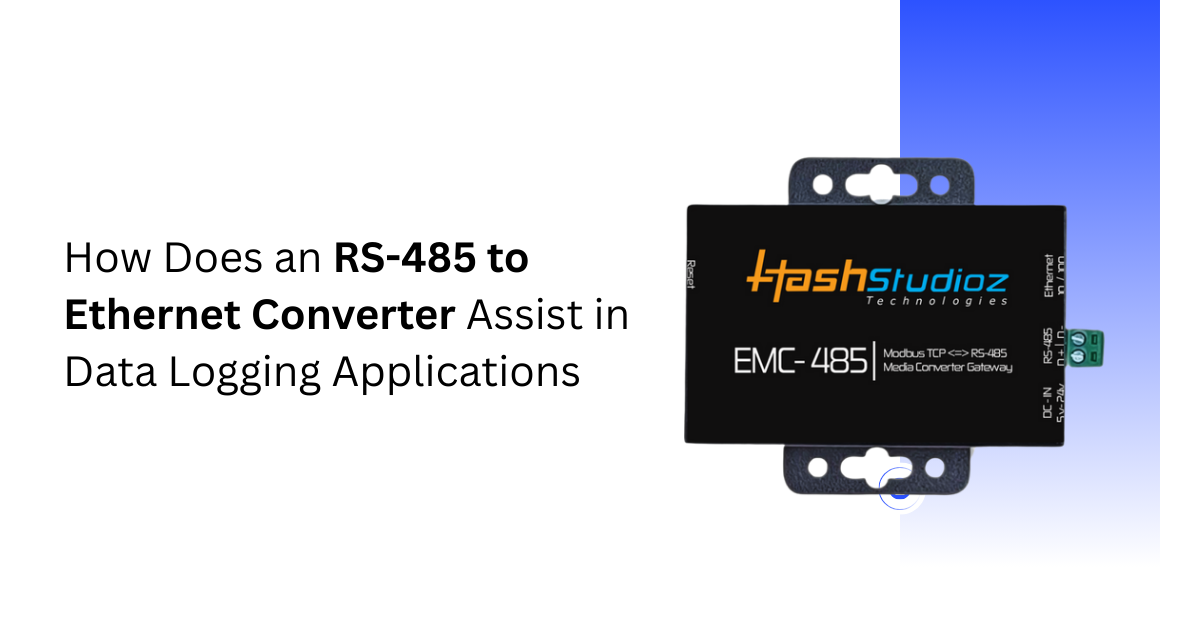
Data logging plays a critical role in industrial systems. It supports monitoring, analysis, compliance, and fault detection. Many industrial devices still use RS-485 serial communication. Modern data platforms rely on Ethernet and IP networks. This creates a communication gap.
An RS-485 to Ethernet Converter bridges this gap. It allows serial devices to send data to Ethernet-based systems. An RS-485 Ethernet Converter makes long-term data collection practical and reliable.
Understanding Data Logging in Industrial Systems
Data logging means collecting and storing data over time. Industrial data often comes from sensors, meters, and controllers.
Common Data Sources
Typical RS-485 devices include:
-
Energy meters
-
Temperature sensors
-
Pressure transmitters
-
Flow meters
-
PLCs and RTUs
These devices generate time-based values. Operators use this data for analysis and reporting.
Why Data Logging Matters
Data logging supports:
1. Process Optimization: Collecting real-time machine and production data helps identify inefficiencies and improve overall operational performance.
2. Fault Detection: Continuous monitoring enables early detection of equipment anomalies, preventing costly breakdowns.
3. Regulatory Reporting: Automated data logging ensures accurate, time-stamped records for compliance with industry standards.
4. Predictive Maintenance: Using historical and real-time data, businesses can forecast equipment issues. Studies show predictive maintenance reduces downtime by up to 30% and cuts maintenance costs by 25%.
5. Reliable Data Access: Continuous and accurate data is essential to realize these benefits; without it, optimization and maintenance strategies may fail.
Reliable data access is necessary to achieve these benefits.
Limitations of Direct RS-485 Data Logging
RS-485 works well for local communication. It shows limits in modern data systems.
1. Distance and Access Limits
RS-485 supports long cable runs. It does not support easy remote access. Engineers must stay near the device.
2. Single Master Architecture
Most RS-485 systems use a master-slave model. Only one master can request data. This restricts scalability.
3. Integration Challenges
Modern data logging systems use servers, databases, and cloud platforms. These systems expect IP-based data. RS-485 alone cannot meet these needs.
What Is an RS-485 to Ethernet Converter
An RS-485 to Ethernet Converter is a network interface device. It converts serial RS-485 data into Ethernet packets.
Core Functions
The converter performs these tasks:
-
Reads serial data from RS-485 devices
-
Encapsulates data into TCP or UDP packets
-
Sends data over Ethernet networks
-
Receives Ethernet commands and sends them to serial devices
This conversion allows serial data to reach modern systems.
Role of RS-485 Ethernet Converter in Data Logging
Data logging systems depend on continuous and accurate data flow. The converter plays a central role.
1. Continuous Data Transmission
The converter supports persistent network connections. Data flows without manual polling tools. Many converters support keep-alive and session recovery. This improves logging continuity.
2. Remote Data Access
Ethernet allows remote access over LAN or WAN. Engineers can collect data from distant sites. Remote access reduces site visits. Studies show remote monitoring cuts operational costs by 20%.
Protocol Support for Data Logging
Protocols define how data moves. RS-485 converters support several protocol modes.
1. Transparent Serial Mode
In this mode, the converter forwards raw serial data. The logging software handles protocol parsing. This mode suits custom or proprietary devices.
2. Modbus RTU to Modbus TCP
Many industrial devices use Modbus RTU over RS-485. Logging systems often use Modbus TCP. The converter maps RTU requests to TCP requests. This allows seamless data polling. Modbus remains one of the most used protocols. Over 60% of industrial devices still support it.
Time Accuracy and Data Integrity
Data logging depends on accurate timestamps and clean data.
1. Timestamp Consistency
The converter ensures low and predictable latency. Logging servers can assign accurate timestamps. Some converters support NTP synchronization. This improves time alignment across systems.
2. Error Handling
RS-485 uses differential signaling. This resists electrical noise. Converters add CRC checks and retransmission logic. This reduces corrupted data records. Reliable data improves long-term analysis quality.
Scalability in Data Logging Systems
Industrial systems grow over time. Data logging must scale.
1. Multi-Device Support
RS-485 supports up to 32 devices per bus. Some systems support more with repeaters.One converter can collect data from many devices. This reduces hardware count.
2. Network Expansion
Ethernet allows easy expansion. New logging servers can access the same converter. Multiple clients can read data without disturbing the RS-485 bus. This improves system flexibility.
Performance in High-Volume Data Logging
Some applications generate large data volumes.
1. Polling Rates
Converters support configurable polling rates. Engineers can balance load and accuracy. Typical RS-485 polling cycles range from 100 ms to several seconds.
2. Buffer Management
Industrial converters include internal buffers. These buffers store data during network delays. Buffered data prevents loss during brief outages. This feature matters in remote or unstable networks.
Reliability in Harsh Environments
Data logging often occurs in harsh conditions.
1. Electrical Noise Resistance
RS-485 resists electromagnetic interference. This suits factories and substations. Converters use isolation circuits. These protect against ground loops and surges.
2. Environmental Ratings
Industrial converters operate between -40°C and +75°C. They resist dust and vibration. Reliable hardware ensures long-term data collection.
Security Considerations in Data Logging
Data often contains sensitive operational information.
1. Network Security Features
Many converters support:
-
Password protection
-
IP filtering
-
Encrypted tunnels
These features limit unauthorized access.
2. Controlled Access
Logging servers can connect through secure VLANs or VPNs. This protects data paths.
Secure data logging supports compliance needs.
Use Cases in Data Logging Applications
1. Energy Monitoring Systems
Power meters use RS-485 communication. Logging software tracks energy usage trends. An RS-485 Ethernet Converter sends meter data to central servers. Utilities use this data for billing and analysis. Smart energy systems report up to 15% efficiency improvement through data analysis.
2. Water and Wastewater Plants
Flow and level sensors log values continuously. Ethernet access enables centralized monitoring. Operators detect leaks and abnormal patterns early.
3. Manufacturing Process Logging
Factories log temperature, speed, and pressure data. Analysis improves quality control. Ethernet access allows integration with MES and ERP systems.
Integration with Modern Data Platforms
Modern logging platforms include databases and analytics tools.
1. SCADA Integration
Converters allow SCADA systems to collect serial data. Operators view trends and alarms in real time.
2. Cloud-Based Logging
Some systems send data to cloud servers. Ethernet connectivity supports this model. Cloud logging supports long-term storage and advanced analysis.
Maintenance and Diagnostics Support
Reliable logging requires ongoing health checks.
1. Device Diagnostics
Many converters provide status pages. These show connection health and error counts. Engineers can detect issues early.
2. Reduced Downtime
Remote diagnostics reduce troubleshooting time. Faster resolution improves data continuity. Plants report up to 40% faster issue resolution with remote diagnostics.
Limitations to Consider
No solution fits every scenario.
1. RS-485 Speed Limits
RS-485 speeds range up to 10 Mbps at short distances. Long runs reduce speed. High-speed logging may need alternative interfaces.
2. Network Dependence
Ethernet relies on network availability. Backup paths improve reliability. Understanding these limits helps proper design.
Best Practices for Data Logging Deployment
1. Proper Bus Design
Use correct termination and biasing. This prevents communication errors.
2. Quality Cabling
Use shielded twisted-pair cables. This reduces noise impact.
3. Correct Configuration
Set baud rates and timeouts carefully. This ensures stable polling. Good practices improve logging quality.
Future Outlook for RS-485 Data Logging
RS-485 remains widely used. Legacy devices will stay active for many years. Ethernet-based logging will continue growing. Converters will remain key components. Hybrid systems will dominate industrial environments.
Conclusion
An RS-485 to Ethernet Converter plays a vital role in data logging applications. It connects legacy serial devices to modern networks. An RS-485 Ethernet Converter improves access, reliability, and scalability. It supports continuous data flow and remote monitoring. For industries that rely on long-term data collection, this technology remains essential. It extends device life while supporting modern analytics. Proper design and deployment ensure accurate and reliable data logging for years.

 English
 Arabic
 French
 Spanish
 Portuguese
 Deutsch
 Turkish
 Dutch
Dutch
 Italiano
 Russian
 Romaian
 Portuguese (Brazil)