


Inside the Evolution of Meta Advertising Services and AI-Led Campaigns
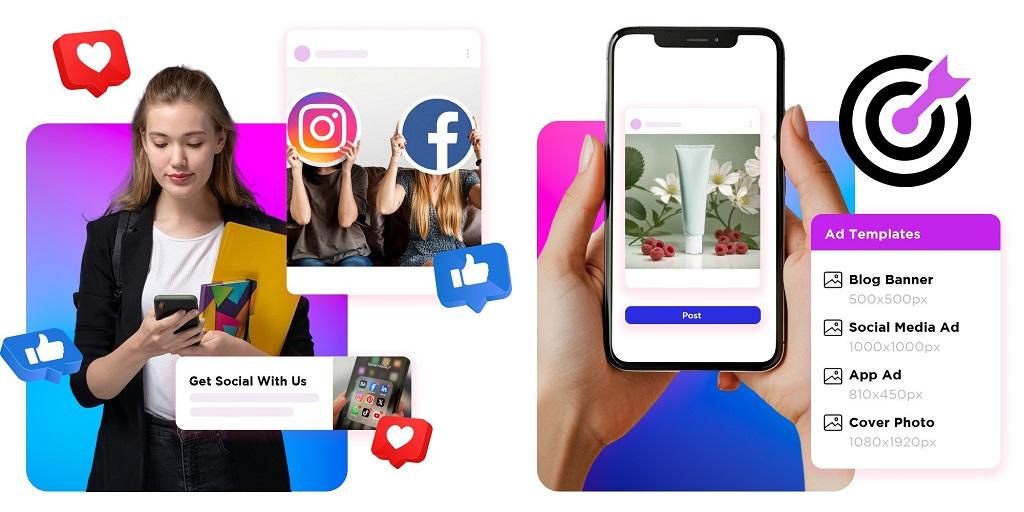
Meta ads have significantly changed even in the last year, a shift not driven by marketers. The platform itself has shifted. Meta has moved from offering helpful tools to actively running campaigns through AI-led systems, and that change affects how brands plan, measure, and manage paid media.
At the center of this shift is Meta Platforms’s decision to make automation the default rather than the option. Advantage+ campaigns now sit front and center in Ads Manager, handling audience expansion, placement decisions, and budget distribution with minimal manual input. Advertisers provide strong creative signals and clear objectives; the system then determines delivery, rather than them building tightly segmented campaigns.
For many brands, this is a relief. Campaigns launch faster. Scaling happens more smoothly. But automation also removes some of the guardrails advertisers relied on in the past. When everything runs through machine learning, weak inputs don’t just underperform—they spread quickly.
That’s where modern Meta advertising services come into play.
AI May Run the Engine, but Strategy Defines Direction
Meta’s newer AI tools go beyond copy suggestions or creative prompts. AI agents and business assistants now help assemble campaigns, generate variations, and optimize delivery before target audiences in real time. Creatives can be automatically adapted across placements like Reels, Stories, and Feeds. Branding elements can be pulled directly into ad formats. Even lead workflows are becoming more conversational through Instant Forms that open directly into Messenger or WhatsApp.
This level of automation works best when someone is actively shaping what goes into the system. Creative quality, offer clarity, and landing experience matter more than ever. When those pieces are strong, automation accelerates results. When they aren’t, advertising campaign performance issues become harder to diagnose.
Success with Meta social media advertising now hinges on inputs like creative, messaging, funnel, and responsiveness, not constant setting adjustments.
How We Measure Ad Results is Getting Smarter, But Less Simple
The way we report on paid social ad performance is changing in important, though sometimes hidden, ways.
Meta (like Facebook and Instagram) now offers tools such as the Opportunity Score, a number from 0 to 100 that suggests where you could improve your ad results. It helps see potential issues with Meta marketing, but it's just the platform's best guess (an algorithm's opinion). You still need to understand why the score is what it is.
Ad credit logic is shifting from "last-click" to more innovative methods. These newer models use customer data and cross-device modeling to more clearly show what actually drives a sale, even if the results are less straightforward than before.
Meta is also introducing tools to tell you when people are getting tired of seeing your ads (creative fatigue) and new reports that warn you before your ad performance drops. This helps teams decide when to create new ads before the current ones stop working, instead of waiting for a crisis.
For companies that need to prove that their ad spending is worth it, these changes are a big deal. Reporting now requires a brief explanation of why the numbers look the way they do, not just showing a picture of the results.
What Brands Actually Need From Meta Advertising Services
Running ads on Meta today isn't about fighting automation or surrendering to it. It's about knowing when to let systems run and when to intervene.
Strong Meta advertising services provide:
- Strategic creative testing frameworks
- Guardrails around automation, not resistance to it
- Precise interpretation of evolving metrics
- Alignment between ad performance and tangible business outcomes
This is where Meta agencies with hands-on experience inside Meta’s current ecosystem add value. 1Digital Agency guides strategy within Meta's AI environment, helping brands adapt while maintaining control over messaging, spend, and performance clarity.
Meta will continue to automate. That part isn’t optional. Brands with informed oversight and partners who understand live campaign behavior gain the advantage over automation alone.
For more information about Bigcommerce Partner and Magento SEO Company Please visit: 1Digital Agency.

 Arabic
 French
 Spanish
 Portuguese
 Deutsch
 Turkish
 Dutch
Dutch
 Italiano
 Russian
 Romaian
 Portuguese (Brazil)
 Greek
Greek