


Essential Tips for Mastering Your Arranger Keyboard
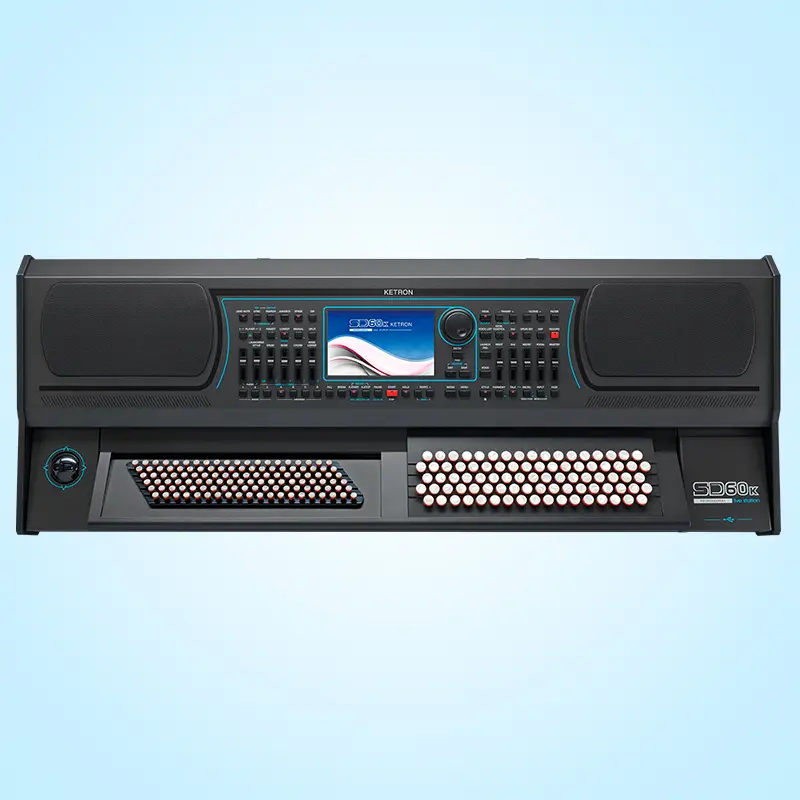
Playing an arranger keyboard may be a thrilling experience to any level of musicians. These keyboards are meant to deliver the total musical feel that has in-built rhythms, accompaniments and a tonal variety of sounds. In case you are interested in improving your performance or making your playing more vivid, it is essential to know how an arranger keyboard can be used.
This guide will provide you with practical tips that would enable you to make the most out of your instrument.
The Features of an Arranger Keyboard
Arranger keyboards have many features which can be daunting to start off with. These are styles, patterns of accompaniment, split keyboards and customizable sounds. Being familiar with what each feature does will save time and will assist you to create music effectively.
Styles enable you to automatically create supporting tracks in various genres and split keyboards enable you to play several sounds at the same time. Knowledge of these features means that you can use the keyboard in a creative way as opposed to mechanical way.
Choosing the Right Sounds and Styles
The choice of the right sounds and styles is essential in creating music of high quality and sound. A great variety of instruments, including piano and strings, drums, and brass, are provided by most arranger keyboards. You can also experiment and use various combinations to give your compositions more depth.
The style library assists you to synchronize the rhythm and the genre of your piece. You have to consider the mood that you are going to produce when selecting the sounds and the styles. This method allows making your performances more expressive and involving.
Mastering the Accompaniment Function
Another major benefit of an arranger keyboard is the automatic accompaniment. It has this capability to enable you to concentrate on the melody and leave the harmonies and rhythms to the keyboard. In order to master this role, you should practice synchronization of playing with the accompaniment patterns.
This should be gradual and slow until you become used to it. With this feature being effectively used, the solo performance is made to sound as a full band and this is especially handy with live performances or recordings.
Learning Keyboard Techniques
Knowledge of features is no more important than technical skills. Finger positioning, chord progressions, tempo, and other techniques can make a great contribution to your performance. Scales and chord progressions are good activities that you should practice to get around the keyboard freely.
A great way to review your technique is to record and playback with many arranger keyboards, and this will show you what needs improvement. These techniques and the constant practice bring confidence and skill.
Integrating External Devices
Arranger keyboards are also flexible and may be coupled with external instruments like microphones, computers, speakers and more. Combining these devices will increase your creative possibilities. An example is that you can use music production software, which is connected using a computer and external speakers, which improve the quality of the sound when you make a performance.
Knowing the connection and use of these devices will make you be able to take full advantage of what your keyboard can offer to you when it comes to practice and performance.
The Bottom Line
Arranger keyboard is a potent instrument to any musician who wishes to improve his creativity and performance. Knowing the features, choosing the appropriate sounds and styles, learning the art of accompaniment, perfecting your techniques, and incorporating the external devices, you will be able to produce some music which is memorable.
Regular practice and experimentation will ensure that your performances are refined and pleasant. The time spent learning your arranger keyboard will be repaid in terms of a richer musical experience be it on stage or in the comfort of your own home where you are composing.

 English
 Arabic
 French
 Spanish
 Portuguese
 Deutsch
 Turkish
 Dutch
Dutch
 Italiano
 Russian
 Portuguese (Brazil)
 Greek
Greek