


Optimizing Electro Permanent Chuck for Coolant Protection
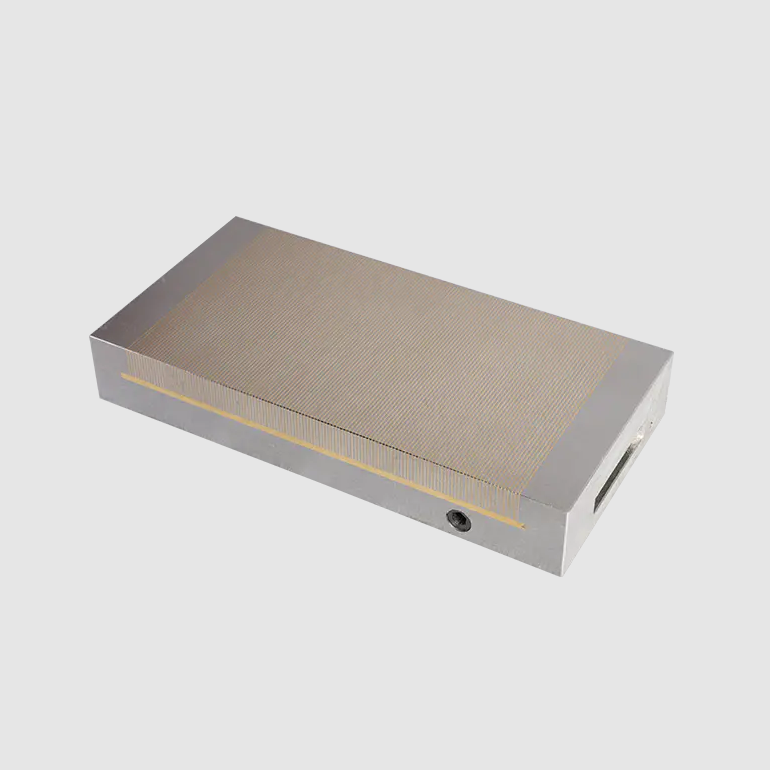
Importance of Surface Design in Electro Permanent Magnetic Chucks
An Electro Permanent Magnetic Chuck is a highly precise device used in machining and metalworking to hold ferrous workpieces firmly during operations such as milling, grinding, and drilling. While the magnetic force ensures that the workpiece stays in place, the surface design of the chuck plays a critical role in preventing coolant or cutting fluid from penetrating the internal magnetic components. Poor surface design can allow liquids to seep through gaps, causing corrosion, short-circuiting, or reduced magnetic performance. Therefore, understanding how surface features influence leak-resistance is essential for both operational efficiency and device longevity.
Flatness and Smoothness
The flatness and smoothness of the chuck’s surface directly impact its ability to resist fluid infiltration. A flat, finely finished surface minimizes gaps between the chuck and the workpiece, which reduces spaces where liquids can accumulate. Even small irregularities or micro-gaps can channel fluids toward the magnetic core or the electrical components, leading to damage over time. High-precision machining and surface grinding are commonly used to achieve the required flatness, ensuring both secure workpiece holding and enhanced protection against coolant leakage.
Slot and Groove Configuration
Many magnetic chucks feature slots or grooves on their surface to help distribute magnetic flux evenly. While these slots are necessary for magnetic efficiency, their design must balance magnet performance with leak-resistance. Narrow, well-sealed grooves can maintain strong adhesion while preventing fluid from seeping into the magnet body. Conversely, poorly designed or overly wide slots can serve as channels for cutting fluids or debris, compromising both the chuck’s performance and durability. Engineers must carefully consider slot width, depth, and sealing methods to optimize both magnetic and anti-leak characteristics.
Protective Coatings and Material Choice
Surface coatings and the choice of material significantly influence a chuck’s resistance to penetration. Hard, corrosion-resistant materials such as stainless steel or coated alloys provide a physical barrier against liquids. Additionally, specialized coatings, including powder coatings, nickel plating, or epoxy layers, can seal the surface further, preventing fluids from entering the magnetic assembly. However, coatings must be uniform and not excessively thick, as excessive coating thickness can create air gaps between the chuck and the workpiece, slightly reducing magnetic holding force.
Maintenance and Cleaning
Even with optimal surface design, regular maintenance is essential to maintain leak-resistance. Cutting fluids and debris can accumulate in grooves or micro-gaps, eventually compromising the sealing effect of the surface. Routine cleaning, inspection for wear or corrosion, and occasional re-coating or polishing can help sustain the chuck’s anti-penetration performance. Proper maintenance ensures that the chuck remains both magnetically effective and resistant to fluid infiltration over extended periods of use.
The surface design of an Electro Permanent Magnetic Chuck plays a vital role in preventing fluid penetration, protecting the internal components, and maintaining reliable magnetic performance. Factors such as flatness, groove configuration, material choice, and protective coatings all contribute to effective leak-resistance. By optimizing these elements and performing regular maintenance, users can ensure the chuck performs efficiently in environments where cutting fluids or coolants are present, extending its service life and maintaining workpiece stability during machining operations.

 English
 Arabic
 French
 Spanish
 Portuguese
 Deutsch
 Turkish
 Dutch
Dutch
 Italiano
 Russian
 Portuguese (Brazil)
 Greek
Greek