


Deformation Risks in Grid Plastic Trays
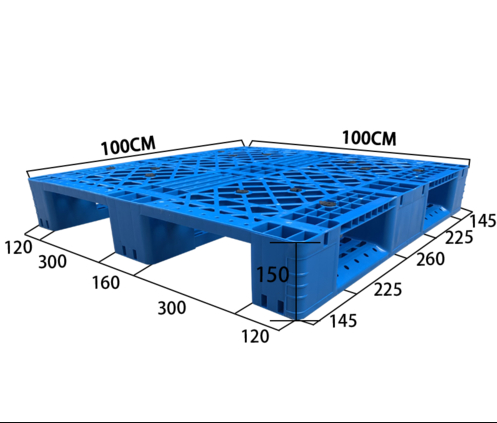
Structural Concerns in Industrial Plastic Trays
In industrial logistics and storage systems, plastic trays must withstand repeated loading, stacking, and transportation without losing structural integrity. A common concern among users is whether a Chuan-shaped Grid Plastic Tray is prone to deformation or cracking under real-world conditions. This concern is reasonable, as tray failure can lead to product damage, safety hazards, and increased operational costs. Evaluating deformation resistance requires a closer look at design geometry, material behavior, and usage scenarios.
Influence of Chuan-Shaped Grid Geometry
The Chuan-shaped grid structure is designed to create linear reinforcement channels across the tray surface. These grid lines act as load-bearing ribs that help distribute weight evenly from the top surface to the base supports. When properly engineered, this geometry reduces stress concentration and limits bending under heavy loads. Compared to random or shallow grid layouts, the Chuan-shaped pattern offers predictable load paths, which improves resistance to warping during stacking and transport.
Deformation Under Static and Dynamic Loads
Deformation typically occurs when a tray is subjected to loads exceeding its design capacity or when weight is unevenly distributed. Under static loads, such as long-term storage, grid depth and rib thickness determine how much the tray flexes over time. In dynamic conditions, including forklift handling or conveyor movement, repeated vibrations can amplify minor flexing. A well-designed tray minimizes these effects by maintaining sufficient rigidity across the grid structure, preventing permanent shape distortion.
Crack Formation and Stress Concentration
Cracking is often the result of localized stress rather than overall load. Sharp internal corners, thin rib intersections, or weak weld points in molded plastic can become initiation sites for fractures. In a Chuan-shaped Grid Plastic Tray, smooth transitions between grid ribs and reinforced intersections play a key role in preventing crack formation. When stress is spread evenly across the grid network, the likelihood of sudden breakage is significantly reduced.
Material Performance and Fatigue Resistance
Even the strongest grid design depends on material quality. Plastic trays experience elastic deformation, meaning they flex under load and return to their original shape when the load is removed. Problems arise when material fatigue sets in after repeated cycles. Adequate wall thickness and uniform material distribution help slow fatigue progression, allowing the tray to endure repeated use without developing micro-cracks or permanent bends.
Impact of Stacking and Support Conditions
Stacking height and support conditions directly influence deformation risk. When trays are stacked improperly or supported unevenly, excessive pressure may be placed on specific grid sections. The Chuan-shaped layout helps guide vertical forces downward, but stability also depends on correct alignment between trays. Proper stacking ensures that loads are transferred through reinforced grid areas rather than unsupported sections, maintaining long-term structural stability.
Environmental and Operational Factors
Environmental conditions such as temperature fluctuations, humidity, and chemical exposure can affect plastic behavior. High temperatures may soften materials, increasing the risk of deformation, while low temperatures can make plastics more brittle and susceptible to cracking. A tray designed for industrial use accounts for these variables by balancing flexibility and rigidity, ensuring consistent performance across different operating environments.
Long-Term Durability in Practical Use
In real-world applications, deformation and breakage are rarely caused by a single factor. Instead, they result from the combined effects of overloading, improper handling, and prolonged stress. A Chuan-shaped Grid Plastic Tray that is correctly specified, properly loaded, and used within its intended environment demonstrates strong resistance to both deformation and cracking. This reliability makes it suitable for repeated logistics cycles and extended service life.
Whether a Chuan-shaped Grid Plastic Tray is prone to deformation or breakage depends largely on its structural design, material quality, and usage conditions. The Chuan-shaped grid geometry provides effective load distribution and reinforcement, reducing stress concentration and enhancing durability. When combined with appropriate material selection and proper operational practices, this type of tray can maintain its shape and strength over time, offering a dependable solution for industrial storage and transportation needs.

 English
 Arabic
 French
 Spanish
 Portuguese
 Deutsch
 Turkish
 Italiano
 Russian
 Romaian
 Portuguese (Brazil)
 Greek
Greek