


Why Print That Lasts Is Usually Designed Around Behaviour
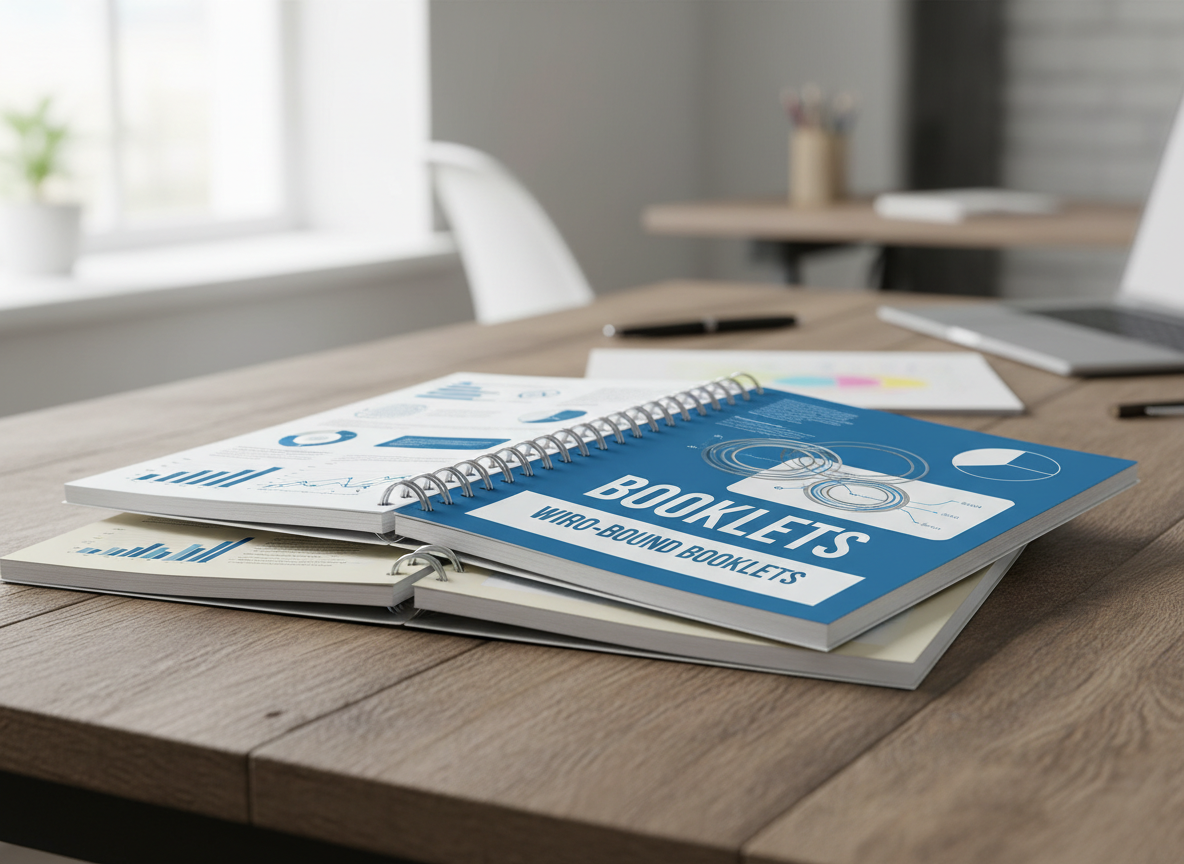
When printed materials last, it’s rarely because they were overbuilt, expensive, or visually striking. Longevity in print usually comes from something quieter: the material fits into how people actually use it.
Most printed items don’t disappear because they’re damaged beyond use. They disappear because they become inconvenient. They stop fitting the rhythm of work. They demand more effort than people are willing to give. Over time, they’re pushed aside, replaced, or ignored.
Print that remains in circulation tends to share one characteristic. It was designed with behaviour in mind, not just appearance or specification.
Durability Is Not the Same as Longevity
It’s easy to confuse durability with longevity. They’re related, but they’re not interchangeable.
Durability is about resistance to wear. Longevity is about continued relevance and use.
A document can be physically intact and still abandoned. Pages can remain attached. Covers can stay clean. The print can still end up unused.
Longevity depends on whether the material continues to feel appropriate for the way people interact with it.
This distinction matters because many print decisions focus on making materials tougher rather than making them easier to live with.
Behaviour Determines Wear Patterns
Printed materials age in very specific ways. Corners soften. Certain pages show more handling than others. Some documents are always found open at the same section.
These wear patterns are not random. They reflect behaviour.
Where behaviour is anticipated, materials age gracefully. Where it isn’t, deterioration feels abrupt, even if it happens slowly.
Print that lasts doesn’t fight these patterns. It accommodates them.
Why Some Materials Age Well and Others Feel Tired Quickly
Two printed pieces can be produced at the same time, on similar stocks, with similar finishes — and age very differently.
The difference is rarely material quality alone. It’s how well the format matches use.
Materials that:
-
Open without effort
-
Sit comfortably on surfaces
-
Tolerate repeated handling
-
Don’t require care or adjustment
Continue to feel usable even as they age.
Materials that require compensation — holding pages down, flattening spines, careful handling — start to feel tiring long before they look worn.
That fatigue shortens lifespan more effectively than physical damage.
Longevity Comes From Reducing Friction
Friction is the enemy of lasting print.
Not dramatic friction. Small, persistent friction.
The need to:
-
Hold something open
-
Adjust grip repeatedly
-
Flip awkwardly between sections
-
Manage the object rather than use it
Each instance seems trivial. Over time, they add up.
People don’t decide to stop using print because of one inconvenience. They stop because the effort never quite feels worth it anymore.
Print that lasts quietly removes those obstacles.
Designing Around Behaviour Changes Specification Decisions
When behaviour is considered early, many specification decisions shift naturally.
Paper weight isn’t chosen for feel alone, but for flexibility. Binding isn’t selected for appearance, but for movement. Size isn’t picked for familiarity, but for where and how the material will be used.
These decisions tend to result in print that feels unremarkable at first glance — and remarkably usable over time.
That usability is what keeps materials in circulation.
How Behaviour Shapes Long-Term Print Performance
|
Behaviour Pattern |
Design Response |
Result Over Time |
|
Frequent reference |
Flat-opening format |
Continued daily use |
|
One-handed use |
Stable size and balance |
Less wear from handling |
|
Desk-based work |
Materials that stay open |
Pages accessed repeatedly |
|
Shared use |
Durable construction |
Slower visible ageing |
|
Storage between uses |
Neat stacking or filing |
Materials stay accessible |
This relationship between behaviour and outcome is consistent across industries. Where behaviour is ignored, print fades from use regardless of quality.
Overbuilding Doesn’t Guarantee Longevity
A common reaction to premature wear is to increase specification. Thicker covers. Heavier paper. More rigid finishes.
Sometimes this helps. Often it creates new problems.
Heavier stocks resist bending. Rigid covers make opening less comfortable. Bulkier formats discourage portability.
Print that lasts is rarely the most substantial object in the room. It’s the one that interferes the least with what people are trying to do.
Why Longevity Is Often Invisible at Approval Stage
Longevity can’t be assessed on screen. It emerges over weeks and months.
At approval stage:
-
Everything looks clean
-
Pages are pristine
-
Interaction is theoretical
Longevity only reveals itself once:
-
The document is used repeatedly
-
It’s stored and retrieved
-
It’s handled by different people
By the time issues surface, the print run is already complete.
This is why behaviour-led decisions need to happen early, before design is locked in.
Print That Lasts Becomes Familiar
Familiarity is a powerful driver of longevity.
Printed materials that are easy to use become part of routine. People know where they are. They know how they open. They trust that the information is easy to access.
That familiarity reduces cognitive load. The document stops being “something to deal with” and becomes something to rely on.
Once a printed item reaches that point, it tends to remain in use until the content itself becomes outdated.
Why Lasting Print Rarely Draws Attention to Itself
Print that lasts is rarely the most talked-about piece. It doesn’t attract praise. It doesn’t provoke complaints.
It simply continues to be used.
This quiet success can be misleading. Because nothing goes wrong, the decisions that made it successful often go unnoticed.
When the next project comes along, those decisions are not always repeated — and longevity quietly disappears.
Behaviour-Led Design Reduces Replacement Cycles
Replacing printed materials is often treated as inevitable. In reality, frequent replacement is usually a sign of mismatch rather than necessity.
When print is designed around real behaviour:
-
Materials stay relevant longer
-
Wear feels acceptable rather than disruptive
-
Replacement happens when content changes, not when format fails
This reduces waste, cost, and frustration without needing to increase specification.
Longevity achieved through fit is more sustainable than longevity achieved through excess.
Why Experience Matters More Than Templates
Templates and standard options can’t account for how materials will actually be used.
Experience fills that gap.
Printers who see repeat work notice which formats endure and which quietly disappear. They recognise wear patterns. They hear informal comments that never make it into formal feedback.
This accumulated knowledge shapes better decisions over time.
UK-based printers such as I YOU PRINT tend to work this way because they see printed materials before, during, and long after delivery — not just at the point of production.
Final Perspective
Print that lasts is rarely the result of one premium choice. It’s the result of many small decisions aligned with how people behave.
When format, construction, and use work together, printed materials remain useful without demanding attention. They stay in circulation because they belong there.
Designing around behaviour doesn’t make print louder or more impressive. It makes it more resilient.
And in real working environments, resilience is what keeps print alive.

 English
 Arabic
 French
 Spanish
 Portuguese
 Deutsch
 Turkish
 Dutch
Dutch
 Italiano
 Russian
 Romaian
 Portuguese (Brazil)