


Why Real-World Use Is the Only Meaningful Test for Print

Print is usually judged in safe conditions. On screens. On proofs. On desks where nothing is rushed and nothing is being juggled. Colours are checked, alignment is approved, paper feels good in the hand, and the job is signed off.
That moment is often mistaken for success.
In reality, printed materials are not tested when they are approved. They are tested when they are used. That test happens slowly, inconsistently, and without supervision. It happens on desks, in bags, at counters, in meeting rooms, on factory floors, and in environments no designer or buyer is standing in when decisions are made.
Real-world use is where print proves whether it works or not. Everything else is preparation.
Approval Is Controlled. Use Is Not
Design approval happens under conditions that remove friction. Lighting is good. Time is available. Interaction is careful. Files are viewed at rest.
Real use looks nothing like that.
Printed materials are handled by people who did not choose them. They are opened quickly, closed without care, stacked with other documents, slid across surfaces, folded back, or left open while something else happens. They are used when attention is divided, not focused.
This difference matters because print is a physical object. Once it leaves controlled conditions, it behaves according to how it was built.
No proof can simulate that.
What Print Is Actually Competing With
Printed materials don’t compete with other printed materials. They compete with reality.
They compete with:
-
Time pressure
-
Interruptions
-
Multitasking
-
Physical constraints
-
Habits that already exist
When print fits into those conditions, it stays in use. When it doesn’t, it gets bypassed.
This is why testing print only at approval stage gives a false sense of confidence. The real competition hasn’t even started yet.
Behaviour Reveals What Design Can’t Predict
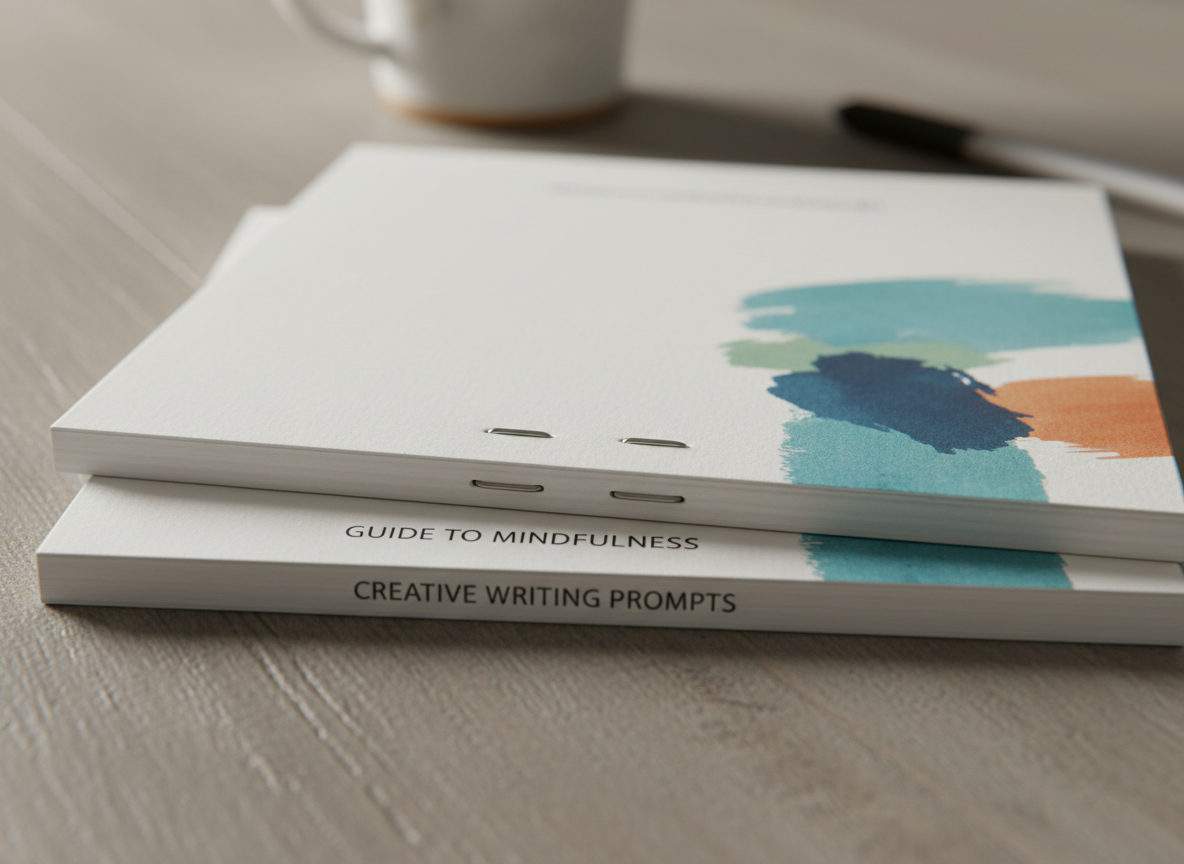
Design intent and user behaviour rarely align perfectly.
A booklet might be designed to be read cover to cover, but used as a reference. A document might be intended for desk use, but carried between locations. A guide might be designed carefully, but skimmed under pressure.
These shifts don’t indicate misuse. They indicate reality.
Real-world use reveals:
-
Which pages are accessed most
-
Where people pause or stop
-
How often materials are revisited
-
What parts show wear first
None of this can be predicted reliably from layout alone.
Ease of Interaction Is the First Real Test
The first real test print faces is physical interaction.
Does it open naturally?
Does it stay open without being held?
Can it be placed down and still be usable?
Can pages be turned easily without adjustment?
These questions are rarely asked explicitly, yet they determine how people engage.
If interacting with print requires effort, people shorten their interaction. They skim. They extract what they can quickly. They move on.
If interaction feels effortless, engagement lasts longer without being forced.
Why Many Print Issues Appear “Later”
Print problems are often described as issues that appear later, as if they emerge unexpectedly.
In most cases, they were present from the beginning. They just weren’t visible until the print entered use.
Margins that are slightly too tight don’t matter on screen. They matter when someone is holding pages open.
Paper stiffness doesn’t matter at approval. It matters when pages resist turning.
Binding choices don’t matter visually. They matter when documents are used repeatedly.
Real-world use doesn’t create problems. It exposes them.
The Gap Between Intended and Actual Use
One of the most important observations in print production is that materials are rarely used exactly as intended.
Intent says:
“This will be read carefully.”
Use says:
“This will be checked quickly.”
Intent says:
“This will sit on a desk.”
Use says:
“This will be carried around.”
Intent says:
“This will be handled occasionally.”
Use says:
“This will be opened all day.”
The closer print design comes to accommodating actual behaviour, the longer it remains relevant.
Where Print Is Really Judged
Print is not judged in isolation. It is judged in context.
It is judged:
-
Next to other documents
-
Under different lighting
-
In shared spaces
-
While people are doing other tasks
In these settings, small inconveniences are amplified. Anything that interrupts flow becomes noticeable.
Print that supports context blends in. Print that resists it stands out for the wrong reasons.
What Real-World Use Tests That Approval Doesn’t
|
Aspect |
Approval Stage |
Real-World Use |
|
Handling |
Careful, deliberate |
Quick, repetitive |
|
Attention |
Focused |
Divided |
|
Environment |
Controlled |
Variable |
|
Interaction |
Minimal |
Continuous |
|
Consequence |
Theoretical |
Behaviour-driven |
This is why real-world use is the only meaningful test. It applies pressure in ways no checklist can.
Why People Rarely Report Print Problems
Most print issues don’t generate feedback.
People don’t complain that something is awkward to open. They don’t report that pages don’t stay flat. They don’t formally note that a document feels inconvenient.
They adapt instead.
They skim more. They rely on memory. They stop reaching for the material. From the outside, everything appears fine. Internally, engagement has dropped.
This silence is often mistaken for success.
Durability Isn’t Enough Without Usability
It’s possible for print to survive physically and still disappear from use.
Pages can remain intact. Covers can stay clean. Bindings can hold. And yet the material is no longer consulted.
Longevity is not only about how long print lasts. It’s about how long it remains useful.
Real-world use tests both.
Why Short Tests Don’t Reveal Much
Some print problems only appear after repeated interaction.
A booklet may feel acceptable the first time it’s opened. After the tenth time, resistance becomes tiring. After the fiftieth, it’s avoided.
This is why brief testing or initial impressions aren’t enough. Print performance is cumulative.
The real test is repetition.
Observing Use Changes How Print Is Specified
When organisations observe how printed materials are actually used, priorities shift.
They notice:
-
Which documents are kept close
-
Which are stacked away
-
Which are always opened to the same page
-
Which show early wear
These observations reveal mismatches between design intent and reality. They also point toward better decisions next time.
Observation turns print from a static object into a system that can be improved.
Why Experience Outweighs Assumptions
Specification guides list options. Experience explains consequences.
Printers who see repeat projects understand what holds up under use and what quietly drops out of circulation. They recognise patterns that don’t show up in approvals or templates.
This perspective comes from seeing print before, during, and after it’s used.
UK-based printers such as I YOU PRINT tend to build this understanding because they remain connected to how materials perform beyond delivery, not just how they look when finished.
Real-World Use Is the Only Honest Measure
Print doesn’t succeed because it looks right. It succeeds because it works where it’s used.
Real-world use removes assumptions. It strips away ideal conditions. It reveals whether print supports people or gets in their way.
Everything else — proofs, approvals, specifications — exists to prepare for that moment.
The only test that matters happens after printing is finished, when no one is watching, and people decide, quietly, whether a piece of print earns its place in their routine.

 Arabic
 French
 Spanish
 Portuguese
 Deutsch
 Turkish
 Dutch
Dutch
 Italiano
 Russian
 Romaian
 Portuguese (Brazil)
 Greek
Greek