


Engine Oil Market Forecast Through 2031: Market Size Expansion, Regulatory Impact, and Technology Shifts
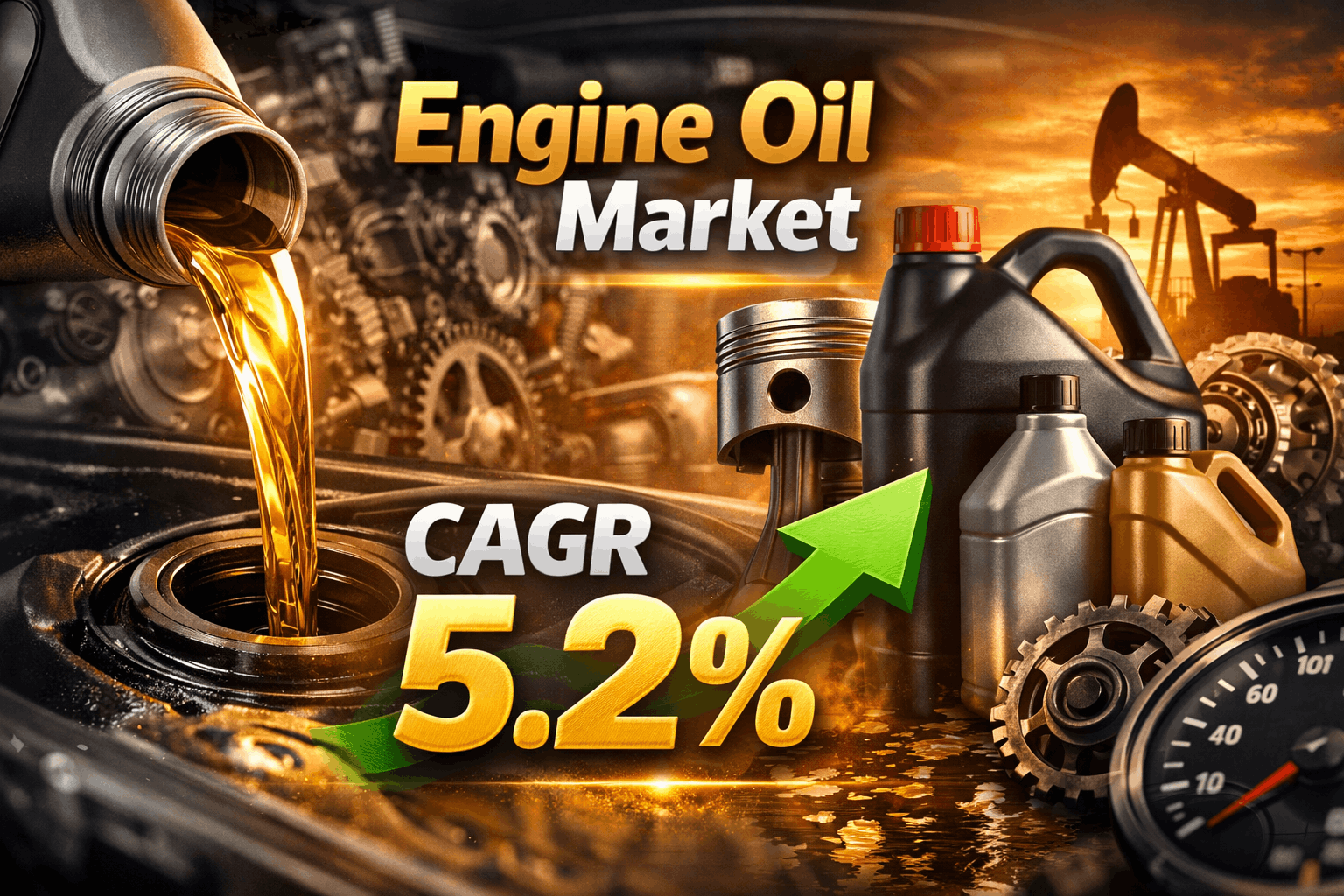
The Engine Oil Market includes the global production and sale of lubricating oils used in internal combustion engines across passenger cars, commercial vehicles, two wheelers, and off highway and industrial machinery. Engine oil reduces friction and wear, manages heat, helps control deposits, and supports fuel economy and emissions performance through advanced base oils and additive systems.
Market size expansion through 2031
The market is moving into a steady growth phase as the global vehicle parc continues to rise and fleets prioritize durability and operating cost control. According to The Insight Partners, the engine oil market is projected to reach US$ 114.81 billion by 2031 from US$ 81.57 billion in 2024, supported by a 5.2% CAGR during 2025–2031.
This expansion is being reinforced by premiumization in the aftermarket, stronger OEM specifications, and rising industrial activity that increases demand for heavy duty diesel engine oils and specialized formulations for harsh operating environments.
Regulatory impact shaping lubricant specifications
Regulation is a direct lever on engine oil chemistry. Emissions and durability rules push automakers toward smaller turbocharged engines, tighter tolerances, and exhaust aftertreatment systems, all of which demand low viscosity and low SAPS oils to protect catalysts and particulate filters. In Europe, the Euro 7 framework has been negotiated with phased timing and broader attention to non exhaust sources like brake particles, and recent policy reporting indicates an implementation timeline later than earlier proposals.
In China, the rollout of tighter standards including China 6B and China VI b has been implemented for key categories, influencing OEM and service fill lubricant requirements and accelerating adoption of higher performance formulations.
Sample PDF:- https://www.theinsightpartners.com/sample/TIPRE00006419
Technology shifts transforming product demand
Technology change is happening in three visible layers.
First, gasoline engine oil standards continue to evolve. The API and ILSAC systems shape what goes on shelves and into workshops, and the move toward newer categories is linked to better fuel economy, timing chain wear protection, and deposit control. API explains the role of modern service categories for gasoline engines, while industry updates indicate API Service SQ licensing starting March 31, 2025, and major brands are already launching products aligned to API SQ and ILSAC GF 7 performance requirements.
Second, viscosity migration continues. Markets are shifting toward 0W and low viscosity grades where OEM approved, because these improve efficiency and cold start protection while keeping wear under control.
Third, electrification changes the mix rather than eliminating demand overnight. Hybrids still require engine oils, and EV growth opens adjacent opportunities in thermal management and e axle fluids that many lubricant players are actively targeting.
Engine Oil Market segmentation
By Type
Mineral Oil, Synthetic Oil, Bio based Oil
By End Use Industry
Automotive including Passenger Cars, Light Commercial Vehicles, Heavy Commercial Vehicles, Others
Building and Construction, Power Generation, Mining and Metallurgy, Oil and Gas, Marine, Aviation, Others
By Geography
North America, Europe, Asia Pacific, Middle East and Africa, South and Central America
Key Players
- Shell Plc
- BP Plc
- TotalEnergies SE
- Exxon Mobil Corp
- Chevron Corp
- Lukoil
- Gulf Oil International Ltd
- AMSOIL Inc
- Valvoline Inc
- Repsol SA
What are the biggest factors behind the 5.2% growth outlook through 2031?
Market expansion is supported by rising vehicle parc, continued lubricant demand from commercial fleets and industrial equipment, and premiumization toward synthetic and OEM approved oils that improve efficiency and extend drain intervals.
How do regulations change the type of engine oil that sells most?
Tighter emissions and durability rules increase demand for low viscosity and low SAPS oils that protect modern engines and aftertreatment systems, and they accelerate adoption of updated performance categories and OEM approvals.
Which technology shifts should investors watch in engine oils through 2031?
Investors should watch the transition to newer gasoline engine oil standards such as API SQ and ILSAC GF 7, faster penetration of synthetic oils in emerging markets, and adjacent growth in fluids for hybrids and EV thermal management.
Future Outlook
Through 2031, the engine oil market is expected to expand steadily as higher performance requirements, updated standards, and regulatory compliance push the product mix toward synthetic and advanced additive technologies. Asia Pacific remains the volume growth engine due to vehicle parc expansion and manufacturing strength, while mature regions will emphasize OEM approvals, low viscosity grades, and sustainability led innovation.
Related Report:- Organic Fertilizers Market Dynamics and Analysis by 2031
Top of Form
Bottom of Form

 English
 French
 Spanish
 Portuguese
 Deutsch
 Turkish
 Dutch
Dutch
 Italiano
 Russian
 Romaian
 Portuguese (Brazil)
 Greek
Greek