


The Sealed Sanctuary: A Deep Dive into Container Shipping for Vehicles
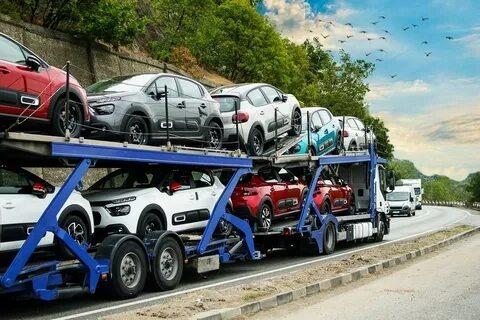
In a world of constant motion, where the most precious possessions often traverse continents, the question of how they travel is paramount. For vehicles—those extensions of our freedom, symbols of passion, and significant financial investments—the journey itself must be as impeccable as the destination. This is where the world of container shipping ascends from a mere logistical method to a philosophy of protection. It represents the pinnacle of secure auto transport, a private, sealed sanctuary on the high seas that caters to the most discerning needs. This exploration goes beyond the basics, revealing why container shipping is the definitive choice for those who accept nothing less than absolute security for their vehicle.
Beyond the Garage: Understanding the Container Itself
At first glance, a shipping container is a simple, corrugated steel box. In the realm of global logistics, it is a revolutionary standard—a uniform building block of world trade. For vehicle shipping, this standardization becomes a powerful tool. The two primary sizes are the 20-foot container and the 40-foot container.
The 20-foot unit, often called a "dry van," becomes a custom-fit garage for a single standard vehicle. Its dimensions create a snug environment, minimizing empty space and thus, movement during transit. The 40-foot container offers greater flexibility, accommodating two average-sized vehicles or a single vehicle alongside carefully packed, approved personal effects (subject to strict international regulations). These containers are engineering marvels: built to withstand stacking under immense weight, sealed against the elements, and equipped with standardized locking mechanisms that provide a level of security inaccessible in other transport forms.
The process is precise. Your vehicle is carefully loaded at a dedicated facility, using ramps and meticulous guidance to ensure a perfect fit without contact with the container walls. Once positioned, it is secured using specialized nylon straps, wheel chocks, and sometimes soft ties, anchoring it to the container's robust floor points. The doors are then closed, and a uniquely numbered seal—a tamper-proof bolt—is applied. This seal is the guardian of the journey; its integrity upon arrival is the first and most critical check, confirming the container's sanctity has been maintained.
The Fortress vs. The Parking Garage: Container vs. RORO
To appreciate the value of container shipping, one must contrast it with its common alternative: Roll-on/Roll-off (RORO) shipping. The distinction is profound and informs the entire decision-making process.
RORO shipping is efficiency personified. Your driven vehicle is rolled onto a colossal car carrier ship, parked in a vast, multi-deck hold alongside hundreds of others, and secured in place. It is exposed to the ship's internal environment—a ventilated but shared space. While a proven and cost-effective method for standard, operational cars, it is a communal experience. The vehicle is accessible to crew during the voyage for safety checks and is subject to the ambient air, which carries salt and humidity.
Container shipping, in stark contrast, is private and absolute. From the moment the doors seal, your vehicle exists in its own controlled micro-environment. It is inaccessible to anyone during the voyage, save for extreme emergencies. It is protected from:
-
Physical Contact: No possibility of door dings, scrapes, or handling incidents from other vehicles or equipment.
-
Weather and Salt Air: The sealed steel walls provide a complete barrier against ocean spray, humidity, rain, and contaminants.
-
Theft and Vandalism: The one-time seal and robust locking system make unauthorized access immediately evident and nearly impossible to conceal.
-
Cargo Shift: Properly secured inside its own fortress, it is immune to the shifting of other cargo in the ship's hold.
This comparison frames the core choice: RORO is a secure parking garage on the ocean. Container shipping is a private, moving vault.
The Candidates for the Vault: Which Vehicles Demand This Service?
Not every vehicle requires this highest tier of protection. Container shipping is a specialized solution, and its clientele is equally distinct. It is the non-negotiable standard for several categories of vehicles where risk is simply not an option.
High-Value and Exotic Automobiles: Luxury supercars, bespoke luxury vehicles, and limited-production models represent immense financial investment. Even a minor chip from road debris or a scuff from a tie-down can cost thousands to repair to concours standards. For these machines, container shipping is the only logical choice, preserving their flawless condition and investment value.
Classic and Vintage Restoration Projects: These vehicles are often irreplaceable artifacts. Their value lies in original paint, delicate chrome, and pristine interiors. Exposure to salty air alone can cause catastrophic corrosion to unprotected metal. A non-running project car, laden with fragile, newly restored parts, requires the stable, protected cradle a container provides.
Motorcycles and Specialized Machinery: High-end motorcycles, with their exposed finishes and delicate components, are exceptionally vulnerable. Contained in a container shipping environment, they can be additionally blocked and braced within the space, often sharing a container with other cargo or a vehicle. Similarly, racing equipment, vintage tractors, or other motorized collectibles benefit from this total enclosure.
Personal Effects and Household Goods (In Tandem): For international relocations, some regulations permit carefully packed, inventoried household goods to be shipped in the same container as the vehicle, using specialized crating and blocking. This "less-than-container-load" (LCL) service, exclusively available with container shipping, can streamline a complex international move into a single, sealed shipment.
The Journey of the Sealed Box: From Loading to Delivery
The path of a containerized vehicle is a meticulously choreographed sequence within the global supply chain.
-
Origin Handling: The process begins at a container freight station (CFS) at the port of origin. Your vehicle undergoes a professional inspection, is documented photographically, and is then expertly loaded and secured inside the container. The seal is applied, and documentation, including the crucial Container Packing Certificate, is completed.
-
The Ocean Voyage: The sealed container is transported to the port by truck, then lifted by massive gantry cranes onto a container ship. It is stacked securely among thousands of identical boxes, forming a city of steel on the waves. Its position is logged, and its status is tracked electronically throughout the transit.
-
Customs and Destination Port Procedures: Upon arrival at the destination country, the entire container is cleared through customs as a single unit. Because it is sealed, inspections are typically document-based or involve non-intrusive scanning. This can sometimes streamline the process compared to inspecting individual vehicles on a RORO ship.
-
Final Unlocking and Delivery: After clearance, the container is transported to a destination depot. Only in your presence, or that of your authorized agent, is the seal broken and the doors opened for the first time since departure. A final inspection verifies the vehicle's condition against the origin report. It is then unloaded with the same care it was loaded with, ready for its new road.
An Investment in Absolute Certainty
Choosing container shipping is ultimately a decision to prioritize absolute protection over all other factors. It is an acknowledgment that the vehicle being shipped is not merely a mode of transport but a valuable asset, a passion project, or an indispensable part of a life transition.
It represents an investment in the elimination of "what if." What if there's a storm? What if something shifts in the hold? What if the environment causes damage? The container answers these with the solidity of its steel walls. In an era where we can track a package on our phone with minute-by-minute updates, container shipping provides a parallel certainty for our most prized mechanical possessions. It is the assurance that the vehicle you lovingly maintain, meticulously restore, or significantly invest in will meet the shores of its new home in precisely the same state it left—ready for the next chapter of its journey, with no story of peril from the sea.

 English
 Arabic
 French
 Spanish
 Portuguese
 Deutsch
 Turkish
 Dutch
Dutch
 Italiano
 Romaian
 Portuguese (Brazil)
 Greek
Greek