


Silicone Catheters Market Forecast 2026–2034: Applications, Innovations, and Regional Insights
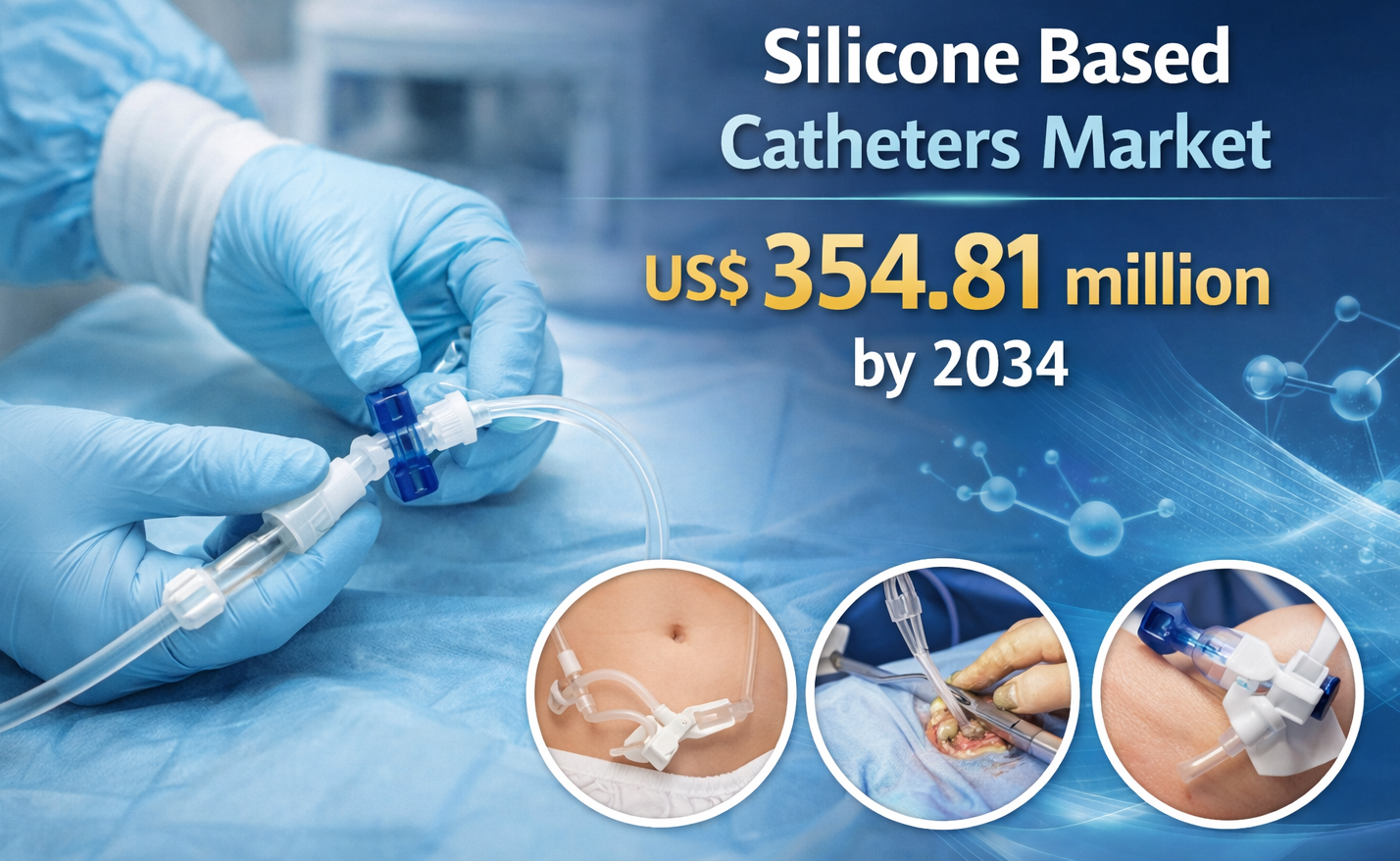
Silicone-based catheters are widely used medical devices manufactured from medical-grade silicone, a material known for its excellent compatibility with human tissue. Due to their non-reactive, hypoallergenic, and flexible nature, these catheters are especially suitable for patients with latex sensitivity and those requiring prolonged catheterization. Their smooth surface helps minimize friction during insertion and removal, reducing discomfort and lowering the risk of urethral trauma, which makes them ideal for intermittent and long-term applications, including Foley catheterization.
Silicone Catheters Market Overview
The silicone-based catheters market is anticipated to demonstrate strong growth through 2034. The market is valued at US$ 196.27 million in 2025 and is projected to reach US$ 354.81 million by 2034, expanding at a CAGR of 6.80% during the forecast period from 2026 to 2034. Market growth is supported by the rising prevalence of chronic and age-related conditions, increased surgical volumes, and greater emphasis on patient safety and infection prevention.
Compared with traditional latex catheters, silicone-based products offer superior clinical performance, including lower encrustation rates, reduced allergic reactions, and improved long-term tolerance. As a result, healthcare providers are increasingly shifting toward silicone catheters, particularly in cases requiring extended indwelling use. Ongoing innovations such as antimicrobial coatings, hydrophilic surfaces, and enhanced balloon technologies continue to strengthen product adoption across hospitals, ambulatory surgical centers, and home healthcare settings.
Market Drivers and Trends
Silicone-based catheters are extensively used in urinary drainage, genitourinary surgeries, spinal cord injury management, and interventional procedures. One of the key trends shaping the market is the global initiative to reduce Catheter-Associated Urinary Tract Infections (CAUTIs). Silicone’s inert properties and compatibility with antimicrobial coatings make it a preferred material for infection control strategies.
Hospitals remain the largest consumers due to high patient volumes and complex procedures. However, the increasing adoption of home-based care and self-catheterization is reshaping market dynamics. Patients and caregivers are seeking catheters that offer ease of use, comfort, and safety outside traditional clinical environments.
Download PDF Copy- https://www.theinsightpartners.com/sample/TIPRE00028381
Primary growth drivers include:
- Rising incidence of urological, neurological, and chronic disorders
- Rapidly aging global population, leading to higher rates of urinary incontinence and retention
- Material advantages of silicone, enabling long-term use with fewer complications
Growth Opportunities
The market presents multiple growth opportunities for manufacturers and stakeholders:
- Next-generation catheter coatings designed to prevent infection and improve lubrication
- Home healthcare and outpatient expansion, increasing demand for user-friendly catheter solutions
- Specialized catheter development, particularly for pediatric and complex surgical applications
Competitive Landscape
The market features a mix of established multinational corporations and regional manufacturers focused on innovation and market expansion. Key players include:
- Teleflex Incorporated
- B. Braun Melsungen AG
- ConvaTec Group Plc
- Ribbel International Limited
- Bactiguard
- BD (Becton, Dickinson and Company)
- Cook Medical LLC
- Angiplast
- Sterimed Group
Strategic initiatives such as product launches, regulatory approvals, acquisitions, and distribution agreements continue to shape the competitive environment.
Industry Developments
Recent years have seen increased investment in coated catheter technologies, securement devices, and patient-centric product designs. Regulatory approvals and strategic collaborations among leading companies further underscore the industry’s commitment to innovation and improved clinical outcomes.
Future Outlook
Looking forward, the silicone-based catheters market is expected to maintain steady growth driven by technological advancements, rising healthcare standards, and increasing awareness of catheter-related complications. Demand is likely to be strongest in emerging economies, where healthcare infrastructure development and access to advanced medical devices are improving rapidly. As manufacturers continue to focus on infection prevention, comfort, and ease of use, silicone-based catheters will remain a critical component of modern medical care through 2034 and beyond.
Related Reports-
Embryo Transfer Catheters Market

 English
 Arabic
 French
 Portuguese
 Deutsch
 Turkish
 Dutch
Dutch
 Italiano
 Russian
 Romaian
 Portuguese (Brazil)
 Greek
Greek