


5-Yard Adjustable Cohesive Non-woven Bandage Explained: Features and Proper Use
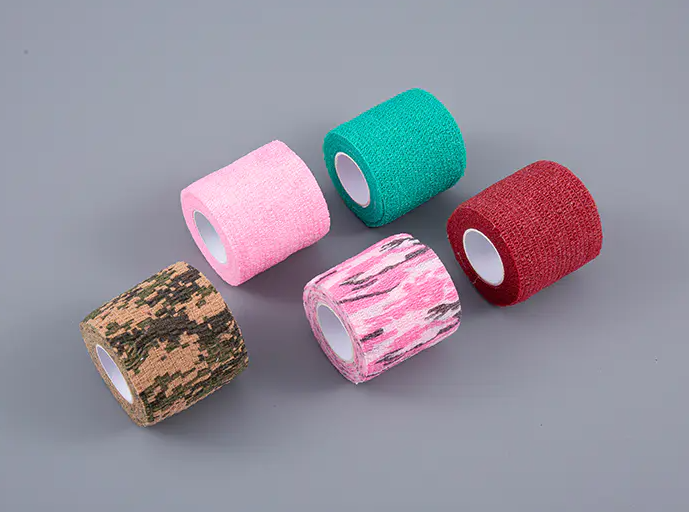
A 5-yard adjustable cohesive non-woven bandage sounds like a mouthful, but the product itself is refreshingly straightforward: it's a soft, stretchy wrap that sticks to itself (not to skin or hair) and is commonly supplied in a roll length of five yards. You'll see it used everywhere from sports bags and first-aid kits to veterinary clinics and outpatient care, because it's fast to apply, comfortable to wear, and easy to remove.
What the name really means
The term is packed with functional clues:
- :5-yard" refers to the roll length. Five yards provides enough material for multiple wraps around a joint or limb, or for several smaller applications. Depending on width and how heavily you overlap the layers, one roll might handle a single larger wrap or several minor ones.
- :Adjustable: points to the way the wrap can be tightened or loosened during application. You control support by changing tension, overlap, and the number of layers—without needing clips or tape in most cases.
- :Cohesive: is the key feature. The bandage clings to itself through a cohesive coating or surface interaction. It's designed to bond wrap-to-wrap, which helps it stay in place during movement.
- :Non-woven: describes the fabric construction. Instead of being woven like traditional textiles, the material is formed by bonding fibers together. In practice, non-woven cohesive wraps are typically soft, conformable, and breathable, making them comfortable for short- to medium-term wear.
What it's used for
A cohesive non-woven bandage is not a "do-everything" medical dressing; it's primarily a support and securing wrap. Common uses include:
Securing dressings and pads
If you've placed a gauze pad over a minor wound, the cohesive wrap can hold it in place without adhesive tape on the skin. This is especially helpful for people with sensitive skin or areas where tape doesn't adhere well.
Light compression and swelling support
When applied with appropriate tension (snug, not tight), it can provide mild compression to help manage swelling in soft tissue injuries. It's often used in first-aid scenarios for strains and sprains, especially around wrists, ankles, and elbows.
Joint and muscle support during activity
Athletes and active individuals use cohesive wraps for added support and proprioceptive “reminder” around joints. It won't replace a brace when significant stabilization is needed, but it can reduce minor movement irritation and help keep protective pads in place.
Finger, toe, and small-area wrapping
Because it conforms well and doesn't require sticky tape, it's useful for small, awkward areas—fingers, thumbs, or around the forefoot—where conventional bandages slip.
Veterinary and pet care
Cohesive bandages are widely used on animals because they don't adhere to fur the way tape does. They're commonly used to secure pads and protect areas from licking or friction—while still being removable without pulling hair.
Why non-woven cohesive wraps are popular
Several design advantages explain why these wraps are so common:
- No clips required: The end of the wrap typically seals by pressing it onto the layer beneath it.
- Skin-friendly removal: It sticks to itself, so it generally comes off cleanly without the "tape rip" feeling.
- Conforms to movement: Non-woven stretch and softness help it follow body contours and bend zones.
- Breathability: Many non-woven structures allow airflow better than fully occlusive films.
- Quick application: Useful in fast-paced settings—sports, clinics, field first aid.
How to use a 5-yard adjustable cohesive non-woven bandage
Application is simple, but good technique matters. Most problems—slipping, discomfort, numbness—come from either too much tension or poor overlap.
Prepare the area
If you're covering a wound, start with an appropriate primary dressing (gauze, non-adherent pad, etc.). A cohesive wrap is usually a secondary layer meant to hold the dressing in place and provide support.
Make sure skin is dry. Lotions and heavy moisture can reduce grip and cause sliding.
Start with an anchor wrap
Place the beginning of the bandage on the area and make one gentle wrap to establish an anchor. Keep tension light at the start.
Overlap consistently
A common approach is to overlap each turn by about half the bandage width. This produces even coverage and helps the layers lock together.
Control tension as you go
- "Adjustable" means you can increase support by:
- slightly increasing tension (carefully), and/or
- adding layers
A safe rule for everyday use: snug and supportive, never tight. If the wrapped area throbs, tingles, becomes pale/cold, or feels numb, remove and rewrap more loosely.
Finish cleanly
Tear or cut the end (many cohesive wraps tear by hand). Press the end gently onto the layer beneath it so it bonds to itself.
Safety notes and common mistakes
Cohesive wraps are convenient, which can make it easy to overdo compression—especially on fingers, toes, and lower legs.
Avoid these pitfalls:
- Wrapping too tightly, especially during swelling phases (the wrap can become tighter as swelling increases).
- Covering too much area without checking circulation, particularly on extremities.
- Using it as a primary wound contact layer when the wound needs a sterile, non-adherent dressing.
- Leaving it on too long without inspection when swelling, sensation changes, or skin irritation are possible.
If you're wrapping over a bony prominence or a sensitive area, a thin layer of padding beneath can improve comfort and reduce pressure points.
A 5-yard adjustable cohesive non-woven bandage is a versatile, self-adhering wrap used mainly to secure dressings, provide light support, and offer gentle compression when applied correctly. The non-woven material helps it stay comfortable and conformable, while the cohesive design makes it simple to apply without tape or clips.
Used with sensible tension and routine circulation checks, it remains one of the most practical wraps for everyday first aid, sports support, and even veterinary care. In these application scenarios, https://www.sztexnet.com/product/bandage/cohesive-bandage/ supplies cohesive non-woven bandage options designed to support efficient, reliable wrapping in both professional and day-to-day settings.

 English
 Arabic
 French
 Spanish
 Portuguese
 Deutsch
 Dutch
Dutch
 Italiano
 Russian
 Romaian
 Portuguese (Brazil)
 Greek
Greek