


Why Elevator Signage Is One of the Most Overlooked ADA Risks
Braille elevator signs are one of those details most buildings assume are already handled. There's a ramp at the entrance. Accessible parking is marked. Restrooms meet requirements. On paper, everything feels covered.
And yet, elevators are often where ADA compliance quietly breaks down.
For facility managers, property owners, and commercial landlords, this blind spot is common. Not because anyone is ignoring accessibility on purpose, but because elevator signage sits at the intersection of safety codes, accessibility standards, and daily operations. It's easy to miss until it isn't.
The Assumption That Elevators Are Already "Taken Care Of"
Many buildings inherit their elevators from a previous renovation, a different ownership group, or an older code cycle. The elevator itself works. The buttons have Braille. The floors are labeled. So it feels compliant.
What often gets overlooked are the required signs outside and inside the elevator, especially fire safety signage and tactile instructions. These aren't optional additions. They're specific requirements meant to communicate critical information to all users, including those who are blind or visually impaired.
Because these signs don't affect day-to-day elevator operation, they fade into the background. They aren't tested like buttons. They aren't maintained like doors. They just sit there. Or sometimes, they aren't there at all.
Elevators Draw More Scrutiny Than People Realize
During inspections, elevators tend to get extra attention. They're high-traffic areas. They're essential for vertical access. And in emergencies, they become safety-sensitive zones.
Inspectors often look closely at whether required messaging is present, placed correctly, and readable by touch. Missing Braille. Incorrect wording. Signs mounted too high or too low. Flat text where tactile text is required. These are common findings.
What makes this frustrating for building owners is that these issues rarely come up until an inspection, a complaint, or a renovation triggers a review. By then, fixes feel reactive instead of planned.
Why Elevator Fire Signage is a Frequent Gap
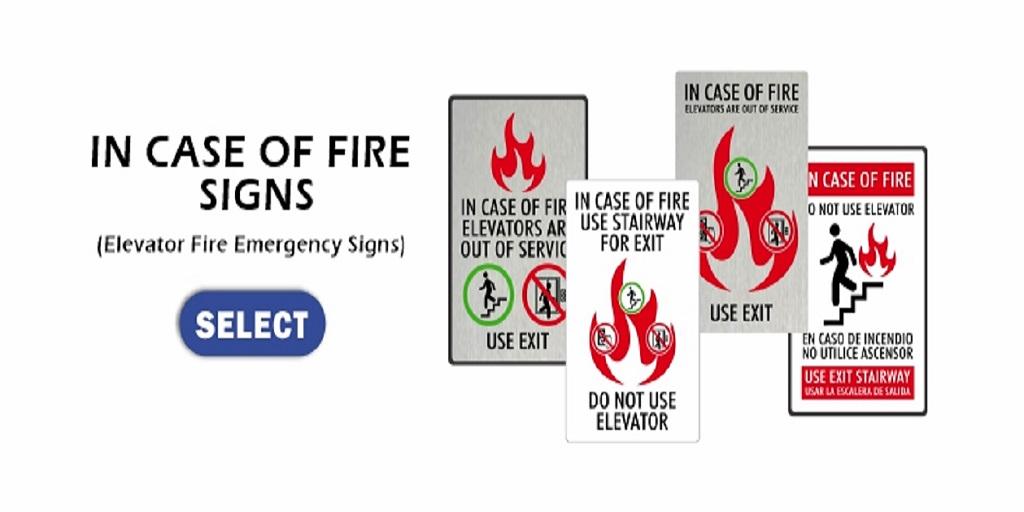
Fire-related elevator signs are a particular trouble spot. Many buildings have a sign. It just isn't the right one.
Some are visual-only. Some use the wrong language. Some were installed before the current ADA guidelines were updated. Others were replaced with "matching" signs during cosmetic upgrades, without realizing accessibility features were lost in the process.
In an emergency, these signs are meant to deliver clear, immediate guidance. For someone who relies on tactile information, the absence of proper Braille elevator signs isn't a minor inconvenience. It's a barrier at the exact moment clarity matters most.
The Real Cost of Overlooking Elevator Signage
The risk isn't only about fines or citations, though those are real. It's also about disruption.
Failed inspections delay occupancy approvals. Complaints create paperwork and follow-up visits. Last-minute signage replacements cost more than planned updates. Tenants notice when buildings scramble to fix issues that should've been addressed long ago.
For commercial landlords, there's also a reputation to consider. Accessibility gaps signal a lack of attention to detail. In competitive leasing environments, that matters more than many realize.
Why This Issue Persists
Elevator signage falls into a gray area. It's not always handled by the same vendor that supplies room signs. It may not be part of a general signage refresh. And it's easy for teams to assume someone else already addressed it.
That's why these gaps persist even in well-managed buildings.
The fix usually isn't complicated. It just requires awareness, a checklist review, and working with specialists who understand the nuances of ADA requirements specific to elevators.
A Quieter Way to Reduce Compliance Risk
Proactive reviews are what separate smooth operations from surprise corrections. Buildings that periodically audit elevator signage alongside other accessibility elements tend to avoid problems altogether.
For those looking to close this gap, providers like Braille Sign Pros offer ADA-compliant elevator signage designed specifically for commercial environments, helping facilities address overlooked details before they become issues.
Because when it comes to accessibility, it's often the most minor signs that reveal the most significant risks around Braille elevator signs.
For more information about Braille Signs and Hotel Room Number Signs Please visit: Braille Sign Pros LLC.

 English
 Arabic
 French
 Spanish
 Portuguese
 Deutsch
 Turkish
 Dutch
Dutch
 Italiano
 Russian
 Portuguese (Brazil)
 Greek
Greek