


Embroidery Coverage Options for Patches Guide
Alright, let me walk you through this properly, just like I would if we were on a call discussing patch production for your brand.
When we talk about embroidery coverage options for patches, we’re really discussing how much of the patch surface is filled with stitching versus exposed twill fabric. This one decision affects your cost, the final look, durability, and even how premium your patch feels in hand.
If you’re creating patches for uniforms, tactical gear, events, sports teams, or merchandise, understanding coverage levels is critical. Let’s break it down in detail so you can make the right choice for your next order.
What Are Embroidery Coverage Options for Patches?
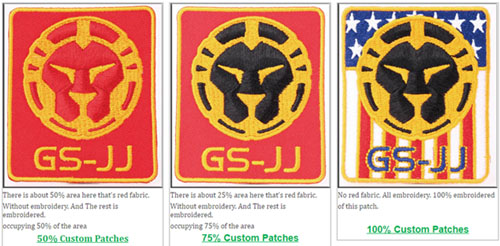
When manufacturers talk about coverage, they usually mean 50%, 75%, or 100% embroidery coverage. That percentage refers to how much of the patch’s surface area is stitched with thread.
At 50% coverage, roughly half the patch surface is embroidery while the rest is visible twill fabric. At 75%, most of the background is stitched. At 100%, the entire patch is fully covered in thread with no visible base material.
The higher the coverage, the richer and more detailed the patch appears — but it also increases thread usage and cost. So the right coverage depends on your design and budget goals.
50% Embroidery Coverage – Budget Friendly Option
If you’re working with a simple logo or text-based design, 50% coverage can be a very practical choice. This level keeps production costs lower because less thread and stitching time are required.
In this style, the twill background is clearly visible. The embroidered areas highlight the main design elements, while the base fabric supports the overall look. It works well for bold text, minimal shapes, and large clean designs.
Now, I’ll be honest — it doesn’t look as dense or premium as higher coverage options. But for bulk orders, promotional patches, school clubs, or simple branding, it’s extremely cost-effective and still durable.
75% Embroidery Coverage – Balanced & Professional
Most businesses actually prefer 75% coverage. Why? Because it gives you a nice balance between cost and visual impact.
Here, the majority of the patch is stitched, and only small portions of the twill show through. This creates a richer texture and more vibrant color display. The design feels fuller without jumping to full premium pricing.
If your logo includes multiple colors, gradients, or layered shapes, 75% coverage helps bring those elements forward. It works well for corporate patches, brand identity, and merchandise where appearance matters.
100% Embroidery Coverage – Premium Full Stitch Look
When you want a bold, high-end finish, 100% coverage is the top-tier option. The entire patch surface is filled with thread — no twill visible at all.
This creates a dense, textured feel and makes colors appear more vibrant. The patch looks heavier, more structured, and more luxurious.
However, it’s important to understand that not every design needs full coverage. If your artwork is simple, full coverage may increase cost without adding much visual benefit. But for military insignia, premium branding, or detailed emblems, it delivers strong impact.
How Coverage Affects Patch Durability
Coverage doesn’t just affect appearance — it also impacts durability.
Higher stitch density means more thread layers, which can increase resistance to wear and fraying. Fully embroidered patches often feel thicker and more rigid.
However, durability also depends on backing type, border style, and thread quality. Even a 50% coverage patch can last for years if properly stitched and attached correctly.
So coverage improves strength, but it’s not the only factor to consider.
Choosing the Right Coverage for Your Design
Here’s how I usually advise clients:
First, look at your artwork complexity. If your design is minimal, heavy coverage may not be necessary. If it’s detailed and layered, higher coverage helps maintain clarity.
Second, consider your budget and quantity. Large orders often benefit from 50% or 75% coverage to maintain reasonable production costs.
Third, think about your brand image. Tactical, premium, and heritage-style brands often lean toward 75–100% coverage because it feels solid and high quality.
Other Factors That Work with Coverage

The border style — such as merrowed edge or laser-cut — affects how clean and sharp the patch looks. A merrow border adds a classic stitched frame, while laser-cut edges allow custom shapes.
Backing options also matter. Heat-seal backing works for iron-on applications, while sew-on and hook backing (like Velcro) are common for uniforms and tactical gear.
All these elements together determine the patch’s overall quality and functionality.
Cost Considerations of Embroidery Coverage
Let’s talk numbers in a practical sense.
More coverage means more thread, more machine time, and slightly higher production cost. That’s why 100% coverage is the most expensive option.
But here’s something important — the price difference between 75% and 100% isn’t always dramatic. Sometimes upgrading coverage slightly improves perceived value more than it increases cost.
So instead of automatically choosing the cheapest option, think about long-term branding value.
Common Mistakes When Selecting Coverage
One mistake is choosing full coverage for a design that doesn’t need it. If large areas are solid color, partial coverage can achieve the same effect at lower cost.
Another mistake is underestimating how visible twill background affects appearance. Some colors contrast beautifully, while others may look dull if too much base fabric shows.
Finally, some buyers ignore stitch density limits. Extremely fine detail may not reproduce well at low coverage levels.
Final Thoughts on Embroidery Coverage Options
If I had to summarize it simply — embroidery coverage options for patches are about balancing cost, visual depth, and design purpose.
50% coverage is economical and clean.
75% coverage is balanced and professional.
100% coverage delivers premium impact.
The right choice depends on your artwork, budget, and brand positioning. Don’t just think about price — think about how the patch represents your identity.
When selected correctly, the right embroidery coverage transforms a simple patch into a powerful branding tool that lasts for years.

 English
 Arabic
 French
 Spanish
 Portuguese
 Turkish
 Dutch
Dutch
 Italiano
 Russian
 Romaian
 Portuguese (Brazil)
 Greek
Greek