


Hand Held Fiber Laser Welding Machine – Revolutionizing Metal Fabrication
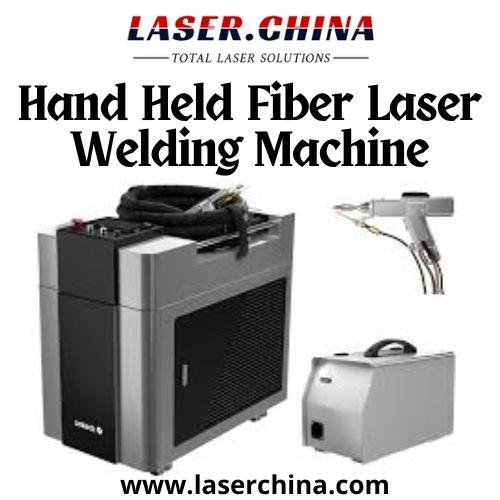
In the modern era of metal fabrication, the hand held fiber laser welding machine has emerged as a transformative tool across industries. Unlike conventional welding techniques that rely on consumable electrodes or extensive setups, this innovative technology offers a combination of precision, speed, and adaptability that reshapes the workflow for professionals in automotive, aerospace, shipbuilding, and industrial repair sectors.
The concept behind fiber laser welding revolves around the generation of a high-intensity, coherent light beam, transmitted through fiber optics. This approach allows the laser to focus energy on a very small area, producing precise, controlled welds with minimal heat-affected zones. Handheld models of these machines bring the same high performance to a portable form factor, allowing operators to reach tight or complex areas without relying on stationary equipment.
Portability Meets Industrial Power
Portability is a defining characteristic of the hand held fiber laser welding machine. Unlike traditional laser welding systems, which are typically large and require dedicated spaces, handheld models can be maneuvered around the workpiece, giving professionals unprecedented access. This is particularly valuable in industries where large structures, such as ship hulls or industrial machinery, need on-site repair or assembly. Operators can carry the unit directly to the location, reducing downtime and eliminating the need for transporting heavy components to a central workshop.
Precision Welding for Diverse Metals
One of the most significant strengths of the hand held fiber laser welding machine is its ability to work across various metals, including stainless steel, aluminum, copper, and titanium. The concentrated laser beam can create deep welds without requiring extensive surface preparation, which streamlines workflows and allows for efficient joining of thin or delicate materials. Additionally, the precision of fiber laser welding ensures clean, uniform welds that maintain the structural integrity of the metal, which is crucial in industries with stringent quality standards.
Applications Across Industries
The versatility of the hand held fiber laser welding machine makes it highly sought after in multiple industrial sectors. In the automotive industry, it is used for repairing car bodies, joining complex metal assemblies, and performing on-site modifications. Aerospace professionals rely on it for fabricating lightweight components where precision is critical to safety and performance. Shipbuilders and heavy machinery manufacturers utilize handheld fiber lasers for on-site repairs, reducing the logistical challenges associated with moving large equipment. Even in artistic metalworking or architectural projects, the device enables intricate welding on sculptures, frames, and custom metal designs.
Efficiency and Workflow Optimization
A key aspect of the hand held fiber laser welding machine is its contribution to workflow optimization. The portability and flexibility of the device allow operators to complete tasks faster, reducing labor costs and overall project timelines. Traditional welding methods often require clamps, fixtures, and extensive setup times, but with handheld fiber lasers, the energy is directed precisely where needed, minimizing errors and rework. This efficiency is particularly important in industries where time is a critical factor, such as emergency repairs in industrial plants or rapid prototyping in manufacturing.
Technological Advancements
Recent advancements in fiber laser technology have significantly enhanced the performance of handheld models. Modern units feature improved beam quality, higher power output, and more intuitive control systems. These developments ensure consistent weld quality, even during prolonged operations or in challenging positions. Furthermore, innovations in cooling systems and ergonomic designs have made these machines more user-friendly, reducing operator fatigue while maintaining high levels of performance.
Safety and Operational Considerations
Operating a hand held fiber laser welding machine requires a clear understanding of safety protocols. The high-intensity laser beam can cause burns or eye damage if proper precautions are not taken. Operators must use protective eyewear, gloves, and clothing while ensuring the workspace is free from reflective surfaces that could redirect the laser. Additionally, maintaining ventilation is essential, as the process can generate fumes or particles depending on the metal type. Adhering to these precautions ensures a safe and efficient working environment, allowing the technology to reach its full potential without risk.
Maintenance and Longevity
Maintaining the performance of a hand held fiber laser welding machine involves routine inspections and care. Checking fiber connections, cleaning optical components, and ensuring the cooling system functions optimally are essential for long-term reliability. Unlike traditional welding equipment, fiber lasers have fewer moving parts, which reduces mechanical wear and tear. With proper care, these devices provide consistent performance over years of use, making them a valuable investment for industries seeking reliable, high-precision welding solutions.
Integration with Modern Manufacturing
As manufacturing processes evolve toward automation and smart systems, the hand held fiber laser welding machine is increasingly integrated with digital workflows. Operators can use software to control parameters, monitor real-time performance, and document welds for quality assurance. This integration enhances traceability and consistency, ensuring that every weld meets the required standards. In high-tech industries such as aerospace or medical device manufacturing, the ability to record and verify weld quality is essential, positioning handheld fiber lasers as both practical tools and components of advanced industrial ecosystems.
Training and Skill Development
While the machine is designed for usability, mastering a hand held fiber laser welding machine requires training and practice. Understanding the nuances of laser-material interaction, adjusting parameters for different metals, and maneuvering the device effectively are skills that significantly impact the quality of welds. Many industrial training programs now include specialized courses for fiber laser welding, emphasizing practical, hands-on experience to ensure operators can leverage the full capabilities of the technology.
Economic and Operational Impact
Investing in hand held fiber laser welding machines offers significant operational and economic advantages for businesses. The reduction in setup times, increased speed of welding, and versatility in handling diverse metals directly contribute to higher productivity. Additionally, the precision and reduced material wastage lead to lower costs over time. Companies that adopt this technology can scale operations, meet tight deadlines, and maintain consistent quality without the limitations of traditional welding equipment.
Future Trends
The future of handheld fiber laser welding is closely tied to ongoing technological innovations. As laser sources become more efficient and portable, the devices are expected to deliver even higher power levels with improved safety and ease of use. Integration with AI-assisted monitoring and robotics may also expand the applications of handheld lasers, allowing semi-automated operations in complex or hazardous environments. The convergence of portability, precision, and digital control ensures that these machines will continue to redefine industrial welding practices for years to come.
Final Thoughts
The hand held fiber laser welding machine represents a remarkable evolution in metal fabrication. Its combination of precision, portability, and adaptability has opened new possibilities for industries ranging from automotive to aerospace. By streamlining workflows, enabling on-site operations, and maintaining exceptional weld quality, handheld fiber lasers are not merely tools—they are enablers of efficiency, innovation, and industrial advancement. For professionals seeking to elevate their metalworking capabilities, this technology offers both immediate and long-term value, shaping the future of welding with every precise beam it delivers.

 English
 Arabic
 French
 Spanish
 Portuguese
 Deutsch
 Turkish
 Dutch
Dutch
 Italiano
 Romaian
 Portuguese (Brazil)
 Greek
Greek