


How a Spring Check Valve Supports Safe and Efficient Flow Control
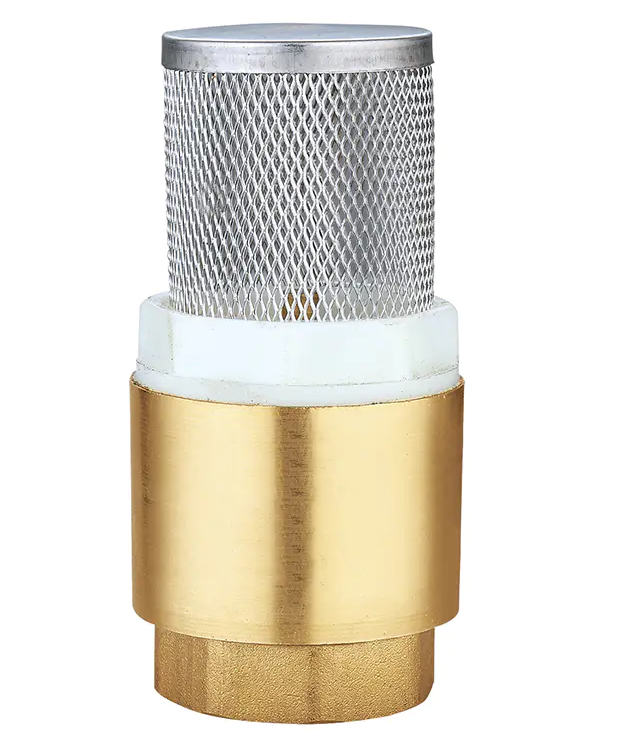
A Spring Check Valve is designed to automatically control one-way fluid movement, ensuring that water, gas, or oil flows only in the intended direction. Its mechanism is based on a spring-loaded disc that opens and closes in response to system pressure. This type of valve is widely used in plumbing, irrigation, and industrial equipment, providing reliable flow control without manual intervention.
The working process of a Spring Check Valve is straightforward yet efficient. When pressure is applied from the inlet side, the spring compresses, allowing the valve to open and the medium to pass through. When the pressure drops or flow reverses, the spring pushes the disc back into its seat, stopping reverse flow immediately. This prevents potential damage to pumps, meters, and pipelines caused by back pressure or contamination.
Yuhuan Shuangwei Copper Products Co., Ltd. features a range of brass and stainless steel spring check valves, emphasizing durability, precise structure, and stable sealing performance. Brass valves are particularly popular in residential and commercial water systems due to their resistance to rust and scale buildup. Stainless steel variants, on the other hand, are preferred for high-temperature or high-pressure environments such as industrial cooling systems and chemical processing lines.
One of the main advantages of using a Spring Check Valve is its ability to maintain steady flow while requiring minimal maintenance. The compact construction allows for installation in tight spaces, and the internal components are engineered to resist wear and corrosion. Depending on the design, valves can be mounted horizontally or vertically, offering flexibility for different piping arrangements.
In operation, the spring mechanism ensures fast and reliable response to pressure changes, minimizing water hammer effects and preventing system fluctuations. Some designs include soft-seal components that enhance leak prevention and improve long-term performance. The valve’s automatic functionality also eliminates the need for external actuators or control systems, simplifying operation and reducing energy consumption.
In addition to practical benefits, a Spring Check Valve contributes to system safety by ensuring clean and directional fluid transport. This is particularly important in systems where contamination or pressure reversal could disrupt operations. By preventing backflow, it protects equipment, maintains pressure balance, and enhances overall efficiency.
In summary, the Spring Check Valve combines simplicity, reliability, and adaptability in one compact device. It plays a crucial role in ensuring safe and efficient operation across a wide range of plumbing and industrial systems.

 English
 Arabic
 Spanish
 Portuguese
 Deutsch
 Turkish
 Dutch
Dutch
 Italiano
 Russian
 Romaian
 Portuguese (Brazil)
 Greek
Greek