


Beyond the Transcriptome: Unveiling Cellular Secrets Through Ribosome Footprinting and Multi-Omics Integration
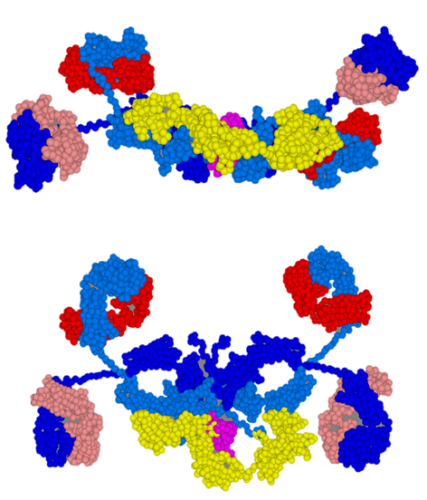
For decades, the central dogma of molecular biology has guided our understanding of life: DNA makes RNA, and RNA makes protein. However, recent breakthroughs in high-throughput sequencing have revealed a startling reality—mRNA levels often fail to correlate with protein abundance. This discrepancy suggests that the true "control room" of the cell lies not in transcription, but in the complex, dynamic process of translation. As researchers strive to decode this mystery, the focus has shifted toward the "Translatome." At the heart of this revolution is Ribosome Profiling (Ribo-seq), a technique that provides a high-resolution snapshot of protein synthesis by capturing the exact position of ribosomes on mRNA.
Deciphering the Translatome with Ribosome Footprints
Traditional RNA sequencing (RNA-seq) measures the steady-state level of transcripts, but it cannot determine which genes are actually being translated into functional proteins. By exploring the link between ribosome footprints and gene expression regulation, scientists can move past simple abundance metrics.
These "footprints"—small fragments of RNA protected from degradation by the ribosome—reveal critical regulatory mechanisms. For instance, they can pinpoint ribosomal pausing, which may indicate cellular stress or the presence of rare codons. Furthermore, Ribo-seq allows researchers to identify alternative open reading frames (ORFs) and translation start sites that are invisible to standard transcriptomics. Understanding these nuances is essential for grasping how cells modulate their proteome in response to environmental cues or pathological states.
From Bench to Bioinformatics: The Ribo-seq Workflow
Harnessing the power of translation research requires a meticulous and highly specialized experimental approach. The journey from cells to data: the essential steps in ribosome footprinting involves several critical checkpoints. It begins with the stabilization of ribosomes through chemical cross-linking or specialized lysis buffers, followed by RNase digestion to remove all RNA not "shielded" by a ribosome.
The resulting Ribosome-Protected Fragments (RPFs) are then isolated and converted into a deep-sequencing library. This process is technically demanding; any bias during library preparation or fragment size selection can skew the results. Specialized bioinformatic pipelines are then employed to map these fragments back to the genome with nucleotide-level precision. For drug developers, these standardized steps are the key to identifying how a therapeutic compound might interfere with or enhance the translation of specific oncogenes or viral proteins.
The New Frontier: Single-Cell Multi-Omics Integration
While bulk Ribo-seq provides a valuable population-level average, it often masks the biological heterogeneity found in complex tissues like tumors or the brain. The next frontier in precision medicine involves a single-cell multi-omics integration perspective. By combining translation data with single-cell RNA-seq (scRNA-seq) and epigenetic profiling, researchers can decode cell states in unprecedented detail.
This holistic approach allows for the identification of rare cell subpopulations that might be "transcriptionally primed" but "translationally silent," or vice versa. In oncology, for example, multi-omics integration can reveal why certain cancer cells survive treatment by switching their translation programs, even when their mRNA profile remains unchanged. This level of insight is transformative, paving the way for therapies that target the actual machinery of protein synthesis rather than just the messengers.
Conclusion
The integration of ribosome footprinting into the broader multi-omics toolkit marks a paradigm shift in biological research. By moving beyond mere transcript abundance and focusing on the actual synthesis of proteins, we gain a much more accurate understanding of the "functional" state of a cell. Whether it is uncovering the mechanisms of antibiotic resistance or discovering new biomarkers for neurodegenerative diseases, mastering the interplay between ribosome footprints and gene regulation is the key to unlocking the next generation of biotherapeutic innovations.

 English
 Arabic
 French
 Spanish
 Deutsch
 Turkish
 Dutch
Dutch
 Italiano
 Russian
 Romaian
 Portuguese (Brazil)
 Greek
Greek