


What Is Fianchetto in Chess and When to Use It
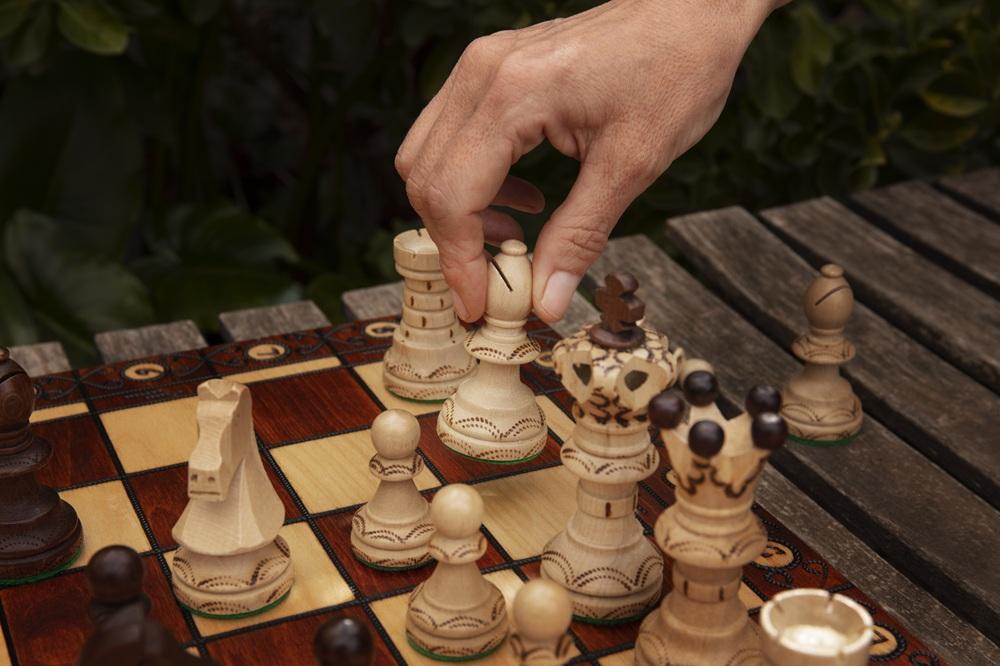
There’s something quietly powerful about a fianchetto. It doesn’t shout. It doesn’t demand attention the way a central pawn push does. And yet, if you’ve ever faced a well-placed bishop slicing across the board from the corner, you know—it can feel suffocating.
For many players, especially those working with a chess personal trainer, the idea of a fianchetto becomes a turning point. It’s not just a move. It’s a shift in how you see the board. Less direct. More patient. And often, much more dangerous.
Understanding the Fianchetto (Without Overcomplicating It)
A fianchetto happens when you develop your bishop to the long diagonal, usually by playing g3 and Bg2 (for White) or g6 and Bg7 (for Black). Simple enough.
But the simplicity is deceptive.
That bishop doesn’t just sit there. It controls key central squares from a distance. It supports your king’s safety. It creates long-term pressure that builds slowly, almost invisibly.
It’s like setting a trap and waiting.
Why Players Struggle With It at First
Here’s the honest part. Many beginners—and even some intermediate players—don’t fully trust the fianchetto.
Why?
Because it doesn’t give immediate results.
You’re not attacking right away. You’re not occupying the center with pawns. Instead, you’re developing from the side. It feels passive, even slow.
This is where structured learning matters. Many chess courses for beginners introduce the idea, but they often stop at “this is how you do it,” without really explaining when or why.
And that’s where confusion begins.
What the Fianchetto Actually Does for Your Position
When used correctly, a fianchetto offers three big advantages.
First, king safety. Especially in kingside fianchetto setups, your king becomes very hard to attack. The bishop acts like a shield, covering long diagonals that would otherwise be weak.
Second, long-range control. That bishop can influence the center without being directly involved in early exchanges. It’s quiet pressure, but it adds up.
Third, flexibility. You’re not committing too early. You keep options open. And in chess, that matters more than most people realize.
A good chess personal trainer will often point out that flexibility is what separates average players from strong ones.
Common Situations Where Fianchetto Works Best
You’ll often see fianchetto setups in openings like the King’s Indian Defense or the Grünfeld. But you don’t need to memorize those names to understand the idea.
Use a fianchetto when:
- You want a solid, safe king position
- You prefer strategic play over early tactics
- Your opponent controls the center early
In these cases, the fianchetto helps you stay in the game without overextending.
It’s not flashy. But it’s reliable.
When You Should Avoid It
Now, this is important. The fianchetto isn’t always the right choice.
If the center is wide open and tactical, you might fall behind in development. If your opponent launches a fast attack on the flank where you fianchettoed, your structure can become a target.
Also, if you don’t understand the follow-up plans, the position can feel awkward. Your pieces don’t coordinate well. Your bishop becomes just… there.
This is where many players go wrong. They copy the setup without understanding the ideas behind it.
And copying without thinking rarely works in chess.
Typical Mistakes Players Make
One common mistake is weakening the kingside too early. Moving pawns like g3 or g6 without a clear plan can create holes around your king.
Another mistake is ignoring the center. Just because your bishop controls it from a distance doesn’t mean you should abandon it completely.
And then there’s overconfidence. Players sometimes think the fianchetto makes their position automatically strong. It doesn’t. It still needs support, coordination, and timing.
These are the kinds of things that come up again and again in game analysis sessions.
How to Actually Learn to Use It Well
Reading about the fianchetto helps. Watching games helps more. But applying it in your own games that’s where the real learning happens.
This is why many players move beyond basic tutorials and start working with a chess personal trainer. Because someone needs to point out:
- When your fianchetto is strong
- When it’s misplaced
- What plan should follow
Without that feedback, progress is slow. You might understand the idea, but not the execution.
A Simple Way to Practice
Try this.
Play a few games where you intentionally fianchetto your bishop early. Don’t overthink it. Just focus on:
- Keeping your king safe
- Watching how your bishop influences the board
- Not rushing into attacks
After the game, review it. Look for moments where the bishop helped and where it didn’t.
This kind of focused practice is often included in good chess courses for beginners, but it’s useful at every level.
Why It Matters More Than You Think
The fianchetto isn’t just a setup. It’s a lesson in patience.
It teaches you to:
- Think long-term
- Value piece activity over quick attacks
- Build pressure instead of forcing it
And these are skills that go far beyond a single opening.
They shape how you play the entire game.
FAQs
Is fianchetto good for beginners?
Yes, but only if you understand the idea behind it. Otherwise, it can feel confusing or slow.
Do strong players use fianchetto often?
Absolutely. It’s common in many high-level openings because of its flexibility and safety.
Can I use fianchetto in every game?
Not really. It depends on the position. Sometimes direct central control is better.
Do I need a coach to learn it properly?
Not required, but helpful. A chess personal trainer can speed up your understanding significantly.
Conclusion
The fianchetto is one of those ideas that looks simple on the surface, but carries depth the more you explore it. It won’t win you games instantly. It won’t create fireworks in the opening.
But it builds something stronger. A position that holds. A structure that supports you into the middlegame. And a way of thinking that values control over chaos.
If you take the time to understand it—not just play it—you’ll start to see the board differently.
And that’s where real improvement begins.

 English
 Arabic
 French
 Spanish
 Portuguese
 Deutsch
 Turkish
 Dutch
Dutch
 Italiano
 Russian
 Romaian
 Greek
Greek