


Premium Art Installation Design for Galleries, Events & Brands
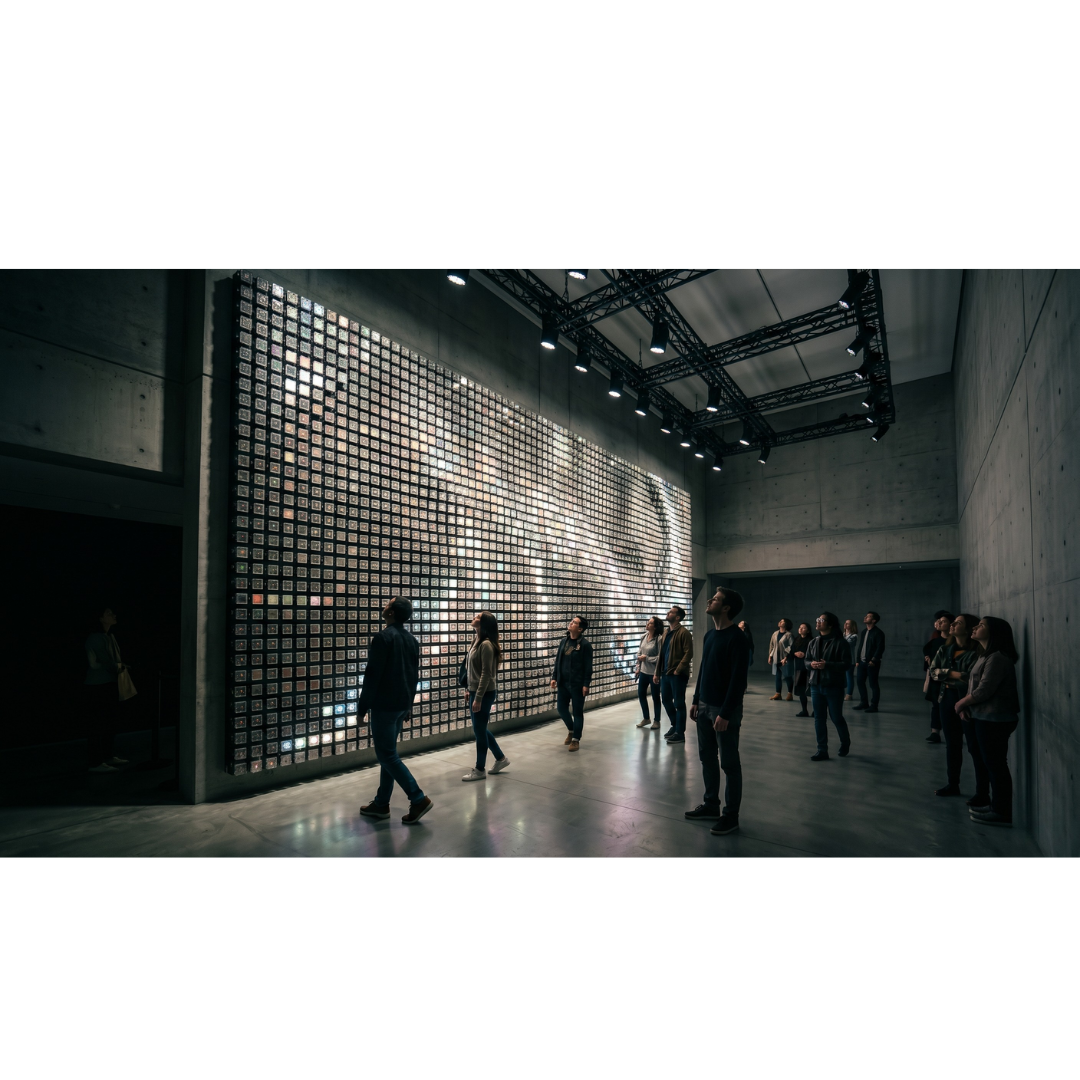
Art installation design is the process of creating three-dimensional, site-specific works that transform a physical space into an experience.
Whether it's a gallery exhibition, a brand activation, or a corporate event, these installations are built to engage audiences in ways that flat visuals simply cannot.
This is not about decoration. It is about creating a moment that people remember, talk about, and photograph.
What Makes an Art Installation Different from Regular Display Work
Most display work sits in the background. An installation demands attention. It interacts with the space, the light, the audience, and sometimes even the architecture itself.
The difference shows in how it is planned. A good installation considers:
-
The dimensions and surfaces of the venue
-
How people will physically move around or through it
-
The lighting conditions at different times of day
-
The material behavior over the duration of the event or exhibition
A retail brand setting up a pop-up might want visitors to walk through a tunnel of hanging mirrors.
A gallery might commission a suspended sculpture that responds to sound.
Both require a completely different approach than putting up banners or framed prints.
Where Art Installation Design Gets Used in Real Business Contexts
Galleries and Museum Exhibitions
Galleries use custom installation work to give each exhibition its own identity.
It is not enough to hang paintings on white walls anymore. Curators work with installation designers to build environments that support the artist's intent and guide how a visitor experiences the work.
Lighting placement, floor material, partition height, and spatial flow all affect how a visitor connects with the art.
A well-designed exhibition space can turn a modest collection into an immersive presentation.
Brand Activations and Product Launches
Brands use large-scale installations at launch events and experiential marketing campaigns to create shareable moments.
The goal is always to make the product or message feel bigger than a simple advertisement can.
A fragrance brand might build a forest of glass tubes filled with botanicals.
A tech company might create an interactive wall made of thousands of physical pixels.
These are not gimmicks. They are strategic communication tools built around a clear visual concept.
Corporate Spaces and Office Environments
More companies are commissioning permanent or semi-permanent installation works for lobbies, conference rooms, and public-facing spaces.
These pieces serve a practical purpose: they communicate company culture without using words.
A custom ceiling installation in a financial firm's reception area says something about precision and investment that no brochure can.
It creates a first impression that sticks.
Events and Hospitality
Weddings, galas, fashion weeks, and hospitality venues all use installation-style design to define the atmosphere of a space.
A floral canopy, a geometric light structure, or a hand-built sculptural centerpiece changes how a room feels and functions.
Event designers who understand structural materials, suspension rigging, and spatial proportion are far more valuable than those who only work from mood boards.
The Design and Build Process Behind a Real Installation
A professional art installation design project goes through several practical phases before anything is built.
Concept Development
The designer works with the client to understand the space, the audience, and the message.
This phase produces sketches, material samples, and sometimes small-scale models.
Technical Planning
This is where most amateur projects fall apart.
Professional installation work requires structural calculations, venue approvals, load assessments, and material testing.
If the piece is hanging from a ceiling, engineers need to confirm the rigging capacity.
Fabrication
Depending on the materials, this could involve:
-
Metalwork
-
Custom lighting rigs
-
Textile weaving
-
Resin casting
-
Digital printing on unusual surfaces
-
Hand-built sculptural elements
Installation and Setup
The on-site build phase is time-sensitive, especially for events.
Installation teams work within strict venue windows, often overnight, to have everything in place before doors open.
Breakdown and Documentation
For temporary pieces, professional dismantling matters.
For permanent works, documentation ensures the piece can be maintained or recreated later.
What to Look for in an Art Installation Partner
Not every creative agency or event company has genuine installation experience.
When evaluating partners, ask for:
-
Past project portfolios with technical details, not just styled photographs
-
References from venues or brands with similar scale requirements
-
Clarity on who handles structural approvals and rigging
-
A clear understanding of your audience and what you want them to feel
Budget conversations should happen early.
Installations vary enormously in cost depending on scale, materials, and complexity.
A partner who cannot give you an honest range in the first conversation is not the right partner.
Conclusion
Art installation design sits at the intersection of creative vision and practical construction.
It is used across galleries, brand events, corporate spaces, and hospitality because it creates experiences that standard design formats cannot deliver.
The best installations are not the most expensive ones.
They are the ones that are built with clarity of purpose, technical honesty, and a real understanding of the space and audience they serve.
If you are planning a gallery show, a product launch, or a permanent feature for your space, approach it the way a serious project deserves:
with a defined brief, a qualified team, and enough lead time to do it properly.
FAQs
Q.1 How long does it take to design and build an art installation?
Ans: Timelines vary based on complexity.
A simple event installation might take two to four weeks from concept to setup.
A large-scale gallery or permanent corporate piece can take three to six months, especially when structural approvals and custom fabrication are involved.
Q.2 What is the typical cost range for a custom art installation?
Ans: Small-scale event installations can start from a few thousand dollars.
Large branded or gallery-grade pieces can run into tens of thousands depending on materials, size, and labor.
Get a detailed quote after sharing your brief and venue specs.
Q.3 Can an art installation be reused or moved to another location?
Ans: Yes, if it is designed for that purpose from the start.
Modular builds and dismountable structures make reuse practical.
Site-specific pieces are harder to relocate because they are built around a particular space.
Q.4 Do I need council or venue approval for an installation?
Ans: In most cases, yes.
Any piece that is suspended, freestanding above a certain height, or uses electrical components will need venue sign-off and sometimes local authority approval.
A professional installation team handles this as part of the process.
Q.5 What industries benefit most from installation-based design?
Ans: Retail, hospitality, fashion, technology, arts, and corporate sectors use installation work regularly.
Any industry that communicates with a live audience in a physical space can benefit from this format.

 English
 Arabic
 French
 Spanish
 Portuguese
 Deutsch
 Turkish
 Dutch
Dutch
 Russian
 Romaian
 Portuguese (Brazil)
 Greek
Greek