


Professional Posters Printing Services: Sharp, Clear & Impactful
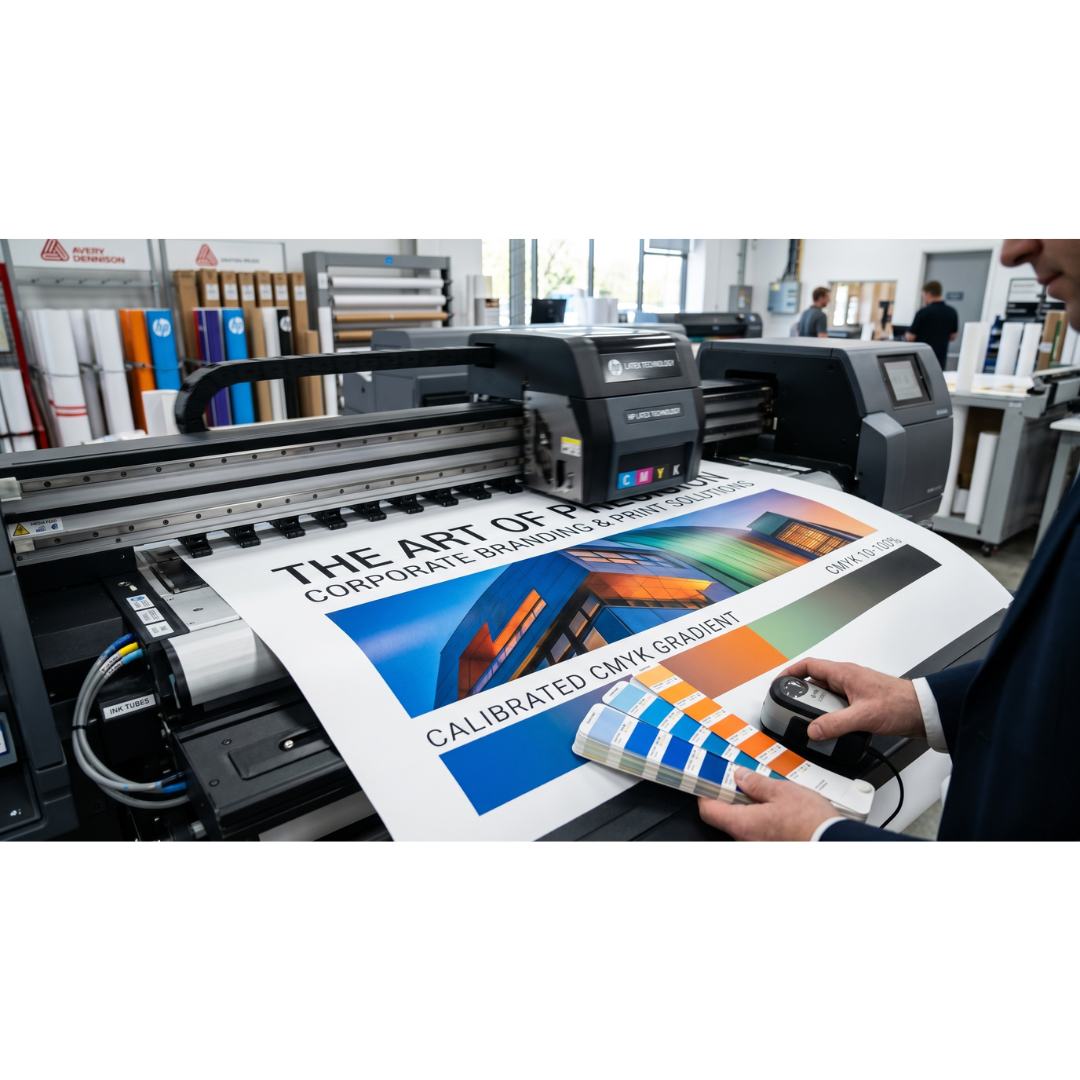
If your printed poster looks blurry, dull, or pixelated on a wall, it does not matter how good your design is.
Professional poster printing is about producing output that holds color accuracy, sharp text, and visual clarity at the exact size you need — whether that is A1 for a retail display or a large format print for an outdoor hoarding.
This blog covers what actually makes poster printing professional, what to look for in a printing service, and how businesses use high-quality print to get real results.
Why Print Quality Separates Results from Waste
A poster is a visual communication tool.
When it works, people stop, read, and act.
When it does not, it becomes background noise.
The difference almost always comes down to:
-
Resolution of the original file (300 DPI minimum for print)
-
The printing technology used (digital vs. offset vs. UV print)
-
Paper or substrate quality
-
Color calibration between screen and final print
Most businesses make the mistake of approving a design on screen and assuming it will translate perfectly to print. It does not always.
A reliable printing service will flag this before production starts, not after.
What "Professional" Actually Means in Poster Printing
The word gets used loosely.
In real terms, professional poster printing means:
-
Accurate color output:
What you see in your design file should closely match what comes off the press. This requires CMYK color management, not RGB. -
Crisp text at any size:
Whether your heading is 12pt or 120pt, edges should be clean and readable from the intended viewing distance. -
Consistent output across copies:
If you are printing 500 copies, copy 1 and copy 500 should look identical. Batch inconsistency is a real problem with low-grade printers. -
Bleed and margin management:
Professional printers work with files that include bleed areas so the final trimmed poster does not show white borders or cut into important content.
Where Businesses Actually Use Poster Printing
Posters serve a wide range of real business purposes:
-
Retail and in-store promotion:
Product launches, seasonal offers, and category signage inside a store. These need to be replaced regularly, so fast turnaround matters. -
Corporate events and conferences:
Corporate posters printing is used heavily in this space — for directional signage, speaker profiles, session schedules, and brand presence at trade shows or internal company events. -
Hospitality and food service:
Menus, daily specials, and brand imagery in cafes, restaurants, and hotels rely on sharp, food-safe laminated prints. -
Healthcare and education:
Clinics, hospitals, and schools use printed posters for wayfinding, health information, safety guidelines, and awareness campaigns. -
Real estate and construction:
Site hoardings, project announcement boards, and open home displays.
In most of these cases, the poster represents the business to someone who has never interacted with the brand before.
Poor quality print creates a poor first impression.
Choosing the Right Paper and Finish
This is where many businesses take shortcuts and later regret it.
-
Paper weight:
170gsm is entry-level for indoor posters. For anything displayed long-term or in a high-traffic area, 250gsm or above holds better and resists curling. -
Gloss finish:
Good for vibrant images and photography. Reflects light, which can cause glare under fluorescent lighting. -
Matte finish:
Better for text-heavy posters. Reduces glare and gives a more refined look in professional environments. -
Satin or silk:
A middle ground. Works well for most business applications where both images and text are present. -
Lamination:
Adds durability and protection against moisture, fingerprints, and minor damage. Useful for posters placed in public-facing areas.
What to Ask a Printing Service Before Placing an Order
Many businesses hand over a file without asking the right questions.
Here is what you should know before committing:
-
What file formats do you accept, and what resolution do you recommend?
-
Do you offer a proof before full production?
-
What is your color matching process (particularly for brand colors)?
-
What is the turnaround time for standard and urgent orders?
-
Do you offer bulk pricing for corporate poster printing?
-
What is your policy if the final output does not match the approved proof?
A printing service that answers these clearly and specifically is worth working with.
One that gives vague responses or rushes you to place the order without discussing specs is a risk.
Getting the Most from Your Poster Investment
Print does not have to be expensive to be effective, but going too cheap usually costs more in reprints and lost opportunity.
A few practical points:
-
Always supply print-ready files with correct bleed settings (usually 3mm to 5mm on each side)
-
Avoid using images sourced from the internet — web images are 72 DPI and will print poorly
-
Request a physical proof for large orders before approving full production
-
Plan your sizes based on where the poster will be displayed and from what distance it will be read
Conclusion
Professional poster printing is not a luxury.
For any business that communicates visually with customers, staff, or event attendees, it is a basic operational need.
Corporate posters printing done well reflects directly on your brand credibility. Done poorly, it undermines even the best marketing message.
The key factors are file quality, printing technology, substrate choice, and working with a provider who treats your order as a production job with real standards, not just a transaction.
FAQs
Q.1 What resolution should my poster file be for printing?
Your file should be at least 300 DPI at the final print size.
Lower resolution files will produce blurry or pixelated output, especially on large format prints.
Q.2 What is the difference between digital and offset poster printing?
Digital printing is cost-effective for small runs and faster to produce.
Offset printing is better for large volumes and delivers more consistent color accuracy across high quantities.
Q.3 How long does professional poster printing usually take?
Standard turnaround is typically 2 to 5 business days depending on size, quantity, and finish.
Urgent orders may be available within 24 hours at an additional cost.
Q.4 Can I get posters printed in custom sizes?
Yes. Most professional printing services offer custom sizing.
Always confirm the maximum print dimensions available and whether your chosen size affects pricing significantly.
Q.5 What finish is best for an office or corporate environment?
Matte or satin finishes work best in office settings.
They reduce glare under artificial lighting and give a professional, clean appearance suitable for corporate spaces.

 English
 Arabic
 French
 Spanish
 Portuguese
 Deutsch
 Turkish
 Italiano
 Russian
 Romaian
 Portuguese (Brazil)
 Greek
Greek