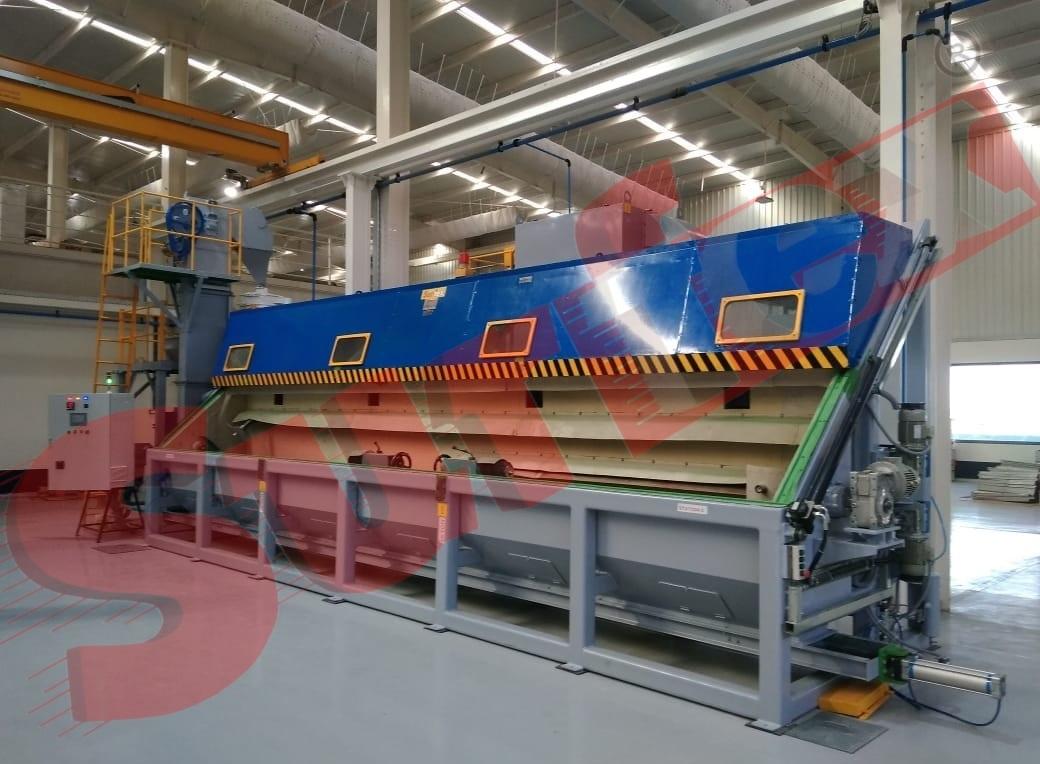
• Shot peening has long been a cornerstone process for improving fatigue life, stress resistance, and surface durability of metal components across aerospace, automotive, energy, and heavy industries.

    https://sfecindia.net/

    #technology #technologies #shotblastingmachine #socialmedia
    Shot peening has long been a cornerstone process for improving fatigue life, stress resistance, and surface durability of metal components across aerospace, automotive, energy, and heavy industries. https://sfecindia.net/ #technology #technologies #shotblastingmachine #socialmedia
    SFECINDIA.NET
    Shot Blasting Machine Manufacturers : India’s No.1 Surface Finishing Experts
    Discover why SFEC India is recognized as India’s No.1 shot blasting machine manufacturer. We deliver advanced surface finishing, shot peening, and abrasive blasting solutions trusted by industries worldwide.
    0 Σχόλια 0 Μοιράστηκε 243 Views 0 Προεπισκόπηση
  • In an era where vehicle lightweighting, agile manufacturing and waste-minimisation are key themes across the automotive industry, this high-capacity blanking line offers a powerful solution for tier suppliers and OEMs alike. Designed to process carbon-rolled steel (CRS), hot-rolled steel (HRS) and aluminium sheet, with widths from 300 to 2,080 mm, lengths from 300 to 4,300 mm, thicknesses from 0.5 to 3.0 mm, and a press capacity of up to 800 t (5,200 × 2,750 mm bed), it delivers high performance at up to 65 strokes per minute, while stacking blanks using both magnetic and vacuum systems.
    https://sumikura.jp/blanking-lines-2.html
    Why this line matters today
    One of the most significant industrial-megatrends is the imperative to ‘do more with less’ — less weight, less material waste, faster change-over, and greater flexibility. The blanking line is well aligned: by offering large size flexibility (wide sheets up to 2,080 mm, long blanks up to 4,300 mm) and material compatibility (CRS, HRS, aluminium), the system supports the manufacture of large body panels, battery-enclosures and multi-material structural components. According to industry sources, blanking lines convert large coil feedstock into precisely cut blanks for automotive use with high throughput and tight tolerances.

    Moreover, the global market research on blanking (especially laser blanking) is showing strong growth driven by automotive and aerospace needs: tool-free layout, high precision, efficient material use. Hence, a press-based blanking line of this scale occupies a strategic position between legacy stamping and more advanced laser blanking, providing high tonnage capacity (800 t) while still addressing large blank formats and material thicknesses typical for structural automotive use.

    Key features & benefits
    Versatile material handling — With thickness capability of 0.5–3.0 mm across steel and aluminium, the line is ready for lightweighting trends (aluminium outer skins, high-strength steel) and large panel sizes.
    High throughput — A press up to 800 t and stroke rate of 65 SPM provide strong productivity for high volume runs.
    Large blank formats — Blank widths up to 2,080 mm and lengths up to 4,300 mm allow consolidation of multiple smaller blanks into one large piece, reducing downstream joins, welds and handling.
    Automated stacking — The magnetic and vacuum stacking system reduces blank handling time, improves safety and preserves blank quality (important for aluminium and surface-sensitive parts). This aligns with known solutions in the automotive-oriented blanking industry.

    Material and cost optimisation — By integrating coil feeding, precise blanking, and efficient stacking, the system supports just-in-time blank production and helps reduce storage of large blank inventories. Manufacturing guides emphasise blanking line benefits: high productivity, waste reduction, consistent blanks.

    Strategic fit for automotive supply chains
    As vehicle platforms evolve more rapidly and use larger panels and mixed materials, suppliers must respond with equipment that handles wide, long, thin gauge blanks reliably. This blanking line enables building large structural or outer-skin blanks out of CRS/HRS/Aluminium in one process step — reducing part count, join complexity and cycle time. The high tonnage and size envelope mean the line can support heavy-gauge steel as well as lighter aluminium alloys, making it future-proof against shifts in material strategy.

    In summary, this automotive blanking line pairs size and tonnage capability, material versatility, and automation-ready stacking, delivering a comprehensive blanking solution geared for modern auto manufacturing demands — higher flexibility, lower waste, faster cycle times and larger blanks.
    In an era where vehicle lightweighting, agile manufacturing and waste-minimisation are key themes across the automotive industry, this high-capacity blanking line offers a powerful solution for tier suppliers and OEMs alike. Designed to process carbon-rolled steel (CRS), hot-rolled steel (HRS) and aluminium sheet, with widths from 300 to 2,080 mm, lengths from 300 to 4,300 mm, thicknesses from 0.5 to 3.0 mm, and a press capacity of up to 800 t (5,200 × 2,750 mm bed), it delivers high performance at up to 65 strokes per minute, while stacking blanks using both magnetic and vacuum systems. https://sumikura.jp/blanking-lines-2.html Why this line matters today One of the most significant industrial-megatrends is the imperative to ‘do more with less’ — less weight, less material waste, faster change-over, and greater flexibility. The blanking line is well aligned: by offering large size flexibility (wide sheets up to 2,080 mm, long blanks up to 4,300 mm) and material compatibility (CRS, HRS, aluminium), the system supports the manufacture of large body panels, battery-enclosures and multi-material structural components. According to industry sources, blanking lines convert large coil feedstock into precisely cut blanks for automotive use with high throughput and tight tolerances. Moreover, the global market research on blanking (especially laser blanking) is showing strong growth driven by automotive and aerospace needs: tool-free layout, high precision, efficient material use. Hence, a press-based blanking line of this scale occupies a strategic position between legacy stamping and more advanced laser blanking, providing high tonnage capacity (800 t) while still addressing large blank formats and material thicknesses typical for structural automotive use. Key features & benefits Versatile material handling — With thickness capability of 0.5–3.0 mm across steel and aluminium, the line is ready for lightweighting trends (aluminium outer skins, high-strength steel) and large panel sizes. High throughput — A press up to 800 t and stroke rate of 65 SPM provide strong productivity for high volume runs. Large blank formats — Blank widths up to 2,080 mm and lengths up to 4,300 mm allow consolidation of multiple smaller blanks into one large piece, reducing downstream joins, welds and handling. Automated stacking — The magnetic and vacuum stacking system reduces blank handling time, improves safety and preserves blank quality (important for aluminium and surface-sensitive parts). This aligns with known solutions in the automotive-oriented blanking industry. Material and cost optimisation — By integrating coil feeding, precise blanking, and efficient stacking, the system supports just-in-time blank production and helps reduce storage of large blank inventories. Manufacturing guides emphasise blanking line benefits: high productivity, waste reduction, consistent blanks. Strategic fit for automotive supply chains As vehicle platforms evolve more rapidly and use larger panels and mixed materials, suppliers must respond with equipment that handles wide, long, thin gauge blanks reliably. This blanking line enables building large structural or outer-skin blanks out of CRS/HRS/Aluminium in one process step — reducing part count, join complexity and cycle time. The high tonnage and size envelope mean the line can support heavy-gauge steel as well as lighter aluminium alloys, making it future-proof against shifts in material strategy. In summary, this automotive blanking line pairs size and tonnage capability, material versatility, and automation-ready stacking, delivering a comprehensive blanking solution geared for modern auto manufacturing demands — higher flexibility, lower waste, faster cycle times and larger blanks.
    Automotive Sheet Metal Blanking Production Line - SUMIKURA Co., Ltd
    Automotive Sheet metal blanking production line is specifically designed for automotive inner and outer body panels, structural reinforcements, chassis components, and aluminum body parts, where surface quality, flatness, and accuracy are critical.
    0 Σχόλια 0 Μοιράστηκε 437 Views 0 Προεπισκόπηση
  • Transforming the Skies with Vertical Takeoff & Landing (VTOL) Precision

    At Intelligent Visioneering, we specialise in advanced consulting for emerging aerospace platforms, combining drone integration, sensor systems, and Vertical Takeoff & Landing (VTOL) capabilities to deliver turnkey solutions that redefine mobility, safety, and mission readiness for critical defence and civil markets.

    https://intelligentvisioneering.com/
    Transforming the Skies with Vertical Takeoff & Landing (VTOL) Precision At Intelligent Visioneering, we specialise in advanced consulting for emerging aerospace platforms, combining drone integration, sensor systems, and Vertical Takeoff & Landing (VTOL) capabilities to deliver turnkey solutions that redefine mobility, safety, and mission readiness for critical defence and civil markets. https://intelligentvisioneering.com/
    Home - Intelligent Visioneering
    Is a Veteran-Owned Small Business with over 50 years of experience in military air, space, nuclear strategic and tactical operations.
    0 Σχόλια 0 Μοιράστηκε 169 Views 0 Προεπισκόπηση
  • Precision and versatility for modern machining demands
    As machining centres advance toward multi-axis turning and hybrid machine tools, the need for tooling systems that accommodate complex setups and varied materials is more critical than ever.
    https://www.xiray-tools.com/product/
    Our tooling portfolio supports a broad spectrum of holder types (VDI, BMT, HSK, BT, PSC), ensuring compatibility with everything from high-speed turning centres to heavy machining spindles, and even grinding machines. Whether you’re performing standard boring, fine finishing, or heavy interrupted cuts, you’ll find tooling engineered for the job.

    Smart tooling meets Industry 4.0
    With the rise of machine-tool connectivity, IoT sensors and adaptive machining, tools are no longer passive. Embedded performance monitoring, chip-evacuation optimisation, and wear-resistant coatings are increasingly the norm in 2025.

    Our tooling systems integrate with such trends by offering holders and inserts designed for high-sensor environments, whether for predictive maintenance or process-data feedback. This means you don’t just buy a boring bar—you acquire a component of a digitally-connected machining ecosystem.

    Advanced materials, coatings and application-specific design
    Manufacturers today are cutting lightweight alloys, titanium, nickel-based superalloys and other challenging materials — and your tooling must keep up.

    Our offering includes high-performance inserts and holders designed for hardened steels, exotic alloys and demanding finishes. Whether you require ultra-tight tolerances for medical or aerospace parts, or robust systems for high-volume automotive work, we deliver solutions with microscale accuracy, advanced coatings and tailored geometries.

    Customisation and modular flexibility for low-volume/high-mix production
    The shift toward agile production, small batch volumes and frequent change-overs is real.

    Our tooling platforms emphasise modularity: interchangeable holders, quick-change inserts, and standard interfaces (VDI, BMT, HSK, BT, PSC) enable you to adapt rapidly from one job to the next without reinventing the tooling stack. That flexibility helps reduce setup time, minimize downtime and improve overall throughput.

    Future-proof your tooling investment
    By selecting from our comprehensive portfolio of 150,000 + tooling variants, you gain access to solutions built for the trends shaping next-generation machining — digital integration, advanced materials, agile production and precision outcomes. Whether you are configuring a new turning centre or optimizing an existing machining line, our offerings give you the toolkit to succeed today and tomorrow.
    Precision and versatility for modern machining demands As machining centres advance toward multi-axis turning and hybrid machine tools, the need for tooling systems that accommodate complex setups and varied materials is more critical than ever. https://www.xiray-tools.com/product/ Our tooling portfolio supports a broad spectrum of holder types (VDI, BMT, HSK, BT, PSC), ensuring compatibility with everything from high-speed turning centres to heavy machining spindles, and even grinding machines. Whether you’re performing standard boring, fine finishing, or heavy interrupted cuts, you’ll find tooling engineered for the job. Smart tooling meets Industry 4.0 With the rise of machine-tool connectivity, IoT sensors and adaptive machining, tools are no longer passive. Embedded performance monitoring, chip-evacuation optimisation, and wear-resistant coatings are increasingly the norm in 2025. Our tooling systems integrate with such trends by offering holders and inserts designed for high-sensor environments, whether for predictive maintenance or process-data feedback. This means you don’t just buy a boring bar—you acquire a component of a digitally-connected machining ecosystem. Advanced materials, coatings and application-specific design Manufacturers today are cutting lightweight alloys, titanium, nickel-based superalloys and other challenging materials — and your tooling must keep up. Our offering includes high-performance inserts and holders designed for hardened steels, exotic alloys and demanding finishes. Whether you require ultra-tight tolerances for medical or aerospace parts, or robust systems for high-volume automotive work, we deliver solutions with microscale accuracy, advanced coatings and tailored geometries. Customisation and modular flexibility for low-volume/high-mix production The shift toward agile production, small batch volumes and frequent change-overs is real. Our tooling platforms emphasise modularity: interchangeable holders, quick-change inserts, and standard interfaces (VDI, BMT, HSK, BT, PSC) enable you to adapt rapidly from one job to the next without reinventing the tooling stack. That flexibility helps reduce setup time, minimize downtime and improve overall throughput. Future-proof your tooling investment By selecting from our comprehensive portfolio of 150,000 + tooling variants, you gain access to solutions built for the trends shaping next-generation machining — digital integration, advanced materials, agile production and precision outcomes. Whether you are configuring a new turning centre or optimizing an existing machining line, our offerings give you the toolkit to succeed today and tomorrow.
    Modular Damping Cutting Tools Holding System Factory - Jiaxing XiRay Industrial Technology Co., Ltd
    Modular Damping Cutting Tools Holding System provides reliable tool clamping for a wide range of cutting processes, including deep-hole boring, high-speed milling, fine finishing, and long overhang machining.
    0 Σχόλια 0 Μοιράστηκε 427 Views 0 Προεπισκόπηση
  • https://www.marknteladvisors.com/research-library/aerospace-parts-manufacturing-market.html
    https://www.marknteladvisors.com/research-library/aerospace-parts-manufacturing-market.html
    WWW.MARKNTELADVISORS.COM
    Aerospace Parts Manufacturing Market Size, Share & Growth Report, 2030
    Aerospace Parts Manufacturing Market size was valued at around USD 936 billion in 2024 & is projected to reach USD 1,200 billion by 2030 along with a CAGR of 4%
    0 Σχόλια 0 Μοιράστηκε 171 Views 0 Προεπισκόπηση
  • The CTL line is capable of processing a broad range of materials, including high-speed steel (HSS), cold rolled steel (CRS), hot rolled steel (HRS), stainless steel (SS), and aluminum (Alum). This versatility allows manufacturers to handle diverse production requirements with a single machine. From thin aluminum panels used in consumer goods to thick steel plates for industrial and construction projects, the CTL line ensures uniform quality, flatness, and edge precision.
    https://sumikura.jp/cut-to-length-lines/
    Engineered for high-capacity operations, the system can handle coil widths up to 2,500 mm and produce sheets up to 12,000 mm long, while accommodating coil weights of 35 tons. This heavy-duty capacity allows manufacturers to process large rolls efficiently, reducing downtime caused by frequent coil changes and maintaining continuous production. For high-volume operations, this translates to increased throughput, better labor utilization, and overall operational efficiency.

    The line’s thickness range of 0.2 mm to 9.0 mm enables it to process both lightweight and heavy-duty materials. Thin sheets are ideal for automotive panels, appliances, or electronics, while thicker plates are suitable for shipbuilding, structural components, and heavy machinery. This wide range eliminates the need for multiple cutting systems and allows manufacturers to adapt to diverse project requirements without additional investment.

    Operational flexibility is enhanced by the variable speed range of 0–80 meters per minute. High-speed operation ensures rapid processing for large production runs, while lower speeds allow precise control for high-tolerance or delicate materials. This adaptability enables the CTL line to efficiently meet both volume-driven and precision-oriented production needs.

    The system features dual shear cutting options: stop shear and rotary shear. The stop shear provides accurate, burr-free cuts for short sheets and thicker materials, while the rotary shear supports continuous, high-speed cutting for long sheets and large batches. By offering these complementary cutting methods, the CTL line gives operators the flexibility to select the optimal approach for each project, balancing speed, precision, and edge quality.

    Built for reliability, the system incorporates a heavy-duty frame and precision-engineered components, ensuring consistent performance in demanding industrial environments. Automated controls simplify setup, reduce operator intervention, and minimize errors, while low-maintenance construction ensures minimal downtime and maximum uptime for production.

    Industries such as automotive, aerospace, shipbuilding, construction, appliance manufacturing, and general fabrication benefit from the CTL line’s combination of versatility and performance. By streamlining coil-to-sheet conversion, manufacturers can reduce material waste, improve productivity, and deliver high-quality sheets efficiently.

    In summary, the Cut-to-Length Line offers a versatile, high-capacity, and reliable solution for modern manufacturing. Its ability to process multiple materials, handle heavy coils, cut a wide thickness range, and operate with dual shear options makes it an essential tool for manufacturers seeking efficiency, precision, and consistent high-quality output across a variety of industrial applications.
    The CTL line is capable of processing a broad range of materials, including high-speed steel (HSS), cold rolled steel (CRS), hot rolled steel (HRS), stainless steel (SS), and aluminum (Alum). This versatility allows manufacturers to handle diverse production requirements with a single machine. From thin aluminum panels used in consumer goods to thick steel plates for industrial and construction projects, the CTL line ensures uniform quality, flatness, and edge precision. https://sumikura.jp/cut-to-length-lines/ Engineered for high-capacity operations, the system can handle coil widths up to 2,500 mm and produce sheets up to 12,000 mm long, while accommodating coil weights of 35 tons. This heavy-duty capacity allows manufacturers to process large rolls efficiently, reducing downtime caused by frequent coil changes and maintaining continuous production. For high-volume operations, this translates to increased throughput, better labor utilization, and overall operational efficiency. The line’s thickness range of 0.2 mm to 9.0 mm enables it to process both lightweight and heavy-duty materials. Thin sheets are ideal for automotive panels, appliances, or electronics, while thicker plates are suitable for shipbuilding, structural components, and heavy machinery. This wide range eliminates the need for multiple cutting systems and allows manufacturers to adapt to diverse project requirements without additional investment. Operational flexibility is enhanced by the variable speed range of 0–80 meters per minute. High-speed operation ensures rapid processing for large production runs, while lower speeds allow precise control for high-tolerance or delicate materials. This adaptability enables the CTL line to efficiently meet both volume-driven and precision-oriented production needs. The system features dual shear cutting options: stop shear and rotary shear. The stop shear provides accurate, burr-free cuts for short sheets and thicker materials, while the rotary shear supports continuous, high-speed cutting for long sheets and large batches. By offering these complementary cutting methods, the CTL line gives operators the flexibility to select the optimal approach for each project, balancing speed, precision, and edge quality. Built for reliability, the system incorporates a heavy-duty frame and precision-engineered components, ensuring consistent performance in demanding industrial environments. Automated controls simplify setup, reduce operator intervention, and minimize errors, while low-maintenance construction ensures minimal downtime and maximum uptime for production. Industries such as automotive, aerospace, shipbuilding, construction, appliance manufacturing, and general fabrication benefit from the CTL line’s combination of versatility and performance. By streamlining coil-to-sheet conversion, manufacturers can reduce material waste, improve productivity, and deliver high-quality sheets efficiently. In summary, the Cut-to-Length Line offers a versatile, high-capacity, and reliable solution for modern manufacturing. Its ability to process multiple materials, handle heavy coils, cut a wide thickness range, and operate with dual shear options makes it an essential tool for manufacturers seeking efficiency, precision, and consistent high-quality output across a variety of industrial applications.
    Customized Automation Cut to length lines Supplier - SUMIKURA Co., Ltd
    Cut to length lines are a complete solution for transforming coils into high-quality, ready-to-use sheet packages.
    0 Σχόλια 0 Μοιράστηκε 490 Views 0 Προεπισκόπηση