


Deconstructing the Core of a Modern API Management Market Platform
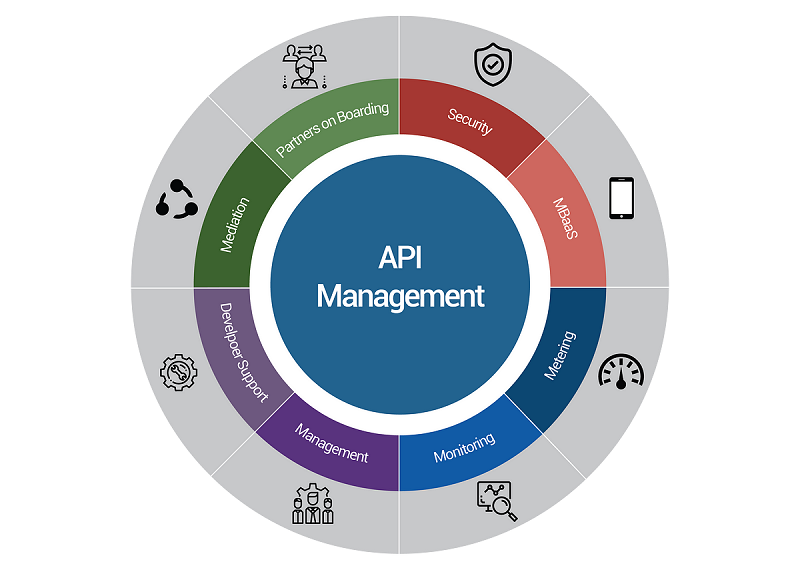
The process of transforming raw application endpoints into secure, reliable, and discoverable products is orchestrated by a sophisticated and multi-faceted software solution. The modern API Management Market Platform is a comprehensive suite of tools designed to handle the entire lifecycle of an API, from its initial design to its eventual retirement. The architecture of such a platform is typically comprised of several key, interconnected components that work together to provide a complete solution for both API providers and API consumers. The most critical of these components is the API Gateway, which acts as the policy enforcement point. This is complemented by a Developer Portal, which serves as the public-facing "storefront" for the APIs, and an Analytics Engine, which provides deep insights into API usage and performance. All of these components are controlled and configured through a centralized Management Plane or publisher portal. Understanding the distinct role of each of these components is essential to appreciating how an API management platform provides the essential governance, security, and business intelligence for a successful API program.
The API Gateway is the operational workhorse of the entire platform. It is a high-performance, scalable proxy server that sits in front of the back-end services and acts as the single entry point for all incoming API traffic. Its primary function is to enforce security and policy at runtime. When an API request comes in, the gateway is responsible for a series of critical tasks. First, it authenticates the identity of the client making the request, typically by validating an API key, an OAuth token, or another security credential. Second, it authorizes the request, checking to see if the authenticated client has permission to access the requested resource and perform the requested action. Third, it enforces traffic management policies, such as rate limiting (to prevent any single client from overwhelming the back-end) and spike-arrest policies (to handle sudden bursts of traffic). It can also perform other functions like transforming the request/response format, logging the transaction, and routing the request to the appropriate back-end service. The gateway is the essential "bouncer" and "traffic cop" that protects the back-end systems from both malicious and unintentional misuse.
While the gateway is the back-end enforcer, the Developer Portal is the public-facing interface designed to engage and empower the API consumers—the developers who will build applications using the APIs. The portal acts as a self-service "app store" for an organization's APIs. Here, developers can browse a catalog of available APIs, read detailed documentation that explains how each API works, and explore interactive examples in a sandbox environment. The portal automates the onboarding process, allowing developers to register for an account, create an "app," and receive the API keys or other credentials they need to start making calls, all without needing to contact the API provider directly. A well-designed developer portal is critical for driving the adoption of an API program. It should be easy to navigate, provide clear and comprehensive documentation, and offer tools that make it as frictionless as possible for a developer to discover, understand, and start using the APIs. It is the key to building a thriving developer community around an organization's platform.
The final crucial component is the Analytics and Management Plane. The management plane is the centralized user interface where the API provider's administrators and developers configure and manage the entire system. This is where they design APIs, define security policies, set rate limits, and publish APIs to the developer portal. It provides a single point of control for the entire API lifecycle. Inextricably linked to this is the analytics engine. The API gateway logs a wealth of data about every single transaction that passes through it. The analytics engine collects, aggregates, and visualizes this data to provide deep insights into the API program's performance and business impact. Administrators can view real-time and historical dashboards showing key metrics like total API traffic, error rates, and response times. Business leaders can see who their top developers are, which APIs are driving the most value, and track revenue for monetized APIs. This data-driven feedback loop is essential for treating APIs as products, allowing the organization to understand how they are being used, identify problems, and make informed decisions to improve and evolve their API offerings over time.
Explore More Like This in Our Regional Reports:
Malaysia Business Process Outsourcing (BPO) Services Market
Mexico Business Process Outsourcing (BPO) Services Market
South Africa Business Process Outsourcing (BPO) Services Market

 English
 Arabic
 French
 Spanish
 Portuguese
 Deutsch
 Turkish
 Dutch
Dutch
 Italiano
 Romaian
 Portuguese (Brazil)
 Greek
Greek