


Stainless Steel 316L Round Bar: Properties, Applications, and Advantages
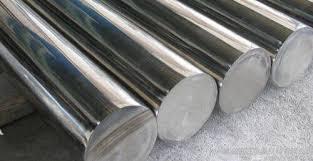
Stainless Steel 316L round bar is one of the most widely used austenitic stainless steel products in industries that demand high corrosion resistance, strength, and reliability. Known for its low carbon content and molybdenum addition, SS 316L round bar performs exceptionally well in corrosive and high-temperature environments, making it a preferred material for critical engineering applications.
What Is Stainless Steel 316L Round Bar?
Stainless Steel 316L round bar is a cylindrical metal product manufactured from low-carbon 316-grade stainless steel. The “L” grade indicates reduced carbon content, which significantly improves weldability and minimizes the risk of carbide precipitation during welding. This makes SS 316L round bars ideal for applications involving fabrication and welded structures.
Chemical Composition and Key Characteristics
SS 316L contains chromium, nickel, and molybdenum, which together enhance its corrosion resistance and mechanical performance. The presence of molybdenum provides superior resistance to pitting and crevice corrosion, especially in chloride-rich environments such as marine and chemical processing conditions.
Key characteristics include:
-
Excellent corrosion resistance
-
High resistance to pitting and crevice corrosion
-
Good strength at elevated temperatures
-
Superior weldability compared to standard 316 grade
-
Non-magnetic in the annealed condition
Mechanical Properties
Stainless Steel 316L round bar offers a balanced combination of strength and ductility. It maintains good mechanical properties across a wide temperature range, including cryogenic conditions. The alloy also exhibits excellent toughness, making it suitable for both structural and pressure-bearing applications.
Manufacturing Process
SS 316L round bars are produced through hot rolling, cold drawing, or forging processes depending on the required size and tolerance. After forming, the bars are typically solution annealed to restore corrosion resistance and relieve internal stresses. Surface finishes may vary from bright drawn to rough-turned or polished, based on application requirements.
Applications of Stainless Steel 316L Round Bar
Due to its versatility and performance, Stainless Steel 316L round bar is used across multiple industries:
Chemical and Petrochemical Industry
Used in reactors, valves, pumps, and fittings that handle corrosive chemicals and solvents.
Marine and Coastal Applications
Ideal for shafts, fasteners, and structural components exposed to seawater and saline environments.
Oil and Gas Industry
Used in offshore platforms, processing equipment, and piping components due to its resistance to aggressive media.
Pharmaceutical and Food Processing
Preferred for hygienic applications because of its clean surface finish and corrosion resistance.
Power Generation
Used in heat exchangers, turbine components, and high-temperature structural parts.
Construction and Engineering
Applied in architectural structures, machine components, and load-bearing parts where durability is essential.
Advantages of Using Stainless Steel 316L Round Bar
SS 316L round bar offers several benefits that make it superior to many other stainless steel grades:
-
Enhanced corrosion resistance compared to SS 304
-
Reduced risk of intergranular corrosion after welding
-
Long service life with low maintenance
-
Excellent formability and machinability
-
Suitable for both high-temperature and low-temperature applications
Welding and Machining
Stainless Steel 316L round bars are easy to weld using common welding techniques such as TIG, MIG, and SMAW. Due to the low carbon content, post-weld heat treatment is generally not required. Machining can be performed using standard tooling, although proper cutting speeds and cooling are recommended for best results.
Comparison with Stainless Steel 316
While both grades offer excellent corrosion resistance, SS 316L is preferred for welded applications due to its lower carbon content. This reduces the risk of carbide precipitation, making 316L more reliable in long-term service, especially in corrosive environments.
Conclusion
Stainless Steel 316L round bar is a dependable and high-performance material suitable for demanding industrial applications. Its superior corrosion resistance, excellent weldability, and strong mechanical properties make it a preferred choice in chemical processing, marine, oil and gas, and pharmaceutical industries. Choosing the right size, finish, and specification of SS 316L round bar ensures long-term reliability and efficient performance.

 English
 Arabic
 French
 Spanish
 Portuguese
 Deutsch
 Turkish
 Dutch
Dutch
 Russian
 Romaian
 Portuguese (Brazil)
 Greek
Greek