


How Managed IT Services Drive Efficiency and Growth
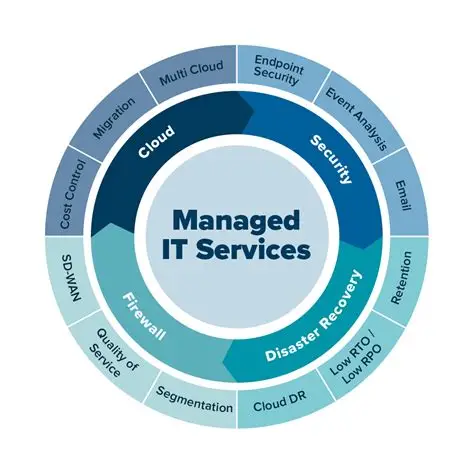
In today’s technology-driven economy, businesses of every size depend on reliable IT infrastructure. Yet maintaining complex networks, ensuring cybersecurity, and managing day-to-day technical issues can quickly overwhelm internal teams. This is where Managed IT Services become transformative—delivering not just operational stability but measurable business growth. By outsourcing key IT functions to specialized providers, organizations free up time, talent, and capital to focus on innovation and expansion.
1. Streamlining Daily Operations
The first and most visible benefit of Managed IT Services is the streamlining of routine operations. Providers monitor systems 24/7, identify anomalies in real time, and resolve problems before they impact productivity. Automated updates, patch management, and proactive maintenance ensure minimal downtime.
Instead of reacting to outages or performance slowdowns, businesses enjoy a predictive maintenance model—keeping servers, applications, and networks running at peak performance. This shift from firefighting to prevention dramatically reduces interruptions, helping employees work more efficiently and customers experience fewer service delays.
2. Reducing Costs and Improving Budget Predictability
Maintaining an in-house IT department can be expensive. Salaries, benefits, software licenses, and training costs often exceed what small and mid-sized businesses can afford. Managed IT Services convert these unpredictable expenses into a fixed, transparent monthly cost.
Because providers already possess the necessary infrastructure and skilled personnel, clients gain enterprise-level technology support without the overhead. This “as-a-service” model allows financial planning to be more precise and scalable—businesses can expand or contract their IT coverage as needs evolve, ensuring that every dollar spent contributes to growth rather than waste.
3. Enhancing Security and Compliance
Cybersecurity threats are rising exponentially, with ransomware and data breaches targeting organizations across every sector. Managed IT providers integrate multi-layered security protocols—firewalls, encryption, endpoint protection, and continuous threat monitoring—to safeguard sensitive information.
Moreover, compliance with data protection regulations such as HIPAA, GDPR, or PCI-DSS requires specialized expertise. A reputable Managed Service Provider (MSP) keeps systems aligned with industry standards and audit requirements, minimizing legal exposure. Businesses gain confidence knowing that their data and reputation are protected, enabling them to pursue digital transformation safely.
4. Access to Expertise and Emerging Technologies
Technology evolves faster than most internal teams can keep up with. Managed IT providers employ certified specialists across disciplines—from cloud computing and cybersecurity to network architecture and business continuity.
This expertise gives companies access to cutting-edge solutions without having to recruit or train additional staff. MSPs often recommend technology upgrades that align with strategic objectives: migrating workloads to the cloud, implementing automation tools, or deploying advanced analytics platforms. In short, Managed IT Services bridge the knowledge gap, ensuring that organizations remain competitive in a rapidly changing digital landscape.
5. Boosting Employee Productivity
When systems run smoothly and downtime is minimized, employees can focus on their core responsibilities instead of troubleshooting IT issues. Managed IT providers often include help-desk support that responds quickly to user problems—whether it’s a forgotten password, software malfunction, or email outage.
By eliminating recurring technical frustrations, staff morale and productivity improve. Moreover, cloud-based collaboration tools deployed and maintained by MSPs enable remote work, file sharing, and real-time communication, creating an agile workforce that adapts easily to new market demands.
6. Supporting Scalability and Business Growth
As organizations expand, their technology needs evolve. Opening new locations, onboarding more employees, or launching online services can strain internal IT resources. Managed IT Services provide the flexibility to scale infrastructure on demand—whether that means adding cloud capacity, deploying new endpoints, or strengthening cybersecurity defenses.
This scalability supports growth initiatives without major capital investment. Companies can enter new markets or adopt digital-first business models faster, backed by the reliability of a managed technology ecosystem.
7. Improving Strategic Focus
Perhaps the most understated advantage of Managed IT Services is the strategic clarity they provide. When routine IT management, monitoring, and troubleshooting are handled externally, business leaders regain time to focus on core objectives—innovation, customer experience, and long-term planning.
In this sense, Managed IT is not merely a cost-saving measure but a growth accelerator. It transforms technology from a background utility into a forward-driving force for competitive advantage.
8. Business Continuity and Disaster Recovery
Unexpected disruptions—natural disasters, cyber-attacks, or hardware failures—can cripple unprepared organizations. Managed IT providers design comprehensive disaster-recovery plans and implement automated data-backup systems.
In the event of a crisis, these safeguards allow businesses to restore operations swiftly with minimal data loss. The result is greater resilience, reduced downtime, and preserved customer trust—critical assets in an era where reputation and reliability determine success.
9. Data-Driven Insights and Continuous Improvement
Many MSPs now integrate analytics dashboards and performance reporting into their services. These insights allow businesses to track system health, identify inefficiencies, and make data-backed decisions. Over time, recurring reports reveal usage patterns and emerging opportunities, guiding smarter investments in technology and operations.
By turning raw IT metrics into actionable intelligence, Managed IT Services become a partner in continuous improvement—helping organizations evolve from reactive maintenance to proactive innovation.
Conclusion
Managed IT Services are more than just outsourced tech support—they are a catalyst for efficiency, security, and growth. By centralizing technology management, businesses gain predictable costs, expert support, and operational resilience. They can adapt quickly to change, innovate with confidence, and focus on what truly matters: delivering value to customers and expanding their market presence.
In a world where digital performance defines business success, partnering with a trusted Managed IT Service Provider is not simply a convenience—it’s a strategic necessity for sustainable growth.

 English
 Arabic
 French
 Spanish
 Portuguese
 Deutsch
 Turkish
 Dutch
Dutch
 Italiano
 Russian
 Romaian
 Greek
Greek