


India’s GDP in 2025: Growth Trends, Drivers, and Economic Outlook
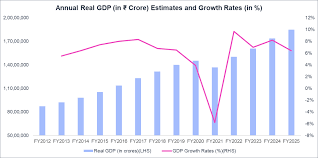
India’s economic trajectory continues to command global attention as it balances structural reforms, domestic demand, and external uncertainties. The GDP of India 2025 is projected to reinforce the country’s position as one of the fastest-growing major economies, supported by resilient consumption patterns, expanding digital infrastructure, and sustained government investment.
Understanding India GDP growth requires a nuanced assessment of both macroeconomic fundamentals and evolving global dynamics. In recent years, India has demonstrated consistent economic expansion despite geopolitical disruptions, inflationary pressures, and tightening financial conditions worldwide. As 2025 unfolds, the country’s GDP outlook reflects a blend of optimism and cautious realism.
GDP of India 2025: Current Estimates and Projections
The GDP of India in 2025 is estimated to exceed USD 4 trillion in nominal terms, marking a significant milestone in the country’s economic journey. This growth trajectory is underpinned by strong domestic demand, a young workforce, and increased capital expenditure by both public and private sectors.
India GDP growth for 2025 is projected to remain in the range of 6.5% to 7%, positioning the country ahead of most advanced and emerging economies. While global growth remains uneven, India’s relatively insulated domestic economy provides a buffer against external shocks.
Key Drivers of India GDP Growth
1. Domestic Consumption
Private consumption continues to be the backbone of India GDP growth. Rising incomes, urbanization, and expanding middle-class demographics are fueling demand across sectors such as retail, real estate, and services.
2. Government Capital Expenditure
Public investment in infrastructure—roads, railways, logistics, and digital connectivity—has played a critical role in sustaining economic momentum. Increased capital expenditure has not only created jobs but also stimulated private sector participation.
3. Digital Economy Expansion
India’s digital ecosystem is a major contributor to GDP growth. With widespread adoption of digital payments, e-commerce platforms, and fintech solutions, the digital economy is expected to significantly boost productivity and efficiency across sectors.
4. Manufacturing and Supply Chain Diversification
The push for “Make in India” and production-linked incentive (PLI) schemes has strengthened manufacturing output. India is emerging as a viable alternative in global supply chains, particularly in electronics, pharmaceuticals, and automotive sectors.
Sector-Wise Contribution to GDP
1.Services Sector
The services sector remains the largest contributor to the GDP of India in 2025, accounting for more than 50% of total output. IT services, financial services, and tourism continue to drive this segment.
2. Industry
Industrial growth is gaining traction, supported by policy incentives and infrastructure development. Manufacturing output is expected to grow steadily, contributing to employment generation and export expansion.
3.Agriculture
While agriculture’s share in GDP is gradually declining, it remains crucial for rural livelihoods. Technological adoption and government support schemes are helping improve productivity and resilience in the sector.
Challenges to Sustained GDP Growth
Despite positive projections, several challenges could influence India GDP growth in 2025:
- Global economic slowdown affecting exports
- Inflationary pressures impacting consumption
- Employment generation lagging behind economic expansion
- Geopolitical uncertainties and supply chain disruptions
Addressing these challenges requires a coordinated policy approach focusing on inclusive growth, skill development, and macroeconomic stability.
Policy Outlook and Reforms
The policy environment remains supportive of growth. Continued emphasis on structural reforms—such as ease of doing business, tax rationalization, and financial sector strengthening—will be critical in sustaining GDP expansion.
Additionally, initiatives promoting green energy, sustainability, and innovation are expected to shape the next phase of economic growth. India’s commitment to renewable energy and climate goals could unlock new investment opportunities while enhancing long-term resilience.
India’s Position in the Global Economy
By 2025, India is expected to consolidate its position as the world’s third-largest economy in purchasing power parity (PPP) terms. Its growing influence in global trade, technology, and geopolitics underscores its strategic importance.
India GDP growth is not only a reflection of domestic strength but also a key driver of global economic expansion. As multinational corporations diversify their investments, India’s large market and policy stability make it an attractive destination.
Future Outlook
Looking ahead, the GDP of India in 2025 sets the stage for sustained long-term growth. With a focus on innovation, infrastructure, and inclusivity, India is well-positioned to navigate global uncertainties and capitalize on emerging opportunities.
The country’s demographic advantage, combined with ongoing reforms, provides a strong foundation for continued economic expansion. However, maintaining high growth rates will depend on addressing structural challenges and ensuring that growth remains broad-based and inclusive.
In conclusion, India GDP growth in 2025 reflects a dynamic interplay of domestic resilience and global integration. As the economy evolves, strategic policymaking and sustained investment will be key to unlocking its full potential.

 English
 Arabic
 French
 Spanish
 Portuguese
 Deutsch
 Turkish
 Dutch
Dutch
 Italiano
 Russian
 Romaian
 Portuguese (Brazil)